Which ferry goes from Dar es Salaam to Zanzibar?
Azam/Kilimanjaro and Zan Fast both operate high-speed passenger ferries on the route.
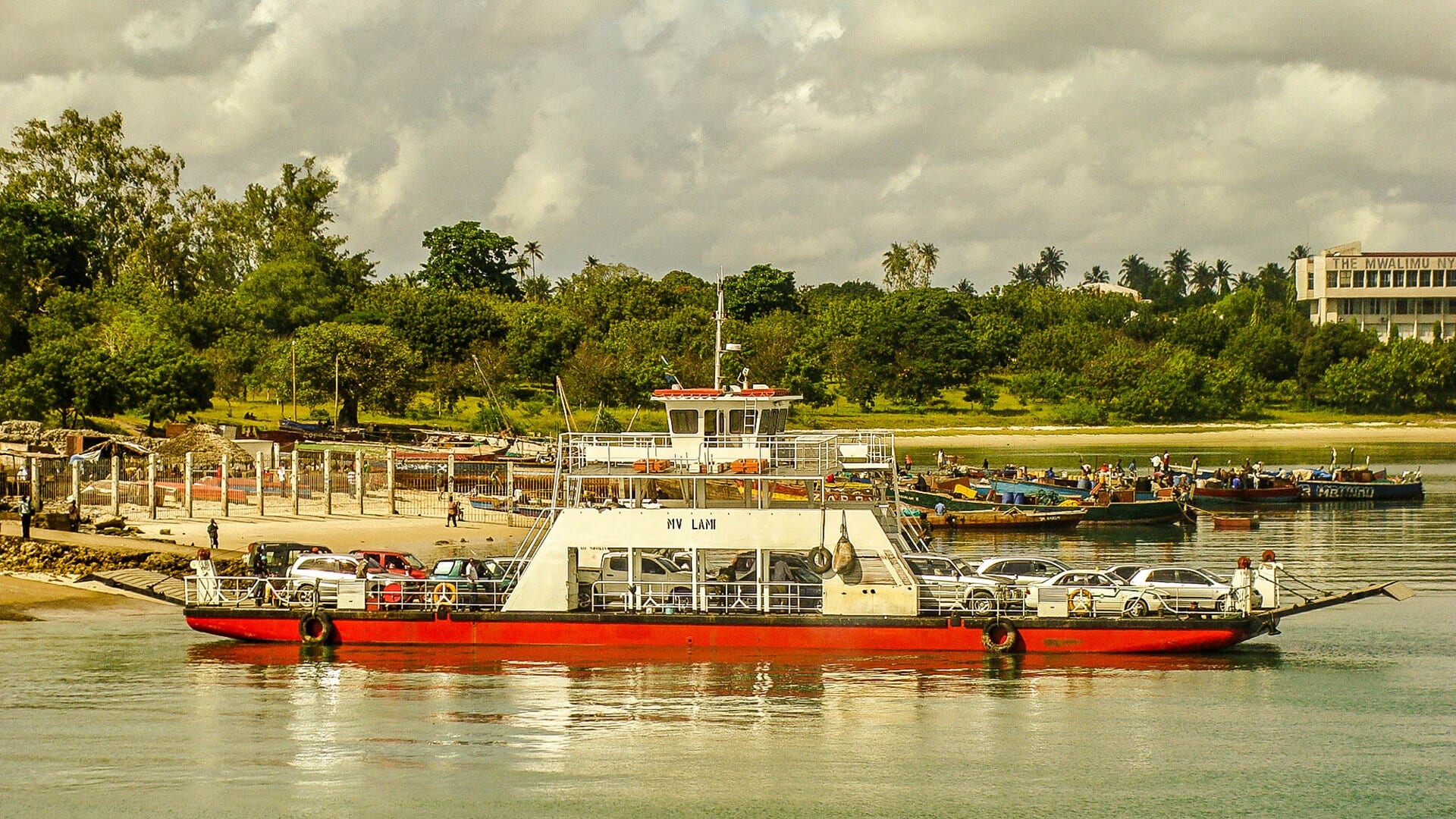
Tanzania uses very different transport depending on where you are going.
Dar es Salaam–Zanzibar is a ferry journey. Dar–Morogoro and Dar–Dodoma are strong SGR routes. Arusha and Moshi are primarily bus or flight journeys. Southern Tanzania and Zambia introduce a completely different railway: TAZARA.
The useful question is not “which transport is best in Tanzania?” It is: Which transport actually fits this route?
MYticket compares the route, timetable, station or terminal, class, baggage rules and what happens after arrival — because a two-hour train or one-hour ferry can still turn into a bad journey if the terminal or connection is wrong.
Search Tanzania transportSearch Dar es Salaam, Zanzibar, Dodoma, Morogoro, Arusha, Moshi, Mwanza and more for available transport options.
| Question | Answer |
|---|---|
| Main Dar–Zanzibar transport | Fast ferry |
| Main ferry operators to compare | Azam/Kilimanjaro and Zan Fast |
| Dar–Zanzibar crossing | Roughly 1 hour on fast services |
| Azam non-resident Economy fare | $35 |
| Azam baggage allowance | 25 kg |
| Recommended Azam check-in | At least 1 hour before |
| Main mainland fast rail | Tanzania SGR |
| Strong SGR routes | Dar–Morogoro, Dar–Dodoma |
| Main long-distance bus terminal in Dar | Mbezi / Magufuli Bus Terminal |
| Cross-border railway | TAZARA |
| TAZARA Zambia service | Dar es Salaam–New Kapiri Mposhi |
| Zanzibar ferry arrival | Stone Town |
Schedules, fares and operator rules can change. Check live booking availability before travelling.
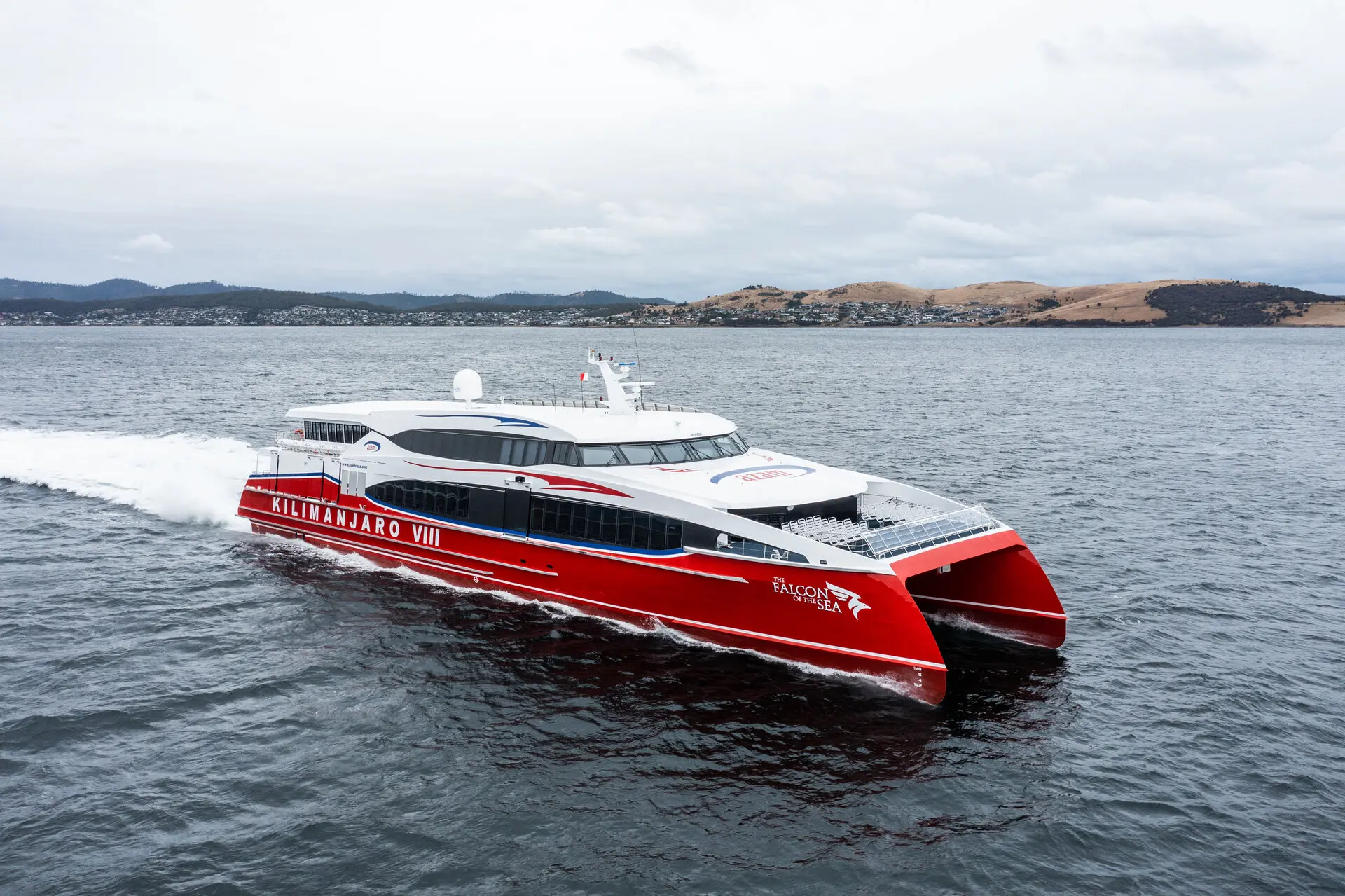
Azam Marine operates the Kilimanjaro fast-ferry fleet between Zanzibar and mainland Tanzania.
Its current passenger fare structure uses:
Economy, Business, VIP and Royal.
But there is an important detail: not every Kilimanjaro vessel has every class.
The fleet uses different vessel configurations, so the booking result for your departure is more reliable than assuming all four classes will appear every time.
Azam's own fleet information confirms different class layouts across its vessels.
Check Azam fleet information| Vessel | Published capacity/class notes |
|---|---|
| Kilimanjaro VII | 520 passengers; Economy, VIP and Royal listed |
| Kilimanjaro VI | 540 passengers; Economy, Business, VIP and Royal listed |
| Kilimanjaro V | 522 passengers; older/different class configuration |
| Kilimanjaro IV | Mixed fleet configuration; verify booking product |
Do not book Business because a blog says every ferry has Business Class.
Check the actual classes offered on your departure.
Azam itself warns that vessels and onboard configurations can change according to operational requirements.
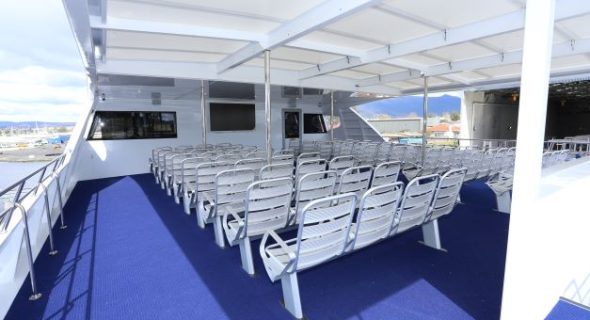
Enough for most travelers. The crossing is short, so Economy is the first fare I would compare. You are still travelling on the same fast ferry and arriving at the same terminal. Pay more only if the upgraded space or experience is something you actually want.
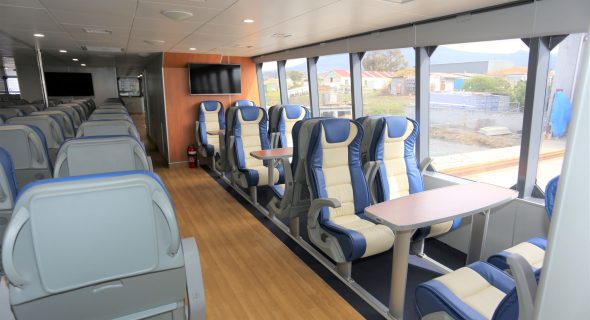
This is the upgrade worth checking first when it appears on your vessel. The current published non-resident price is only $5 above Economy. But Business is not offered on every Kilimanjaro vessel, so rely on the actual booking result rather than assuming it will always appear.
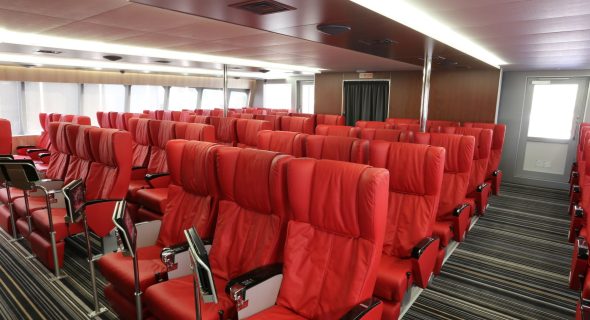
VIP is a substantial price step above Business. Azam provides a VIP lounge for VIP and Royal passengers and publishes onboard Wi-Fi and entertainment facilities across its catamaran operation. Choose VIP for the premium terminal/onboard experience, not because Economy is inadequate.
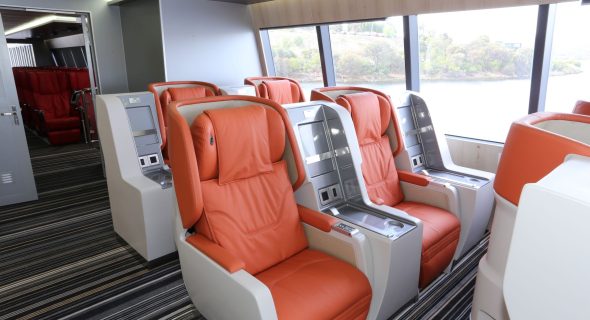
Royal is a luxury purchase. At almost three times the Economy fare, book it because you specifically want the highest available product — not because the crossing requires it. For most travelers, departure time is more important than upgrading from a $35 Economy seat to a $100 Royal seat.
| Passenger | My starting point |
|---|---|
| Budget traveler | Economy |
| Normal tourist crossing | Economy |
| Small upgrade wanted | Business when available |
| Wants lounge/premium experience | VIP |
| Luxury experience specifically | Royal |
| Tight airport connection | Whichever suitable class is on the earlier ferry |
| Family | Compare total Economy/Business cost first |
Do not sacrifice the departure you need just to get a higher class.
If your travel date is fixed, check current Zanzibar ferry tickets before going to the terminal, especially when you need a particular morning or afternoon departure.
Business currently costs only $5 more than Azam Economy when the class is offered, while VIP adds another $20 and Royal jumps to $100.
For most visitors compare Economy and Business first. VIP and Royal are experience upgrades.
VIP is $60 and Royal is $100 for a non-resident adult. VIP includes access to the published VIP lounge; Royal is the highest-priced product.
For a one-hour crossing, use Royal only when the higher product is specifically what you want.
Azam currently requires foreign passengers to carry passports between mainland Tanzania and Zanzibar.
Foreign passengers should pay the foreign-passenger fare in US dollars. Azam also says it accepts GBP and EUR.
Qualifying foreign residents with Tanzanian resident permits or exemption certificates can be charged the applicable resident fare in Tanzanian shillings.
Do not arrive expecting the resident TZS fare simply because you found it online.
Azam publishes these requirements in its current travel guidance.
Use the operator's office, approved agent or a booking platform you trust.
Azam specifically warns passengers not to buy tickets from people in the street claiming to be agents. This is particularly useful advice around the busy Dar ferry area.
Read Azam travel guidance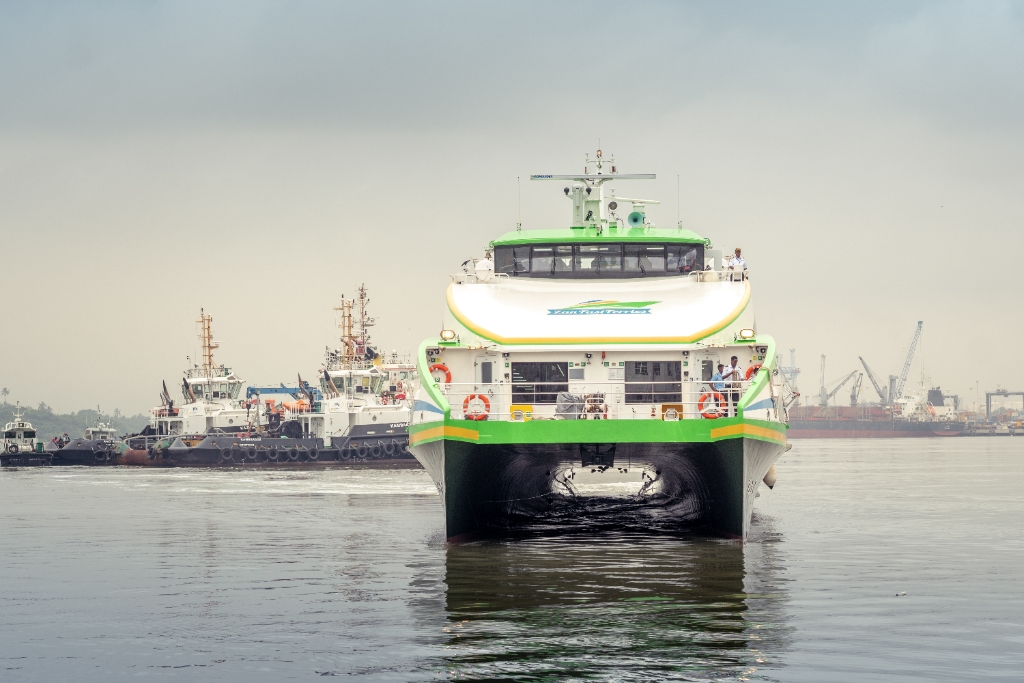
Zan Fast is not simply “the other Economy ferry.”
The company operates several high-speed passenger vessels and uses its own class structure:
Silver, Gold, Platinum and VIP Cabin.
Do not map these automatically onto Azam Economy/Business/VIP/Royal. Compare the actual product offered for your sailing.
Current booking inventory identifies these four Zan Fast classes.
Check Zan Fast booking information| Vessel | Published capacity / role |
|---|---|
| Zanzibar 1 | 475 seats |
| Zanzibar 2 | 475 seats |
| Zanzibar 3 | 615 seats |
| Sea Star 1 | Large passenger/cargo vessel |
Vessel assignment can vary. Use the ferry/class shown on the actual booking rather than assuming every departure uses the same interior.
Zan Fast publishes these vessels on its current site.
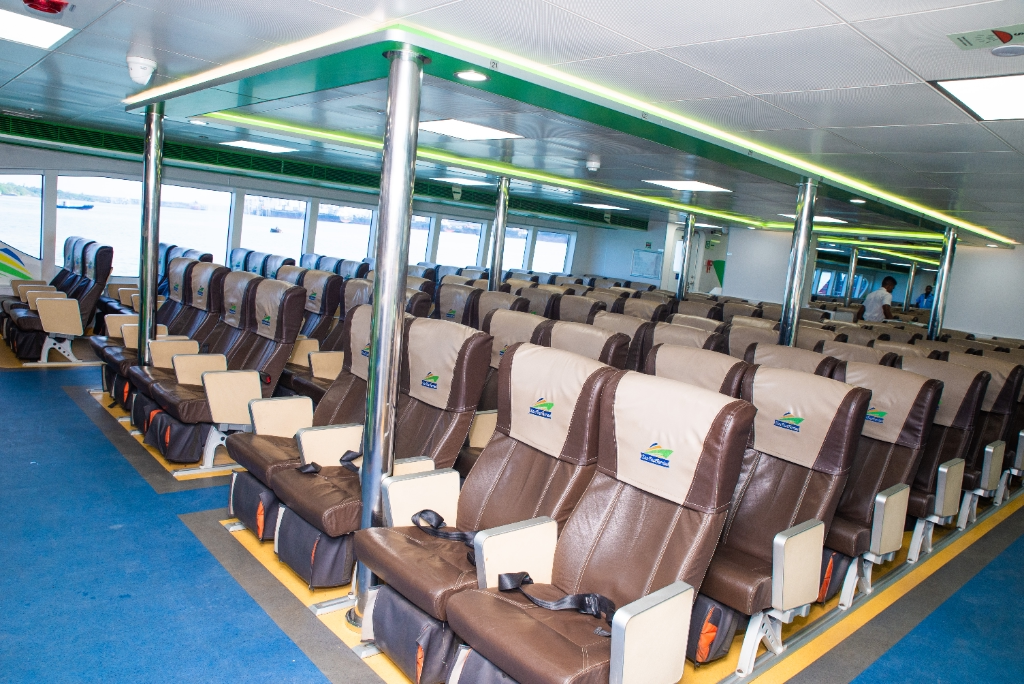
Start here if price is the main consideration. Silver is Zan Fast's entry-level class on current booking listings. Before booking, compare the final fare and departure time against Azam Economy rather than comparing the class name alone.
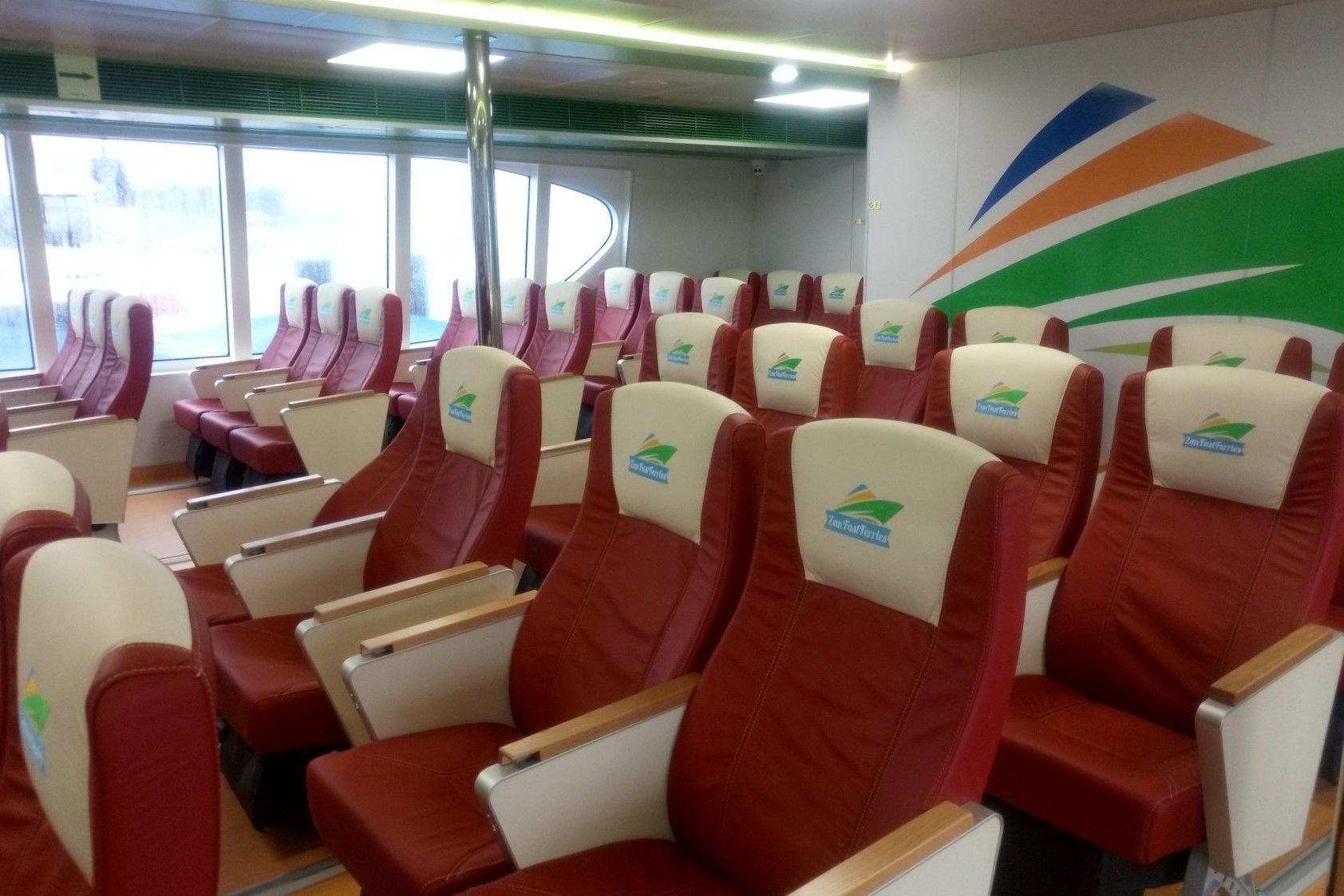
Gold is the first Zan Fast upgrade I would compare. Zan Fast currently states that snacks and soft drinks are provided especially in its Gold, Platinum and VIP classes, alongside Wi-Fi, charging, restrooms and entertainment. Check the actual vessel because onboard configuration can vary.
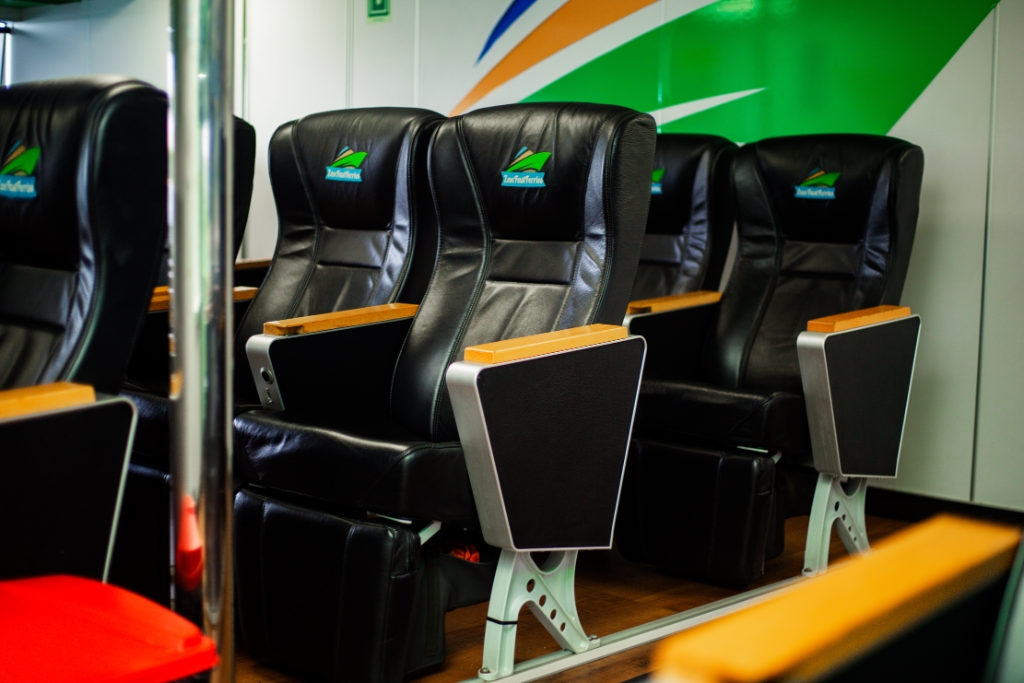
Platinum is a premium Zan Fast class above Gold. The company currently associates its higher classes with snacks/soft drinks and its broader onboard facilities. Compare the price gap against the one-hour crossing before paying automatically.
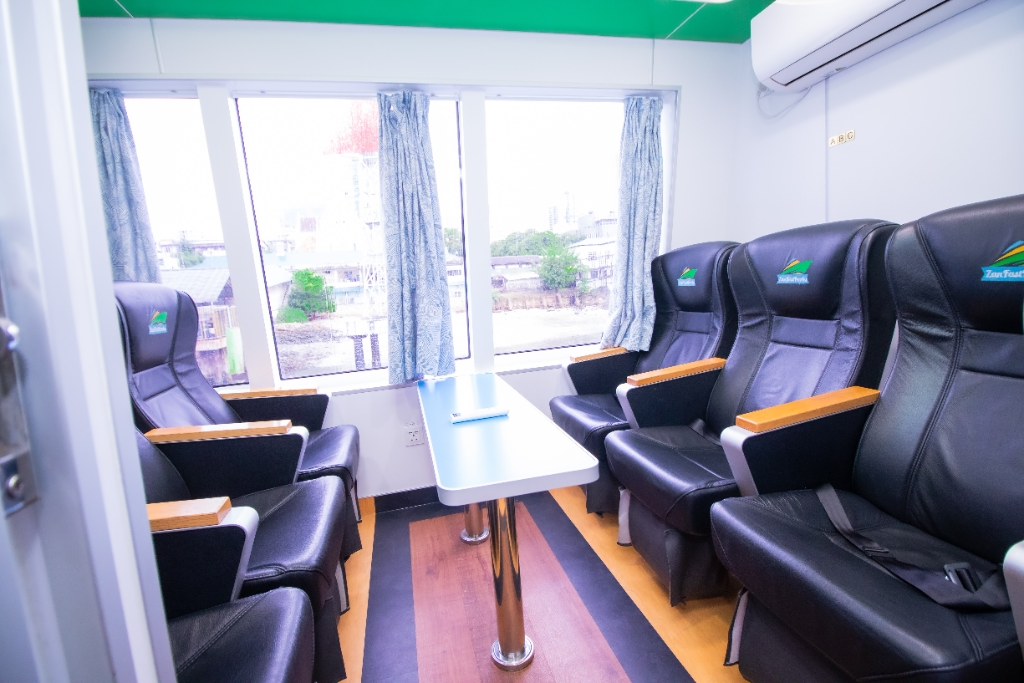
VIP Cabin is Zan Fast's highest named product in current online listings. Treat it as a premium experience rather than a requirement for the crossing. If your priority is a flight connection, the earlier sailing is still more useful than the most expensive cabin on a later boat.
Zan Fast currently advertises:
Exact facilities can depend on vessel and class.
The operator publishes these amenities directly.
Start here if price is the main consideration. Silver is Zan Fast's entry-level class on current booking listings. Before booking, compare the final fare and departure time against Azam Economy rather than comparing the class name alone.
Gold is the first Zan Fast upgrade I would compare. Zan Fast currently states that snacks and soft drinks are provided especially in its Gold, Platinum and VIP classes, alongside onboard facilities such as Wi-Fi, charging, restrooms and entertainment. Check the actual vessel because onboard configuration can vary.
Platinum is a premium Zan Fast class above Gold. The company currently associates its higher classes with snacks/soft drinks and its broader onboard facilities. Compare the price gap against the one-hour crossing before paying automatically.
VIP Cabin is Zan Fast's highest named product in current online listings. Treat it as a premium experience rather than a requirement for the crossing. If your priority is a flight connection, the earlier sailing is still more useful than the most expensive cabin on a later boat.
| Question | Azam / Kilimanjaro | Zan Fast |
|---|---|---|
| Dar–Zanzibar | Yes | Yes |
| Class system | Economy / Business / VIP / Royal | Silver / Gold / Platinum / VIP Cabin |
| Multiple daily crossings | Yes | Yes |
| Pemba network | Yes / operator network varies | Yes |
| Tanga connection | Operator services vary | Via Pemba network |
| Best reason to choose | Timetable + clear published fare structure | Timetable + alternative class/fare options |
I would choose between them in this order:
For a one-hour crossing, buying the higher class on the wrong departure is not a good trade.
The ferry companies do not use the same class names or vessel layouts. For a more focused comparison of Zanzibar ferry operators and services, see the Zanzibar ferries guide.
Start with the departure time, then compare the class and final fare shown for that sailing. Azam Economy or Business and Zan Fast Silver or Gold are the first products to compare for most visitors.
No class guarantees a smooth sea. Ferry motion depends on sea conditions and the vessel.
Choose a premium class for space/service, not because it can guarantee you will not feel motion. If you are prone to motion sickness, prepare for the sea crossing separately rather than assuming VIP solves it.
Zan Fast currently operates passenger services between Zanzibar and Pemba.
The operator states that Zanzibar–Pemba services run twice daily except Friday under its current operating pattern. Check the actual departure for your date before building an onward island itinerary.
Zan Fast currently lists a Pemba–Tanga service operating twice per week.
This is a niche but useful sea connection between the Zanzibar archipelago and northern mainland Tanzania. Do not assume it operates daily.
| Route | What to check |
|---|---|
| Zanzibar → Pemba | Passenger ferry |
| Pemba → Zanzibar | Passenger ferry |
| Pemba → Tanga | Passenger ferry |
| Tanga → Zanzibar | Check current Pemba/Tanga connections |
Check Zan Fast's current Pemba/Tanga connections if travelling between northern mainland Tanzania and the islands. Do not publish a daily direct Tanga–Zanzibar ferry assumption when the current network can involve Pemba.
Dar–Zanzibar is the busiest visitor route, but Tanzania's passenger-ferry network also extends beyond this crossing. For broader Tanzania ferry routes and operator information, see the Tanzania ferry guide.
The crossing is the easiest part when these details are already solved.
Azam currently includes 25 kg per passenger. Excess baggage can be charged separately.
Do not panic and immediately buy another random ticket. Check whether the operator has moved passengers to another sailing, whether the next departure still protects your flight/hotel connection, whether the ticket conditions permit refund or amendment, and whether flying is now the safer alternative.
Azam's current terms provide remedies when the operator cannot provide the booked voyage, while Zan Fast currently allows cancellation/rescheduling requests up to two hours before scheduled departure under its published conditions. Do not treat both policies as identical.
Yes, under the operator's current conditions, but act before departure. Zan Fast currently tells passengers to request a date change or cancellation at least two hours before scheduled departure.
Requests after vessel departure are not accepted, and the operator states there is no refund for cancellation requests made after departure.
Azam's current fare guidance says missed travel date/time: no refund; cancellation notice should be given 2 hours before departure. Keep passenger cancellation/missed-ferry terms separate from operator-caused cancellation rules.
Zanzibar currently requires mandatory inbound travel insurance for foreign visitors. Zanzibar Insurance Corporation currently lists the standard adult cost at USD 44.
This is separate from your ferry ticket. If you are travelling from mainland Tanzania to Zanzibar, check the current entry requirement before going to the ferry terminal.
Check Zanzibar Insurance Corporation guidanceDo not treat ferry arrival and airport check-in as the same time.
After leaving the Dar ferry terminal you still have a road journey across the city to Julius Nyerere International Airport. Traffic can change the transfer substantially.
For an international flight, take an earlier ferry or fly from Zanzibar rather than designing a connection with little recovery time.
If the ferry is part of a same-day flight connection, check the sailing first and build the airport transfer around the confirmed departure rather than the other way around.
I would seriously compare the flight when:
I would favor the ferry when:
| Destination | After the ferry |
|---|---|
| Stone Town | Short local transfer / walk depending accommodation |
| Nungwi | Continue north by road |
| Kendwa | Continue north by road |
| Matemwe | Continue northeast by road |
| Paje | Continue southeast by road |
| Jambiani | Continue southeast by road |
A Dar–Zanzibar ticket ends in Stone Town. It does not include the trip to your beach hotel.
Earlier than you would book an ordinary bus.
TAZARA currently warns that passenger trains are in high demand and can fill roughly two weeks before travel. The operator advises planning about a month ahead and reserving a seat or sleeping berth at least two weeks before departure.
If TAZARA is central to your itinerary, do not leave the reservation until arrival in Dar.
Not necessarily.
TAZARA's current guidance distinguishes advance reservation from collecting/purchasing the actual ticket. If you have made a reservation but still need the ticket, the operator recommends reaching the station early before departure.
TAZARA is useful because it gives Tanzania a cross-border passenger railway to Zambia. Its schedule and reliability require more flexibility than SGR.
| Route | What to check |
|---|---|
| Dar → Arusha | Bus / flight |
| Dar → Moshi | Bus / flight |
| Dar → Mwanza | Flight / long-distance bus |
| Zanzibar → Nungwi | Road |
| Zanzibar → Paje | Road |
| Zanzibar → Jambiani | Road |
| Arusha → Serengeti | Road / safari transfer / air |
| Moshi → Arusha | Road |
| Dar → Zanzibar | Ferry / flight |
Do not search for an SGR just because Tanzania now has modern trains. The SGR only solves specific corridors.
The useful current passenger SGR corridors should not be confused with a nationwide railway covering every tourist city.
For Arusha, Moshi and Mwanza, start with road or air options instead of building the trip around Dar–Dodoma rail.
| Route | First option | Why |
|---|---|---|
| Dar es Salaam → Zanzibar | Ferry | Short direct sea crossing |
| Zanzibar → Dar es Salaam | Ferry | Direct Stone Town–Dar connection |
| Dar es Salaam → Morogoro | SGR | Fast and simple |
| Dar es Salaam → Dodoma | SGR | Large time advantage over bus |
| Dar es Salaam → Arusha | Bus / flight | No equivalent SGR route |
| Dar es Salaam → Moshi | Bus / flight | No SGR equivalent |
| Dar es Salaam → Mwanza | Flight / bus | Bus is very long |
| Dar es Salaam → Mbeya | Bus / TAZARA depending schedule | Long southern route |
| Dar es Salaam → Zambia | TAZARA / flight | Cross-border rail exists |
| Zanzibar → Dar airport | Ferry or flight | Connection risk matters |
Do not force one transport mode across the whole country.
Take the ferry first if you are already in central Dar es Salaam and your destination is Zanzibar.
The fast ferry crosses between Dar es Salaam and Stone Town in roughly one hour on many current services.
The crossing itself is simple. The part worth planning is which operator, departure time, ticket class, terminal arrival time, baggage and what happens after you reach Stone Town.
Current online booking inventory shows departures spread through the day. Representative examples:
| Operator | Class | Departure | Arrival |
|---|---|---|---|
| Zan Fast | Economy | 07:00 | 08:00 |
| Azam / Kilimanjaro | Economy | 07:00 | 07:59 |
| Azam / Kilimanjaro | Economy | 09:30 | 10:29 |
| Zan Fast | Economy | 12:00 | 13:00 |
| Azam / Kilimanjaro | Economy | 12:30 | 13:29 |
| Zan Fast | Economy | 14:00 | 15:00 |
| Azam / Kilimanjaro | Economy | 16:00 | 16:59 |
| Zan Fast | Economy | 16:30 | 17:30 |
If you have a fixed connection later in the day, use an earlier ferry rather than the last possible departure.
Ferry schedules change. Check live availability for your date.
Azam Marine currently publishes separate non-resident fares for international visitors.
| Class | Non-resident adult fare |
|---|---|
| Economy | $35 |
| Business | $40 |
| VIP | $60 |
| Royal | $100 |
Economy is enough if you only want the crossing. Business is the small upgrade I would compare first. VIP and Royal are premium products, not requirements for a comfortable trip.
Check the operator’s current ferry rates and terms before payment.
Azam Marine publishes separate resident and non-resident fares. A foreign visitor should not compare a resident TZS fare with the non-resident USD fare and assume the booking system has made a mistake.
Check which passenger category applies before comparing prices across websites. This is a common pricing confusion.
Economy: enough for most travelers. The crossing is short, so start here unless you specifically want a quieter or more premium experience.
Business: the upgrade to compare first; the increase from Economy is relatively small compared with VIP or Royal.
VIP: choose it for the premium space and service. Royal: a luxury product, not a requirement for tourists.
For a crossing of roughly one hour, prioritize departure time and connection risk over the highest class.
Compare the actual departure, fare and current service rather than assuming one operator is always best. Both currently appear in online Dar–Zanzibar inventory.
Azam/Kilimanjaro has a mature class structure and published passenger rules. Zan Fast can sometimes appear at a lower online fare. Choose the departure that fits the day best.
Do not plan as if any operator can never cancel. Ferry disruptions happen.
If the ferry connects to an international flight, another ferry, a fixed tour or a non-refundable booking, leave a meaningful buffer. The safest strategy is an earlier ferry, not a promise that one operator will never change its schedule.
Azam Marine currently asks passengers to report at least one hour before departure. Follow that rather than arriving 10 minutes before the boat leaves.
Time is needed for ticket/check-in, document checks, baggage handling, security and boarding. The boat may take an hour; your ferry journey starts earlier than departure time.
Azam Marine currently includes 25 kg of baggage per passenger. Excess baggage can be charged separately.
Normal tourist luggage is usually straightforward, but the allowance is not unlimited. A large suitcase is acceptable provided it fits the operator’s baggage conditions.
Azam’s current fare structure treats 5–11 years as children and 12+ as adults. Children under 5 are under the operator’s current no-ticket/infant conditions.
Check the actual booking form for the exact fare before payment.
Carry the valid identification or travel document required for your booking. Ferry operators perform passenger/document checks and security screening.
International visitors should keep their passport accessible rather than buried in checked luggage.
Do not assume you can simply board the next ferry for free. Azam’s current terms say delayed check-in can result in loss of the booked journey without refund.
If you know you are going to miss departure, contact the operator or booking channel immediately.
Under Azam’s current terms, if the operator cannot provide the booked voyage at the expected time, passengers may be offered a full refund or the same class on the next available ferry within the applicable conditions.
Check the current ticket terms because amendment and refund rules can change.
| Option | What you gain | What you still need to plan |
|---|---|---|
| Ferry | Short sea crossing, central Dar to Stone Town | Terminal check-in + onward road transfer |
| Flight | Very short air time | Airport transfer + check-in + Zanzibar airport transfer |
Take the ferry if you are already in central Dar and staying around Stone Town. Fly if you are already at the airport or a ferry connection would make the day unnecessarily risky.
Yes, but do not build a tight connection. After the ferry reaches Dar, you still need to leave the terminal, collect luggage, cross city traffic, reach the airport and complete airline check-in/security.
For an important international flight, take an early ferry or fly from Zanzibar instead of relying on the last possible boat.
The ferry terminal is in Stone Town. If you are staying in Nungwi, Kendwa, Paje, Jambiani or Matemwe, the journey continues by road.
Do not compare a one-hour ferry with a one-hour flight without adding the final transfer on both sides.
Continue by road from Stone Town. With luggage, a direct transfer is simpler than improvising several local connections after arrival.
Continue by road toward the southeast coast. Include the road transfer when deciding between ferry and flight.
Tanzania’s modern SGR changes the transport decision on several mainland routes.
Dar es Salaam–Morogoro and Dar es Salaam–Dodoma are the two routes I would check by train before looking at buses. The time saving is large enough that rail is not just a more comfortable alternative — it can fundamentally change the journey.
Take the SGR first. Current services can cover Dar–Dodoma in roughly two to four hours depending on the train, far faster than many buses.
Representative schedule examples:
| Service | Departure | Arrival | Approx. journey |
|---|---|---|---|
| Express | 06:00 | 09:42 | 3h42 |
| Fast / EMU example | 08:00 | 11:15 | 3h15 |
| Ordinary example | 09:30 | 13:25 | 3h55 |
Some booking inventory may show faster or differently timed services depending on the date and product. Timetables change; check live search results.
Current online Economy booking examples can appear around US$17, depending on the specific train and sales channel. Treat this as a current booking example rather than a permanent official tariff.
| Mode | Typical pattern | My view |
|---|---|---|
| SGR | ~2–4h depending service | First choice |
| Bus | Often ~7–9h+ | Fallback / schedule |
| Flight | ~1h in air | Useful if airport timing wins |
For most travelers I would start with the SGR. The bus mainly wins when its departure time or terminal works better. Flying only clearly wins when the complete airport-to-airport schedule saves meaningful time.
This is one of the easiest SGR decisions. Current fast online examples take around 1h40.
| Departure | Arrival | Journey | |
|---|---|---|---|
| Fast example | 16:00 | 17:40 | 1h40 |
| Fast example | 18:55 | 20:35 | 1h40 |
If the train timing fits, do not choose a much longer road journey merely out of habit.
Current online examples show Economy around $9, Business around $15 and Royal around $20. These are current booking examples, not permanent operator tariffs.
Economy: enough for most short and medium SGR journeys.
Business: worth comparing on longer journeys if the extra space/service is useful.
Royal: a premium product rather than the default way to travel.
On Dar–Morogoro, prioritize the departure time over the class upgrade. On Dar–Dodoma, the longer journey gives Business more reason to be compared.
Before choosing an SGR departure, check which Dar station/terminal the train uses, how early you need to arrive, how far the arrival station is from your hotel and whether onward transport still exists at your arrival time.
Do not treat railway arrival time as hotel arrival time.
Check the Dar SGR station mapBuses remain essential once your route leaves the useful SGR corridors.
For Arusha, Moshi, Mwanza and many regional routes, road transport is still one of the main options. Compare the departure terminal, operator, day versus night departure, actual journey time and where the bus arrives.
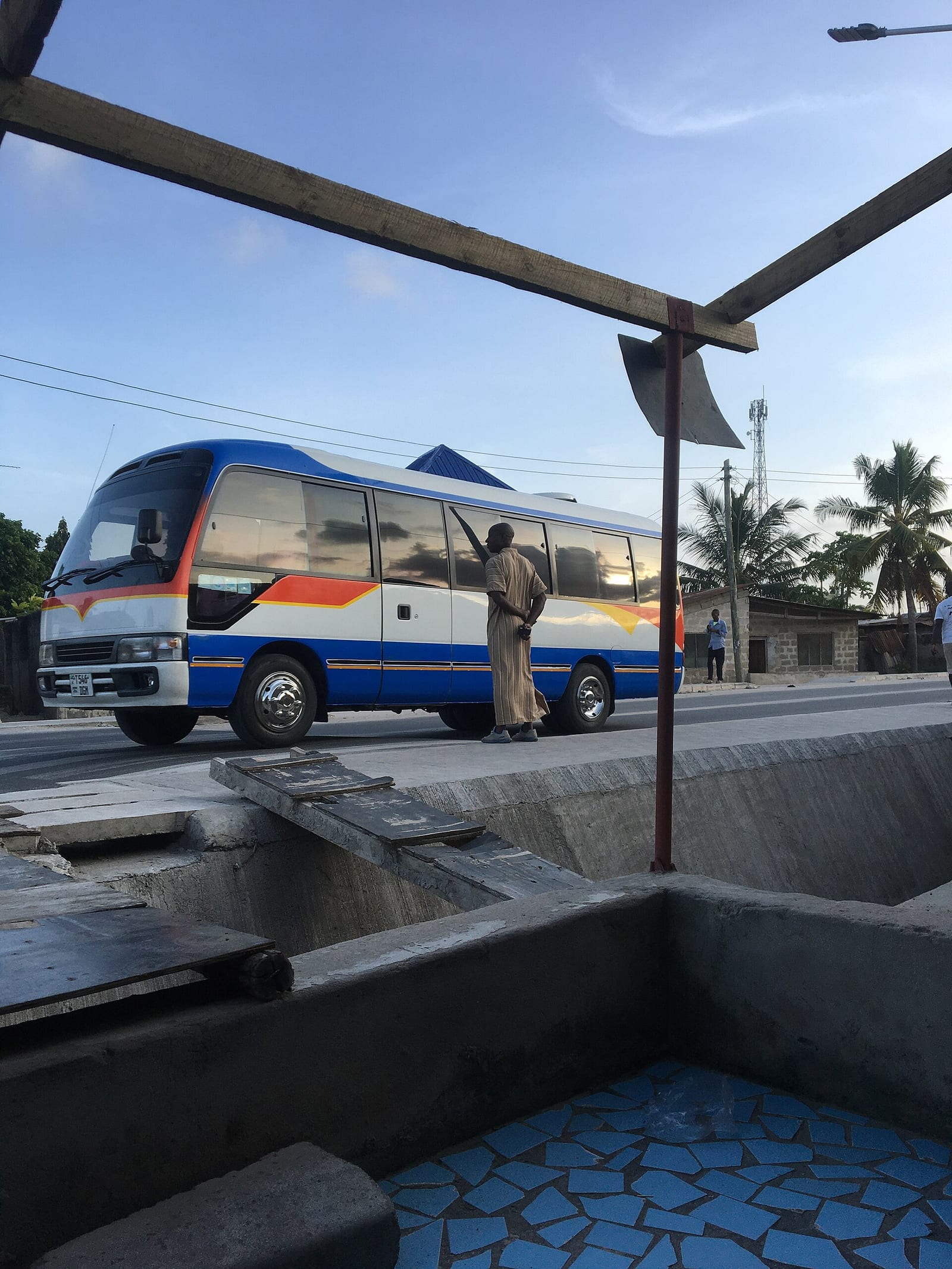
Many long-distance buses leave from Mbezi / Magufuli Bus Terminal rather than central Dar es Salaam. That changes the real departure time.
If your bus leaves at 06:00, you need to solve the journey to Mbezi before 06:00. Do not look at the bus timetable and treat the listed time as when you leave the hotel.
Open Magufuli Bus Terminal mapCompare bus and flight. Do not search for an SGR equivalent. Current online bus inventory includes BM Coach, Happy Nation, Marangu Coach and Kilimanjaro Express.
| Operator | Departure | Arrival | Approx. journey |
|---|---|---|---|
| BM Coach | 05:00 | 15:25 | 10h25 |
| Happy Nation | 05:20 | 15:45 | 10h25 |
| Marangu Coach | 06:20 | 17:20 | 11h |
| Kilimanjaro Express | 08:00 | 18:35 | 10h35 |
Current online fares commonly appear around $18–28, depending on operator and class. Bus schedules change; check live availability.
Bus is the main overland option I would compare first.
| Operator | Departure | Arrival | Approx. journey |
|---|---|---|---|
| Kilimanjaro Express | 05:00 | 13:50 | 8h50 |
| Happy Nation | 05:20 | 13:45 | 8h25 |
| Extra Luxury | 05:45 | 14:45 | 9h |
| Marangu Coach | 06:20 | 15:20 | 9h |
Current online prices are often around $19–24. If you need to be in Moshi during daylight, choose the arrival time before choosing the cheapest bus.
If time matters, fly. Current long-distance buses commonly take around 18–21 hours. Bus fares can be much lower than flights, but this is a full long-distance road journey.
Take the bus when price matters much more than time, you are comfortable with an overnight/very long journey and the schedule works with your itinerary. Otherwise, compare flights.
This is where bus and TAZARA both deserve a look. Current buses often take around 12–14 hours. TAZARA can be useful if its operating day and timetable fit your trip.
Compare departure day, expected journey time, sleeper availability, bus frequency and onward plans in Mbeya. If the train runs on the wrong day, the bus is the practical answer.
Take a day bus when arrival logistics matter more than preserving the day. Take a night bus only when you already know what happens at arrival.
A bus that reaches an unfamiliar terminal at 04:00 can create more problems than the hotel night it saved.
Choose by route and departure, not by brand name alone. Compare departure terminal, departure time, arrival time, booking-channel credibility, current class/service and baggage rules if important.
A famous operator with the wrong departure can be worse than a less familiar operator with a better schedule. Do not treat any bus company as universally best.
Yes, the cross-border TAZARA passenger train is running again. TAZARA links Dar es Salaam with New Kapiri Mposhi in Zambia.
This is a completely different journey from Tanzania’s modern SGR. It is a long-distance cross-border railway, not a fast intercity train.

The Mukuba passenger service currently operates roughly once weekly in each direction.
| Direction | Current departure pattern |
|---|---|
| Dar es Salaam → New Kapiri Mposhi | Friday, around 15:50 |
| New Kapiri Mposhi → Dar es Salaam | Tuesday |
The full journey is roughly 46 hours under the published service pattern. Confirm directly with TAZARA passenger services before travelling.
This is not a service to build a tight onward connection around.
No. TAZARA is a long-distance railway and has experienced service interruptions.
If you are connecting to an international flight, another long-distance train, a safari start or a visa/border deadline, leave a large buffer. Use TAZARA as part of the journey, not as a precise 46-hour stopwatch.
Booking is more manual than SGR or the Zanzibar ferry. TAZARA currently directs passenger reservation enquiries through its stations and passenger-service contact channels and recommends reserving in advance.
TAZARA currently warns that passenger trains are in high demand and can fill roughly two weeks before travel. The operator advises planning about a month ahead and reserving a seat or sleeping berth at least two weeks before departure. If collecting or purchasing close to departure, arrive early.
TAZARA passenger services can include sleeping accommodation and dining facilities. Exact carriage/class availability can vary by train.
Before booking, confirm sleeper/seat class, berth arrangement, whether meals are included or purchased, baggage rules and current border procedures. Do not assume old class descriptions apply to the current service.
TAZARA can be an interesting overland option for Mbeya if the operating day fits. Compare departure day, expected journey time, sleeper availability, bus frequency and onward plans in Mbeya.
If the train runs on the wrong day, the bus is the practical answer.
Do not confuse the two railway systems. Tanzania SGR is the newer fast mainland rail product used on routes such as Dar–Morogoro and Dar–Dodoma. TAZARA is the older long-distance railway running southwest toward Mbeya and Zambia. They serve different journeys and should be treated as different transport products.
Zanzibar fast ferries.
Open mapFerry arrival point on Zanzibar.
Open mapMajor long-distance bus departure point in Dar.
Open mapUse the exact station shown on your train ticket.
Open mapDifferent railway product from SGR.
Open map“Dar es Salaam station” is not enough information. Show the exact terminal or railway name from the ticket.
Azam’s current information covers one-hour reporting, 25 kg baggage, child age bands, passport checks and missed-ferry/cancellation terms. Confirm the ticket conditions before departure.
Check the exact Tanzania Railways service, class and baggage conditions for your booking. Do not transfer ferry or TAZARA rules to SGR.
Bus rules vary by operator and booking channel. Check baggage, boarding terminal and ticket change conditions with the current service.
Confirm current class, baggage, reservation and border procedures directly with TAZARA before travelling.
Buy the ticket before arriving if possible. Reach the terminal early enough for check-in, document checks, baggage handling and security. The fast crossing is short, but the final road transfer from Stone Town to a resort is part of the journey.
Choose a useful departure, reach the correct station with enough time to board and let the train replace the much longer road journey. The real planning happens at both ends: getting to the Dar station and leaving Dodoma station.
A 05:00 bus does not mean leaving your hotel at 05:00. Solve the early transfer to Mbezi / Magufuli Bus Terminal first, then compare arrival time in Arusha.
This is not a fast point-to-point train. The journey lasts roughly two days and crosses an international border. Confirm operation, carry required documents and do not place a tight flight immediately after arrival.
About one hour on many current fast-ferry services.
Azam currently lists non-resident Economy at $35, Business at $40, VIP at $60 and Royal at $100.
At least one hour before an Azam departure under the operator’s current terms.
Azam currently includes 25 kg per passenger. Excess baggage can be charged separately.
Use the ferry if central Dar and Stone Town fit your trip. Fly if the complete airport connection is shorter or safer.
No. It arrives in Stone Town.
Yes, but leave a large buffer for the terminal exit, luggage, city traffic and airline check-in.
There is no universal winner. Compare the actual departure, fare and current operation.
Yes. Take the SGR first and check the live service for your date.
Usually by a large margin. Current examples range roughly from two to four hours depending on service.
Current fast examples are around 1h40.
Current online Economy examples are around $9.
No. Treat it as a premium upgrade rather than the default way to travel.
No equivalent direct SGR route. Compare bus and flight.
Many current examples are around 10–11 hours.
Many current examples are around 8½–9 hours.
Often roughly 18–21 hours.
Many long-distance services use Mbezi / Magufuli Bus Terminal.
Yes, current passenger service has resumed.
Current Mukuba passenger service is roughly once weekly each direction.
Roughly 46 hours under the published pattern.
Not as easily. Reservation is currently more manual and should be confirmed directly with TAZARA.
No. Leave a large buffer.