
Marrakech to Agadir bus schedules
There is no passenger train. Both CTM and Supratours operate direct buses, so compare the terminal, departure time and arrival stop.
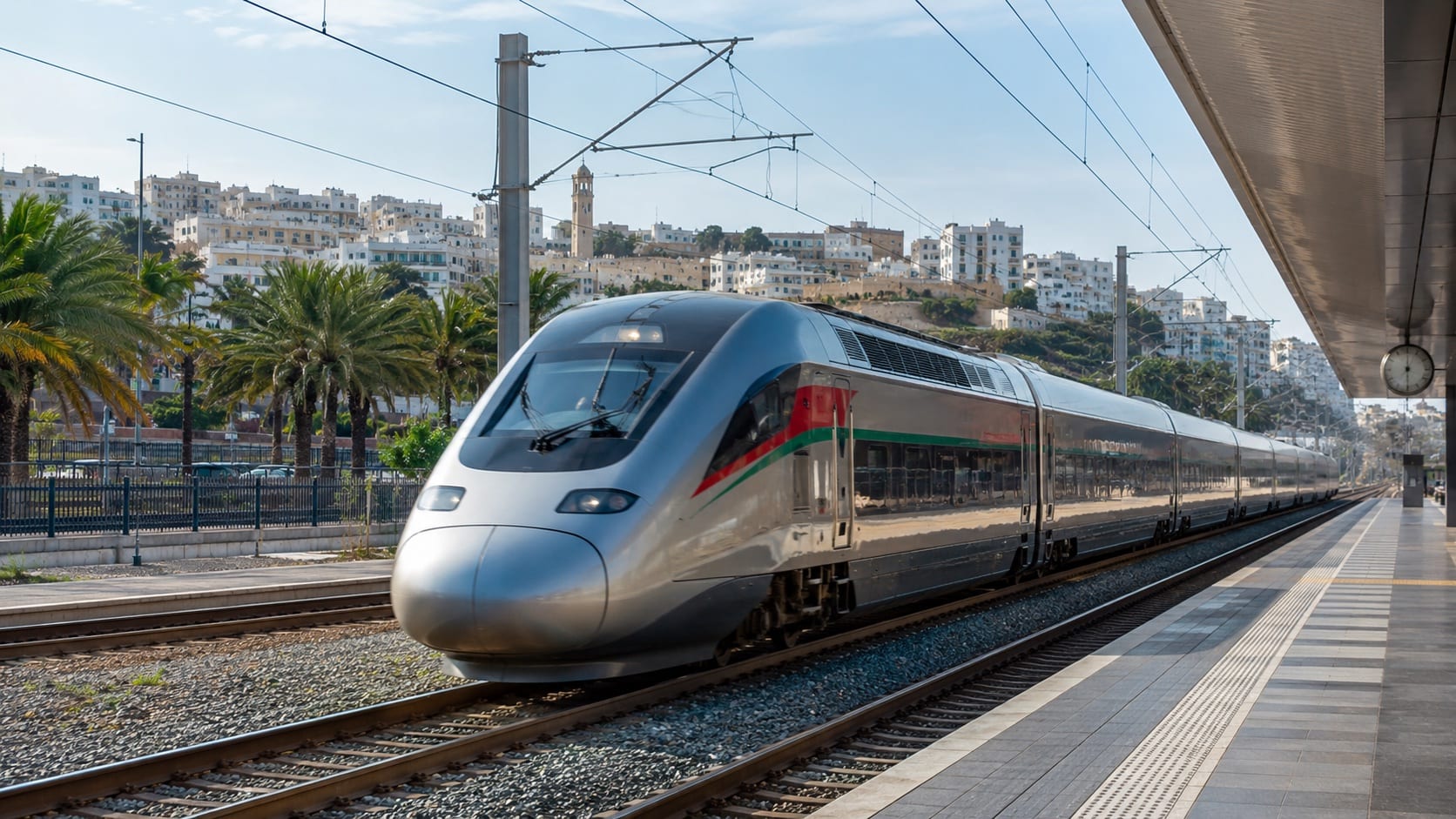
Trains are the easiest way to move between Tangier, Rabat, Casablanca, Marrakech and Fès. For Agadir, Essaouira, Chefchaouen and many smaller destinations, the bus takes over. Ferries matter when your trip continues between Morocco and Spain.
Search Morocco transportEnter your Morocco route and date to check available train, bus and ferry options.
| Route | Best option | Typical time | Typical fare | Key point |
|---|---|---|---|---|
| Casablanca → Tangier | Al Boraq | ~2h–2h20 | variable | Fastest rail corridor |
| Casablanca → Marrakech | Train | ~2h40–3h | ~120 MAD typical | Direct from Casa Voyageurs |
| Marrakech → Fès | Train | ~6½–7h+ | variable | First class worth comparing |
| Marrakech → Agadir | Bus | ~3–3½h | from ~135 MAD | No train |
| Marrakech → Essaouira | Bus | ~3h | ~80–130 MAD | No train |
| Tangier → Chefchaouen | Bus | ~2h15–2h40 | from ~85 MAD | No railway |
| Fès → Chefchaouen | Bus | ~4h10–4h50 | from ~145 MAD | Direct road journey |
| Marrakech → Ouarzazate | Bus | ~4h30–4h45 | from ~115 MAD | High Atlas road |
| Casablanca → Agadir | Bus / flight | ~5½h+ by bus | ~285–345 MAD | No rail |
| Tangier Med → Algeciras | Ferry | ~1½–2h crossing | variable | International ferry |
Use this table for orientation. Check live times and fares before booking.
You do not need the full national timetable to plan the routes most visitors use.
The tables below show the main train and coach departures for the busiest tourist journeys, together with typical journey times, fares and a direct ticket search.
There is no passenger train. Both CTM and Supratours operate direct buses, so compare the terminal, departure time and arrival stop.
The return is also a direct bus journey. Compare CTM with Supratours and check the exact Agadir-area boarding point.
There is no railway to Essaouira. Direct buses are the practical choice, with Supratours especially convenient beside Marrakech station.
Use a direct bus back to Marrakech. The exact arrival time matters if you are connecting to a train, so check the live result.
There is no train across the High Atlas. CTM and Supratours provide the road connection, but their departure patterns differ.
The return is a direct mountain-road bus journey. Compare the two operators and leave margin for road conditions.
There is no simple direct rail journey to rely on here. Compare a road service with an ONCF journey via Casablanca, then check the complete arrival time rather than only the first leg.
Use the live result for the combined or road fare; do not assume one fixed price.
Return travel is normally a road service or an ONCF connection via Casablanca. Allow connection time at Casa Voyageurs if you choose rail.
The fare depends on the road product or the two-part rail itinerary.
ONCF lists Casablanca–El Jadida as a conventional regional rail axis, and road services may also be available. Check the live timetable for the selected Casa station and compare the complete road option.
Check the current ONCF or bus fare for the date and selected product.
The return is a conventional ONCF corridor, with road services as another option. Confirm whether the result arrives at Casa Voyageurs or another Casablanca stop before planning onward travel.
Check the current ONCF or bus fare for the date and selected product.
Compare an ONCF connection through Casablanca with a direct road service. The connection is the key planning detail, not a presumed direct train.
Use the live booking result for the complete itinerary.
Return rail travel normally connects through Casablanca; direct road inventory may also be available. Check the complete journey before booking.
Use the live booking result for the complete itinerary.
The official ONCF timetable supplies the departure examples below. Check your travel date before booking.
Direct ONCF Al Atlas trains run from Marrakech to Casa Voyageurs throughout the day, with journeys taking about three hours.
Direct coaches are available as a road alternative. Allow roughly 3–4 hours and compare the live fare and terminal with the direct ONCF journey. Legacy route guidance: about 3–4 hours, typically 80–140 MAD, with CTM and Supratours between the main terminals. Evening departures can fill quickly, especially when connecting onward in Casablanca.
Check bus optionsTrains run roughly hourly through much of the day.
| Depart | Arrive | Journey | Typical fare |
|---|---|---|---|
| 04:50 | 07:28 | 2h38 | 95–145 MAD |
| 05:50 | 08:28 | 2h38 | 95–145 MAD |
| 06:50 | 09:28 | 2h38 | 95–145 MAD |
| 07:50 | 10:28 | 2h38 | 95–145 MAD |
| 08:50 | 11:28 | 2h38 | 95–145 MAD |
| 09:50 | 12:28 | 2h38 | 95–145 MAD |
Approx. Second Class: 95–145 MAD. Approx. First Class: 180–220 MAD, depending on the train and fare conditions.
Route decision: Train first.
Al Boraq is the clear choice on this route. The fastest direct trains cover Casa Voyageurs to Tanger Ville in a little over two hours.
Coaches are possible, but Al Boraq is normally the fastest and simplest choice. Use the live bus result only after checking its terminal and complete duration. Legacy route guidance: about 5–6 hours, typically 140–220 MAD, with CTM and Supratours between the main terminals. Summer and holiday seats can sell quickly.
Check bus optionsAl Boraq services run approximately hourly across much of the day.
| Depart | Arrive | Journey | Typical fare |
|---|---|---|---|
| 07:00 | 09:10 | 2h10 | 200–250 MAD |
| 08:00 | 10:10 | 2h10 | 200–250 MAD |
| 09:00 | 11:10 | 2h10 | 200–250 MAD |
| 10:00 | 12:10 | 2h10 | 200–250 MAD |
| 12:00 | 14:10 | 2h10 | 200–250 MAD |
| 14:00 | 16:10 | 2h10 | 200–250 MAD |
Approx. Second Class: 200–250 MAD. Approx. First Class: 300–350 MAD, depending on the Al Boraq fare conditions.
Route decision: Take Al Boraq.
Direct ONCF Al Atlas trains run from Marrakech to Fès; allow roughly 6½–7 hours depending on the service.
Long-distance coaches can connect Marrakech and Fès, but rail is normally the more predictable option. Compare the complete road journey and live fare before choosing. Legacy route guidance: about 7–8 hours, typically 140–220 MAD, with CTM and Supratours between the main terminals. Choose the departure around your accommodation check-in.
Check bus options| Depart | Arrive | Journey | Typical fare |
|---|---|---|---|
| 04:50 | 11:15 | 6h25 | 250–280 MAD |
| 06:50 | 13:15 | 6h25 | 250–280 MAD |
| 07:50 | 14:25 | 6h35 | 250–280 MAD |
| 08:50 | 15:15 | 6h25 | 250–280 MAD |
| 09:50 | 16:22 | 6h32 | 250–280 MAD |
Approx. Second Class: 250–280 MAD. Approx. First Class: 350–420 MAD, depending on the train and fare conditions.
Route decision: Direct train; long journey.
Direct ONCF Al Atlas trains run from Casa Voyageurs to Fès, usually taking about four hours; plan a short road transfer from Fès station to the old medina.
Direct coaches can serve the route, but the train usually gives a clearer station-to-station journey. Check the live road duration, terminal and fare before booking. Legacy route guidance: about 4–5 hours, typically 120–200 MAD, with CTM and Supratours between the main terminals. Book early for weekends and holidays.
Check bus options| Depart | Arrive | Journey | Typical fare |
|---|---|---|---|
| 06:40 | 10:35 | 3h55 | 150–180 MAD |
| 08:40 | 12:35 | 3h55 | 150–180 MAD |
| 10:40 | 14:35 | 3h55 | 150–180 MAD |
| 13:40 | 17:35 | 3h55 | 150–180 MAD |
| 16:40 | 20:35 | 3h55 | 150–180 MAD |
Approx. Second Class: 150–180 MAD. Approx. First Class: 220–280 MAD, depending on the train and fare conditions.
Route decision: Direct rail is usually the simplest choice.
Direct Al Atlas trains link Rabat Agdal with Marrakech through Casablanca. Use Rabat Agdal for this long-distance journey and compare the full arrival time rather than building a separate transfer.
Road services can cover this route, although rail is usually the cleaner choice. Check the live coach time, terminal and fare before booking. Legacy route guidance: about 4–5 hours, typically 100–160 MAD, with CTM and Supratours from the main terminals. Evening departures can be busy.
Check bus options| Depart | Arrive | Journey | Typical fare |
|---|---|---|---|
| 09:35 | 13:14 | 3h39 | 130–170 MAD |
| 10:35 | 14:14 | 3h39 | 130–170 MAD |
| 11:35 | 15:14 | 3h39 | 130–170 MAD |
| 12:35 | 16:14 | 3h39 | 130–170 MAD |
| 13:35 | 17:14 | 3h39 | 130–170 MAD |
Approx. Second Class: 130–170 MAD. Approx. First Class: 200–250 MAD, depending on the train and fare conditions.
Route decision: Direct train avoids a separate Casablanca transfer.
Direct Al Atlas trains leave Casa Voyageurs throughout the day for Marrakech. No change is normally required.
Direct coaches also serve this city pair. Allow roughly 3–4 hours and compare the live operator fare, terminal and arrival stop with the train result. Legacy route guidance: about 3–4 hours, typically 80–140 MAD, with CTM and Supratours between the main terminals. Morning and late-afternoon departures can be busiest.
Check bus optionsDirect trains run through the day.
| Depart | Arrive | Journey | Typical fare |
|---|---|---|---|
| 10:30 | 13:14 | 2h44 | 95–145 MAD |
| 11:30 | 14:14 | 2h44 | 95–145 MAD |
| 12:30 | 15:14 | 2h44 | 95–145 MAD |
| 13:30 | 16:14 | 2h44 | 95–145 MAD |
| 14:30 | 17:14 | 2h44 | 95–145 MAD |
| 15:30 | 18:14 | 2h44 | 95–145 MAD |
Approx. Second Class: 95–145 MAD. Approx. First Class: 180–220 MAD, depending on the train and fare conditions.
Route decision: Direct train; no change normally required.
Al Boraq runs directly from Tanger Ville to Casa Voyageurs through Kenitra and Rabat Agdal.
A road service can connect the cities, but rail is usually more predictable. Compare the live coach terminal and arrival time with the train. Legacy route guidance: about 5–6 hours, typically 140–220 MAD, with CTM and Supratours between the main terminals. Reserve early during peak seasons and weekends.
Check bus optionsDirect Al Boraq services run approximately hourly across much of the day.
| Depart | Arrive | Journey | Typical fare |
|---|---|---|---|
| 07:00 | 09:10 | 2h10 | 200–250 MAD |
| 08:00 | 10:10 | 2h10 | 200–250 MAD |
| 09:00 | 11:10 | 2h10 | 200–250 MAD |
| 10:00 | 12:10 | 2h10 | 200–250 MAD |
| 12:00 | 14:10 | 2h10 | 200–250 MAD |
| 14:00 | 16:10 | 2h10 | 200–250 MAD |
Approx. Second Class: 200–250 MAD. Approx. First Class: 300–350 MAD, depending on the Al Boraq fare conditions.
Route decision: Take the direct Al Boraq.
Direct ONCF Al Atlas trains run from Fès to Marrakech through Rabat and Casablanca; expect roughly 6½–7 hours.
A road alternative exists, but this is a long trip and the direct train is usually easier to plan. Check the live coach duration, terminal and fare. Legacy route guidance: about 7–8 hours, typically 140–220 MAD, with CTM and Supratours between the main terminals. This is a long ride, so plan the arrival time carefully.
Check bus options| Depart | Arrive | Journey | Typical fare |
|---|---|---|---|
| 06:40 | 13:14 | 6h34 | 250–280 MAD |
| 07:40 | 14:14 | 6h34 | 250–280 MAD |
| 08:40 | 15:14 | 6h34 | 250–280 MAD |
| 09:40 | 16:14 | 6h34 | 250–280 MAD |
| 10:40 | 17:14 | 6h34 | 250–280 MAD |
Approx. Second Class: 250–280 MAD. Approx. First Class: 350–420 MAD, depending on the train and fare conditions.
Route decision: Direct train; long journey.
Direct trains run west from Fès to Casa Voyageurs without requiring a Rabat transfer.
A direct coach is available as a road option. Compare its live departure, terminal and total time with the direct ONCF journey. Legacy route guidance: about 4–5 hours, typically 120–200 MAD, with CTM and Supratours between the main terminals. Weekend departures may need advance booking.
Check bus optionsDirect intercity trains run through the day.
| Depart | Arrive | Journey | Typical fare |
|---|---|---|---|
| 05:35 | 09:41 | 4h06 | 150–180 MAD |
| 07:35 | 11:41 | 4h06 | 150–180 MAD |
| 09:35 | 13:41 | 4h06 | 150–180 MAD |
| 12:35 | 16:41 | 4h06 | 150–180 MAD |
| 15:35 | 19:41 | 4h06 | 150–180 MAD |
Approx. Second Class: 150–180 MAD. Approx. First Class: 220–280 MAD, depending on the train and fare conditions.
Route decision: Direct rail avoids a Rabat transfer.
Direct northbound trains continue beyond Casablanca to Rabat Agdal. Check the arrival station when booking hotels in central Rabat.
A direct coach is possible, but the train is usually simpler. Allow roughly 4–5 hours by road and check the live departure, terminal and fare. Legacy route guidance: about 4–5 hours, typically 100–160 MAD, with CTM and Supratours from the main terminals. Reserve ahead for a specific evening departure.
Check bus options| Depart | Arrive | Journey | Typical fare |
|---|---|---|---|
| 04:50 | 08:21 | 3h31 | 130–170 MAD |
| 05:50 | 09:21 | 3h31 | 130–170 MAD |
| 06:50 | 10:21 | 3h31 | 130–170 MAD |
| 07:50 | 11:21 | 3h31 | 130–170 MAD |
| 08:50 | 12:21 | 3h31 | 130–170 MAD |
Approx. Second Class: 130–170 MAD. Approx. First Class: 200–250 MAD, depending on the train and fare conditions.
Route decision: Direct train to Rabat Agdal.
Frequent trains link Casa Voyageurs with Rabat Ville and Rabat Agdal. Choose the Rabat station closest to your final destination.
Coaches can cover the Atlantic corridor, but the frequent conventional train is usually easier. Check the live bus terminal, duration and fare if road travel suits you. Legacy route guidance: about 1½–2½ hours, typically 50–100 MAD, with CTM and Supratours between the main terminals. Peak commuter hours can be busy.
Check bus optionsTrains run very frequently through the day.
| Depart | Arrive | Journey | Typical fare |
|---|---|---|---|
| 06:00 | 06:51 | about 1h | 40–60 MAD |
| 08:00 | 08:51 | about 1h | 40–60 MAD |
| 12:00 | 12:51 | about 1h | 40–60 MAD |
| 17:00 | 17:51 | about 1h | 40–60 MAD |
Approx. fare: 40–60 MAD, depending on the station pair and class.
Route decision: Choose the station, then the departure.
Rabat and Casablanca are linked by frequent conventional trains. Rabat Ville and Rabat Agdal both serve different parts of the city.
A coach is possible, although rail is generally the straightforward choice. Compare the live road departure and terminal against the train. Legacy route guidance: about 1½–2½ hours, typically 50–100 MAD, with CTM and Supratours between the main terminals. Morning and late-afternoon departures are busiest.
Check bus optionsTrains run very frequently through the day.
| Depart | Arrive | Journey | Typical fare |
|---|---|---|---|
| 06:30 | 07:21 | about 1h | 40–60 MAD |
| 08:30 | 09:21 | about 1h | 40–60 MAD |
| 12:30 | 13:21 | about 1h | 40–60 MAD |
| 17:30 | 18:21 | about 1h | 40–60 MAD |
Approx. fare: 40–60 MAD, depending on the station pair and class.
Route decision: Pick the Casablanca station that matches your onward trip.
Al Boraq links Tanger Ville directly with Rabat Agdal.
A coach may suit a late or sold-out rail itinerary. Check the live duration, boarding terminal and arrival stop before booking. Legacy route guidance: about 4–5 hours, typically 120–200 MAD, with CTM and Supratours between the main terminals. Weekend departures are particularly popular.
Check bus options| Depart | Arrive | Journey | Typical fare |
|---|---|---|---|
| 06:00 | 07:25 | 1h25 | 150–200 MAD |
| 08:00 | 09:25 | 1h25 | 150–200 MAD |
| 11:00 | 12:25 | 1h25 | 150–200 MAD |
| 15:00 | 16:25 | 1h25 | 150–200 MAD |
| 19:00 | 20:25 | 1h25 | 150–200 MAD |
Approx. Second Class: 150–200 MAD on Al Boraq; the selected fare condition controls the final price.
Route decision: Take Al Boraq from Tanger Ville.
Take Al Boraq from Rabat Agdal to Tanger Ville.
Road travel is possible, although rail is usually the cleaner Atlantic-corridor choice. Compare the live coach result if timing is better. Legacy route guidance: about 4–5 hours, typically 120–200 MAD, with CTM and Supratours between the main terminals. Reserve ahead for a specific weekend time.
Check bus options| Depart | Arrive | Journey | Typical fare |
|---|---|---|---|
| 06:56 | 08:17 | 1h21 | 150–200 MAD |
| 08:56 | 10:17 | 1h21 | 150–200 MAD |
| 10:56 | 12:17 | 1h21 | 150–200 MAD |
| 14:56 | 16:17 | 1h21 | 150–200 MAD |
| 17:56 | 19:17 | 1h21 | 150–200 MAD |
Approx. Second Class: 150–200 MAD on Al Boraq; the selected fare condition controls the final price.
Route decision: Take Al Boraq from Rabat Agdal.
The normal timetable includes a direct overnight Al Atlas service from Tanger Ville to Marrakech. Daytime journeys can be assembled with Al Boraq and Al Atlas through Casablanca; compare the complete itinerary.
Road travel is possible but lengthy. Check the live coach departure and arrival before choosing it over the rail corridor or overnight option. Legacy route guidance: about 8–10 hours, typically 200–320 MAD, with CTM and Supratours from the main terminals. Choose the departure around your arrival plans.
Check bus options| Depart | Arrive | Journey | Typical fare |
|---|---|---|---|
| 23:45 | 09:22 +1 | 9h37 | 300–400+ MAD |
Approx. through fare: 300–400+ MAD, depending on the Al Boraq and Al Atlas connection, class and fare conditions.
Route decision: Compare the complete connection through Casablanca.
The normal timetable includes a direct overnight Al Atlas service from Marrakech to Tanger Ville. Daytime options can use Al Atlas plus Al Boraq through Casablanca; compare the complete itinerary.
A coach makes this a long road day. Compare the live road departure with the direct or connected rail options, especially if preserving a day matters. Legacy route guidance: about 8–10 hours, typically 200–320 MAD, with CTM and Supratours from the main terminals. Reserve early for summer, holidays and weekends.
Check bus options| Depart | Arrive | Journey | Typical fare |
|---|---|---|---|
| 21:00 | 06:22 +1 | 9h22 | 300–400+ MAD |
Approx. through fare: 300–400+ MAD, depending on the Al Atlas and Al Boraq connection, class and fare conditions.
Route decision: Compare the complete connection through Casablanca.
The direct Al Atlas service follows the classic northern line through Ksar El Kebir, Sidi Kacem and Meknès. Al Boraq does not cover the whole journey; use the direct conventional train when its departure fits your day.
Road travel is possible but competes with direct and connected rail options. Compare the complete live journey, not only the first departure. Legacy route guidance: about 5–6 hours, typically 140–220 MAD, with CTM and Supratours between the main terminals. Morning departures are often the most sought after.
Check bus optionsThe official timetable lists direct services at selected times rather than an hourly pattern.
| Depart | Arrive | Journey | Typical fare |
|---|---|---|---|
| 14:25 | 18:48 | 4h23 | 150–220 MAD |
| 19:10 | 23:39 | 4h29 | 150–220 MAD |
Approx. Second Class: 150–220 MAD. Approx. First Class: higher, depending on the train and fare conditions.
Route decision: Take the direct Al Atlas when its timing works.
Direct Al Atlas services run north through Meknès, Sidi Kacem and Ksar El Kebir to Tanger Ville. A connection is not required when a direct departure is available.
A coach can cover this long city pair, but check the complete road time and arrival terminal before choosing it over rail. Legacy route guidance: about 5–6 hours, typically 140–220 MAD, with CTM and Supratours between the main terminals. Summer weekends can require advance booking.
Check bus optionsThe official timetable lists selected direct services during the day.
| Depart | Arrive | Journey | Typical fare |
|---|---|---|---|
| 07:00 | 11:25 | 4h25 | 150–220 MAD |
| 11:15 | 15:45 | 4h30 | 150–220 MAD |
Approx. Second Class: 150–220 MAD. Approx. First Class: higher, depending on the train and fare conditions.
Route decision: Use the direct Al Atlas before assembling an Al Boraq connection.
Meknès and Fès sit on the same Al Atlas corridor, making this a short direct rail trip rather than a connection through Casablanca or Rabat.
Compare the short coach journey with the frequent rail corridor. Confirm the live terminal and arrival point before booking. Legacy route guidance: about 1–1½ hours, typically 30–60 MAD, with CTM and Supratours between the main terminals. Morning services suit same-day visits.
Check bus optionsDirect services run repeatedly through the day.
| Depart | Arrive | Journey | Typical fare |
|---|---|---|---|
| 07:25 | 08:01 | 36m | 40–60 MAD |
Approx. fare: 40–60 MAD, depending on class and the selected departure.
Route decision: Take the direct train.
Direct Al Atlas trains link Fès with Meknès in under an hour on the main north–south rail corridor.
A short road service may be available, but the direct conventional train is usually easier. Compare the live fare and terminal only if bus timing helps. Legacy route guidance: about 1–1½ hours, typically 30–60 MAD, with CTM and Supratours between the main terminals. Morning services work well for day visits.
Check bus optionsDirect services run repeatedly through the day.
| Depart | Arrive | Journey | Typical fare |
|---|---|---|---|
| 06:10 | 06:33 | 23m | 40–60 MAD |
Approx. fare: 40–60 MAD, depending on class and the selected departure.
Route decision: Take the direct train.
Direct Al Atlas trains run west from Meknès through Fès-area and Rabat–Salé corridor stations before reaching Casa Voyageurs. Check the arrival time if you are continuing south.
Compare a live coach with the conventional train. Terminal location and the final Casablanca arrival stop can matter more than a small fare difference. Legacy route guidance: about 3–4 hours, typically 100–170 MAD, with CTM and Supratours between the main terminals. Weekend departures can be busy.
Check bus optionsSeveral direct departures are listed across the day.
| Depart | Arrive | Journey | Typical fare |
|---|---|---|---|
| 21:15 | 00:30 +1 | 3h15 | 120–170 MAD |
Approx. Second Class: 120–170 MAD. Approx. First Class: 180–230 MAD, depending on the train and fare conditions.
Route decision: Use the direct Al Atlas service.
Direct Al Atlas services leave Casa Voyageurs for Meknès during the day. This is a practical rail link for travelers heading to the imperial cities without changing in Rabat.
A coach can serve this city pair, but rail is normally the cleaner station-to-station option. Check the live road result if its departure is more convenient. Legacy route guidance: about 3–4 hours, typically 100–170 MAD, with CTM and Supratours between the main terminals. Midday departures may be calmer.
Check bus optionsSeveral direct departures are listed across the day.
| Depart | Arrive | Journey | Typical fare |
|---|---|---|---|
| 05:40 | 08:47 | 3h07 | 120–170 MAD |
Approx. Second Class: 120–170 MAD. Approx. First Class: 180–230 MAD, depending on the train and fare conditions.
Route decision: Use the direct Al Atlas service.
Kenitra is an Al Boraq stop, so this northbound journey does not require a trip back to Rabat or Casablanca first.
Al Boraq services run repeatedly through the day.
| Depart | Arrive | Journey | Typical fare |
|---|---|---|---|
| 10:12 | 13:49 | 3h37 | 89–140 MAD |
| 14:30 | 17:59 | 3h29 | 89–140 MAD |
| 18:30 | 22:10 | 3h40 | 89–140 MAD |
Approx. Second Class: 89–140 MAD. First Class costs more depending on the selected fare condition.
Route decision: Board Al Boraq at Kenitra.
Al Boraq runs directly from Tanger Ville to Kenitra. This short high-speed link is useful for onward connections toward Rabat, Casablanca or the Al Atlas network.
Al Boraq services run repeatedly through the day.
| Depart | Arrive | Journey | Typical fare |
|---|---|---|---|
| 06:35 | 09:40 | 3h05 | 89–140 MAD |
| 09:35 | 12:42 | 3h07 | 89–140 MAD |
| 16:30 | 20:15 | 3h45 | 89–140 MAD |
Approx. Second Class: 89–140 MAD. First Class costs more depending on the selected fare condition.
Route decision: Board Al Boraq at Tanger Ville.
Direct Al Atlas services run from Fès through Meknès and the Rabat corridor. Some dates show more than one direct option, so compare the arrival station and final time.
| Depart | Arrive | Journey | Typical fare |
|---|---|---|---|
| 04:35 | 07:42 Rabat Agdal | 3h07 | about 115 MAD |
| 05:35 | 08:42 Rabat Agdal | 3h07 | about 115 MAD |
| 07:35 | 10:42 Rabat Agdal | 3h07 | about 115 MAD |
| 09:35 | 12:42 Rabat Agdal | 3h07 | about 115 MAD |
Approx. Second Class: around 115 MAD. First Class costs more and should be checked in the live result.
Route decision: Take a direct Al Atlas service when the arrival time fits.
The reverse journey is a direct Al Atlas rail trip via Meknès. Rabat Agdal and Rabat Ville can appear as separate stops, so check the station printed on your booking.
| Depart | Arrive | Journey | Typical fare |
|---|---|---|---|
| 06:20 | 09:27 | 3h07 | about 115 MAD |
| 08:20 | 11:27 | 3h07 | about 115 MAD |
| 10:20 | 13:27 | 3h07 | about 115 MAD |
| 14:20 | 17:27 | 3h07 | about 115 MAD |
Approx. Second Class: around 115 MAD. First Class costs more; compare the date-specific fare.
Route decision: Use the direct train unless a connection materially improves your arrival.
ONCF lists this as a long Al Atlas journey through Fès. The daytime service and the overnight option have very different arrival times.
Long-distance coaches may be useful when the ONCF departure does not fit. Compare the live road duration and fare with the daytime or overnight train. Legacy route guidance: about 9–11 hours, typically 220–360 MAD, with CTM and Supratours between the main terminals. Choose the departure around the long arrival day.
Check bus options| Depart | Arrive | Journey | Typical fare |
|---|---|---|---|
| 06:40 | 17:00 | 10h20 | about 165–235 MAD |
| 21:07 | 07:11 +1 | 10h04 | about 165–235 MAD |
Approx. Second Class: 165–235 MAD. First Class costs more; fares depend on the selected service and date.
Route decision: Choose daytime for simplicity or the overnight service when it genuinely saves a travel day.
The return Al Atlas journey runs west through Fès. The overnight departure is useful only if you are comfortable arriving in Casablanca the next morning.
Check the live coach result if the long rail journey does not suit your day. Confirm the Casablanca terminal and arrival time before booking. Legacy route guidance: about 9–11 hours, typically 220–360 MAD, with CTM and Supratours between the main terminals. Holiday and peak travel dates need advance planning.
Check bus options| Depart | Arrive | Journey | Typical fare |
|---|---|---|---|
| 13:30 | 23:27 | 9h57 | about 165–235 MAD |
| 21:35 | 07:20 +1 | 9h45 | about 165–235 MAD |
| 06:00 | 16:20 | 10h20 | about 165–235 MAD |
Approx. Second Class: 165–235 MAD. First Class costs more; check the live ONCF fare.
Route decision: Compare the final arrival against your hotel check-in and onward connection.
The Al Atlas service follows the Casa–Oriental corridor and continues via Fès toward Nador. Nador Ville and Beni Ansar are different endpoints, so read the result carefully.
| Depart | Arrive | Journey | Typical fare |
|---|---|---|---|
| 09:30 | 20:42 Nador | 11h12 | about 137–195 MAD |
| 22:10 | 08:17 +1 Nador | 10h07 | about 137–195 MAD |
Approx. Second Class: 137–195 MAD. First Class costs more; the selected endpoint and date affect the fare.
Route decision: Use the direct long-distance service and plan the final road transfer from the arrival station.
The return Al Atlas service is a long-distance journey through Fès. Confirm whether your booking ends at Nador Ville or Beni Ansar before arranging a pickup.
| Depart | Arrive | Journey | Typical fare |
|---|---|---|---|
| 09:35 | 20:27 | 10h52 | about 137–195 MAD |
| 20:25 | 06:50 +1 | 10h25 | about 137–195 MAD |
Approx. Second Class: 137–195 MAD. First Class costs more; check the date-specific fare.
Route decision: Choose the departure that gives you a workable Casablanca arrival.
Fès is an intermediate stop on the Casa–Oriental corridor. Direct examples are less frequent than the Atlantic corridor, so check the date before building a tight itinerary.
Long-distance coaches can be a fallback to the Al Atlas corridor. Compare the complete live road time and fare with the train. Legacy route guidance: about 5–6 hours, typically 140–220 MAD, with CTM and Supratours between the main terminals. Daytime departures may make arrival easier.
Check bus options| Depart | Arrive | Journey | Typical fare |
|---|---|---|---|
| 11:18 | 19:02 | 7h44 | about 125–165 MAD |
| 15:48 | 22:12 | 6h24 | about 125–165 MAD |
Approx. Second Class: 125–165 MAD. First Class costs more; availability varies by date.
Route decision: Take a direct Al Atlas service when available; otherwise compare a same-ticket connection.
The reverse service brings you west from Oujda to Fès. It is a long-distance corridor rather than a high-frequency city shuttle.
Check the live coach result if the rail departure does not fit. The arrival terminal and total time should decide between road and rail. Legacy route guidance: about 5–6 hours, typically 140–220 MAD, with CTM and Supratours between the main terminals. Choose daytime travel for an easier Fès arrival.
Check bus options| Depart | Arrive | Journey | Typical fare |
|---|---|---|---|
| 07:10 | 13:00 | 5h50 | about 125–165 MAD |
| 13:30 | 19:10 | 5h40 | about 125–165 MAD |
Approx. Second Class: 125–165 MAD. First Class costs more; check the selected date.
Route decision: Check whether the result is direct before relying on the displayed journey time.
Rabat joins the Casa–Oriental corridor through Casa Voyageurs. Some services are daytime and some run overnight, so the connection and arrival time matter more than the train name.
| Depart | Arrive | Journey | Typical fare |
|---|---|---|---|
| 07:34 | 17:00 | 9h26 | about 165–235 MAD |
| 22:00 | 07:11 +1 | 9h11 | about 165–235 MAD |
Approx. Second Class: 165–235 MAD. First Class costs more; check the date-specific ONCF result.
Route decision: Compare a through result with a same-station connection in Casablanca.
Travel west on the Al Atlas corridor, checking whether the displayed Rabat stop is Agdal or Ville. The late service arrives the following morning.
| Depart | Arrive | Journey | Typical fare |
|---|---|---|---|
| 13:30 | 22:41 | 9h11 | about 165–235 MAD |
| 21:35 | 06:55 +1 | 9h20 | about 165–235 MAD |
Approx. Second Class: 165–235 MAD. First Class costs more; check the date-specific fare.
Route decision: Choose the arrival station before booking the onward taxi or hotel transfer.
Fès is served on the Casa–Nador rail corridor, but the service is not a short regional trip. Allow the full day and check the final Nador endpoint.
Road travel may be useful when the through rail option does not fit. Confirm the live coach arrival point and compare the complete journey. Legacy route guidance: about 5–6 hours, typically 140–220 MAD, with CTM and Supratours between the main terminals. Summer departures are popular and should be booked early.
Check bus options| Depart | Arrive | Journey | Typical fare |
|---|---|---|---|
| 13:20 | 20:42 | 7h22 | about 137–195 MAD |
| 21:00 | 08:17 +1 | 11h17 | about 137–195 MAD |
Approx. Second Class: 137–195 MAD. First Class costs more; availability changes by date.
Route decision: Book the direct corridor service when the timing works.
The return journey follows the Oriental corridor back through Fès. A daytime or overnight option may appear depending on the travel date.
Compare the live coach with the ONCF corridor. Check the exact Nador-area pickup and Fès arrival point before booking. Legacy route guidance: about 5–6 hours, typically 140–220 MAD, with CTM and Supratours between the main terminals. July and August departures can be busiest.
Check bus options| Depart | Arrive | Journey | Typical fare |
|---|---|---|---|
| 09:35 | 16:40 | 7h05 | about 137–195 MAD |
| 20:25 | 03:35 +1 | 7h10 | about 137–195 MAD |
Approx. Second Class: 137–195 MAD. First Class costs more; check the date-specific fare.
Route decision: Do not plan a tight onward connection without checking the actual arrival.
Rabat and Meknès sit on the conventional Al Atlas corridor. Direct services are much simpler than routing through Casablanca, but confirm the displayed stop and date.
| Depart | Arrive | Journey | Typical fare |
|---|---|---|---|
| 06:20 | 08:10 | 1h50 | about 70–90 MAD |
| 08:20 | 10:10 | 1h50 | about 70–90 MAD |
| 10:20 | 12:10 | 1h50 | about 70–90 MAD |
Approx. Second Class: 70–90 MAD. First Class costs more; check the live fare.
Route decision: Take a direct conventional train.
The return journey is a short conventional rail trip along the Fès–Rabat corridor.
| Depart | Arrive | Journey | Typical fare |
|---|---|---|---|
| 06:00 | 07:50 | 1h50 | about 70–90 MAD |
| 08:00 | 09:50 | 1h50 | about 70–90 MAD |
| 14:00 | 15:50 | 1h50 | about 70–90 MAD |
Approx. Second Class: 70–90 MAD. First Class costs more; check the live fare.
Route decision: Use the direct train that matches your arrival plan.
A conventional Al Atlas service can run directly through Asilah and Meknès. Al Boraq via Kenitra is a different connection, so compare the complete journey rather than only the fast first leg.
| Depart | Arrive | Journey | Typical fare |
|---|---|---|---|
| 07:45 | 10:29 | 2h44 | about 80–120 MAD |
| 11:30 | 14:24 | 2h54 | about 80–120 MAD |
| 22:55 | 01:49 +1 | 2h54 | about 80–120 MAD |
Approx. Second Class: 80–120 MAD. First Class costs more; check the date-specific fare.
Route decision: Take the direct conventional service when its arrival beats the connection.
The return route is available on the northbound conventional corridor. Check whether the result is direct or combines a conventional train with Al Boraq.
| Depart | Arrive | Journey | Typical fare |
|---|---|---|---|
| 07:00 | 09:45 | 2h45 | about 80–120 MAD |
| 12:00 | 14:50 | 2h50 | about 80–120 MAD |
| 21:30 | 00:20 +1 | 2h50 | about 80–120 MAD |
Approx. Second Class: 80–120 MAD. First Class costs more; check the live fare.
Route decision: Compare direct and connection options by final arrival.
Asilah is a short northbound rail stop from Tanger Ville. The published corridor examples show several daytime trains.
A short road service may be available, but the direct train is usually the simplest option. Check the live bus terminal and fare if you prefer road travel. Legacy route guidance: about 45 minutes–1 hour 15 minutes, typically 20–50 MAD, with regional services including CTM and Supratours. Summer weekend day trips are popular.
Check bus options| Depart | Arrive | Journey | Typical fare |
|---|---|---|---|
| 06:45 | 07:26 | 41m | about 30–50 MAD |
| 10:05 | 10:50 | 45m | about 30–50 MAD |
| 16:35 | 17:23 | 48m | about 30–50 MAD |
Approx. Second Class: 30–50 MAD. Check the live fare and station details.
Route decision: Take the direct regional service.
The return journey is a short direct rail trip to Tanger Ville. Check the day’s corridor result because some departures are seasonal.
Compare the short coach ride with the direct ONCF service. Check the exact arrival point in Tangier before continuing to the port or station. Legacy route guidance: about 45 minutes–1 hour 15 minutes, typically 20–50 MAD, with regional services including CTM and Supratours. Arrive early for popular late-afternoon returns.
Check bus options| Depart | Arrive | Journey | Typical fare |
|---|---|---|---|
| 08:10 | 08:52 | 42m | about 30–50 MAD |
| 12:15 | 12:58 | 43m | about 30–50 MAD |
| 18:20 | 19:05 | 45m | about 30–50 MAD |
Approx. Second Class: 30–50 MAD. Check the live fare for the selected departure.
Route decision: Use the direct train and leave time for the station transfer.
Fares are approximate; your travel date controls the final availability and price.
Official ONCF timetable downloads and timetable search; route examples are summarized in the methodology below.
Coach times and fares can vary by date. These sample departures show the route pattern; check the selected departure before paying.
Coach times shown below are route examples; check the selected departure before paying.
There is no passenger train to Essaouira. Supratours runs direct coaches from Marrakech, usually taking about three hours.
The operator search observed about seven departures per day.
| Depart | Arrive | Journey | Typical fare |
|---|---|---|---|
| 07:45 | 10:45 | 3h | around 100–125 MAD |
| 09:00 | 12:00 | 3h | around 100–125 MAD |
| 10:45 | 13:45 | 3h | around 100–125 MAD |
| 14:45 | 17:45 | 3h | around 100–125 MAD |
| 16:45 | 19:45 | 3h | around 100–125 MAD |
| 18:45 | 22:00 | 3h15 | around 100–125 MAD |
Around 100–125 MAD on the route examples shown.
Route decision: Supratours usually gives you more departure choice.
There is no passenger railway from Marrakech to Agadir. Supratours and CTM both run frequent direct coaches, so choose by departure time and arrival stop.
The timetable includes multiple departures; some products use Agadir-area stops such as Tassila or Inezgane.
| Depart | Arrive | Journey | Typical fare |
|---|---|---|---|
| 08:30 | 11:40 Agadir Terminal | 3h10 | around 90–135 MAD |
| 11:45 | 14:55 Agadir Terminal | 3h10 | around 90–135 MAD |
| 12:45 | 15:55 Agadir Terminal | 3h10 | around 90–135 MAD |
| 14:00 | 17:10 Agadir Terminal | 3h10 | around 90–135 MAD |
| 14:45 | 17:55 Agadir Terminal | 3h10 | around 90–135 MAD |
| 16:45 | 19:55 Agadir Terminal | 3h10 | around 90–135 MAD |
Around 90–135 MAD on the route examples shown.
Route decision: Choose by time and exact stop.
There is no passenger train to Ouarzazate. Supratours and CTM both use the Tizi n’Tichka road, but their departure times cover different parts of the day.
| Depart | Arrive | Journey | Typical fare |
|---|---|---|---|
| 08:00 | 12:10 | 4h10 | about 110 MAD |
| 10:00 | 14:10 | 4h10 | about 110 MAD |
| 12:30 | 16:40 | 4h10 | about 110 MAD |
| 15:30 | 19:40 | 4h10 | about 110 MAD |
Around 110 MAD on the route examples shown.
Route decision: Compare both timetables.
Yes, there is scheduled public transport from Marrakech toward Merzouga. Supratours operates the long road corridor through places including Ouarzazate, the Dades/Tinghir area, Erfoud and Rissani. The times below are observed route examples; confirm the exact date before paying. There is no passenger railway on this route.
| Depart | Arrive | Journey | Typical fare |
|---|---|---|---|
| 08:30 | 20:30 | about 12h | around 250–330 MAD |
Around 250–330 MAD; product and date affect the final fare.
Route decision: Road journey; no passenger train.
Supratours operates direct coaches back to Marrakech. The journey is usually around three hours, with the Marrakech arrival beside the railway station.
| Depart | Arrive | Journey | Typical fare |
|---|---|---|---|
| 08:00 | 11:00 | about 3h | around 100 MAD |
| 10:00 | 13:00 | about 3h | around 100 MAD |
| 12:00 | 15:00 | about 3h | around 100 MAD |
| 15:00 | 18:00 | about 3h | around 100 MAD |
| 17:00 | 20:00 | about 3h | around 100 MAD |
Around 100 MAD, with higher-comfort products around 125 MAD.
Route decision: Use the departure that leaves enough time in Essaouira.
Supratours operates direct coaches from Agadir to Marrakech. Choose the arrival stop carefully because Agadir-area departures can use different terminals.
| Depart | Arrive | Journey | Typical fare |
|---|---|---|---|
| 08:00 | 11:30 | 3h30 | around 135 MAD |
| 10:00 | 13:30 | 3h30 | around 135 MAD |
| 12:00 | 15:30 | 3h30 | around 135 MAD |
| 15:00 | 18:30 | 3h30 | around 135 MAD |
| 18:00 | 21:30 | 3h30 | around 135 MAD |
Around 135 MAD for the standard route/product.
Route decision: Choose by departure stop and arrival time.
There is no passenger train on this route. Supratours provides the direct road connection back across the Tizi n’Tichka route.
| Depart | Arrive | Journey | Typical fare |
|---|---|---|---|
| 08:00 | 12:10 | 4h10 | about 110 MAD |
| 10:00 | 14:10 | 4h10 | about 110 MAD |
| 12:30 | 16:40 | 4h10 | about 110 MAD |
| 15:30 | 19:40 | 4h10 | about 110 MAD |
Around 110 MAD on the route examples shown.
Route decision: Compare the road departure with CTM.
The return to Marrakech is a long Supratours road journey, not a rail trip. The times below are observed route examples; confirm the exact date before paying. The service may pass through the desert and High Atlas corridor before reaching the city.
| Depart | Arrive | Journey | Typical fare |
|---|---|---|---|
| 07:30 | 19:30 | about 12h | around 250–330 MAD |
Around 250–330 MAD; product and date affect the final fare.
Route decision: Check the long road journey before committing to a same-day plan.
There is no passenger railway to Zagora. The public-transport journey is a long road trip through the south, so check the live Supratours result for the exact departure, arrival town and date.
| Depart | Arrive | Journey | Typical fare |
|---|---|---|---|
| 06:00 | 13:30 | about 7h30 | around 170–250 MAD |
Approx. 170–250 MAD; the route and date determine the final fare.
Route decision: Use the live operator result and avoid assuming a daily departure.
The return from Zagora is by road, not train. It is a long south-to-city transfer, so leave margin before a flight or onward rail booking.
| Depart | Arrive | Journey | Typical fare |
|---|---|---|---|
| 06:00 | 13:30 | about 7h30 | around 170–250 MAD |
Approx. 170–250 MAD; confirm the date-specific fare and departure point.
Route decision: Check the live road inventory before committing to the return day.
No train reaches Merzouga. Direct overnight road services are the practical public option; some products stop at Rissani, requiring a final desert transfer.
| Depart | Arrive | Journey | Typical fare |
|---|---|---|---|
| 20:30 | 06:00 +1 | about 9h30 | around 200–220 MAD |
| 21:00 | 06:20 +1 Rissani | about 9h20 | around 210 MAD |
Approx. 200–220 MAD. A Rissani arrival is not the same as arriving at a Merzouga hotel.
Route decision: Choose the service by its final stop, then arrange the last desert leg.
The return to Fès is a long road journey. Confirm the pickup point around Merzouga and whether the result ends at Fès station or the operator office.
| Depart | Arrive | Journey | Typical fare |
|---|---|---|---|
| 18:00 | 04:00 +1 | about 10h | around 200–220 MAD |
| 19:00 | 05:20 +1 | about 10h20 | around 210 MAD |
Approx. 200–220 MAD; confirm the exact date and pickup point.
Route decision: Avoid a tight same-morning connection after the desert transfer.
Coach inventory can differ by day and stop.
Supratours official timetable search and booking observations; see the information method below.
CTM has multiple departures on major routes and availability changes through the day. Check the selected trip before payment.
Schedules below are route examples from CTM booking inventory; check the selected departure before paying.
Check the direct bus for the exact city pair rather than assuming every northbound coach continues through all three cities.
CTM runs throughout the day and into the night on Marrakech–Agadir. Most listed journeys take around three hours, with standard fares around 135 MAD in the booking system checked for this route.
| Depart | Arrive | Journey | Typical fare |
|---|---|---|---|
| 06:30 | 09:30 | 3h00 | from 135 MAD |
| 09:00 | 12:00 | 3h00 | from 135 MAD |
| 12:30 | 16:00 | 3h30 | from 135 MAD |
| 15:00 | 18:00 | 3h00 | from 135 MAD |
| 19:00 | 22:00 | 3h00 | from 135 MAD |
| 23:40 | 02:30 +1 | 2h50 | from 135 MAD |
Route decision: Choose the departure that fits your day.
CTM has several direct departures rather than an hourly timetable. Compare these times with Supratours before deciding there is no suitable bus.
| Depart | Arrive | Journey | Typical fare |
|---|---|---|---|
| 10:15 | 15:00 | 4h45 | from 115 MAD |
| 11:30 | 16:15 | 4h45 | from 115 MAD |
| 16:15 | 20:45 | 4h30 | from 115 MAD |
Route decision: Compare the mountain-road departure times.
The table shows one direct CTM departure from Marrakech to Essaouira on the sample date checked.
| Depart | Arrive | Journey | Typical fare |
|---|---|---|---|
| 08:30 | 11:30 | 3h00 | from 105 MAD |
From 105 MAD on the sample departure shown.
Route decision: Compare the single CTM departure with Supratours departures.
Casablanca departure point can differ between FAR, Maarif and Ain Sebaa. Do not hide the terminal in a generic Casablanca label: the best-looking time may leave from the hardest terminal to reach from your hotel.
| Depart | Arrive | Journey | Typical fare |
|---|---|---|---|
| 07:30 · FAR | 14:15 | 6h45 | around 200 MAD |
| 08:45 · FAR | 16:15 | 7h30 | around 200 MAD |
| 09:15 · Maarif | 16:15 | 7h00 | around 200 MAD |
| 12:45 · FAR | 19:15 | 6h30 | around 220 MAD |
| 16:15 · FAR | 22:45 | 6h30 | around 220 MAD |
Around 200–220 MAD on the route examples shown.
Route decision: Choose the Casablanca terminal before choosing the bus.
Direct CTM buses are a practical option when you want to avoid changing in Marrakech. Compare the departure terminal and arrival time as well as the fare.
| Depart | Arrive | Journey | Typical fare |
|---|---|---|---|
| 08:30 · Maarif | 14:00 | 5h30 | from 315 MAD |
| 08:00 · FAR | 14:00 | 6h00 | from 315 MAD |
| 11:30 · Maarif | 17:00 | 5h30 | from 345 MAD |
| 15:00 · FAR | 21:00 | 6h00 | from 345 MAD |
| 23:30 · FAR | 05:30 +1 | 6h00 | from 315 MAD |
Many direct products fall around 315 MAD, with some examples around 285–345 MAD.
Route decision: Compare direct bus against a train-plus-bus connection.
CTM operates direct coaches from Agadir to Marrakech throughout the day. The shortest examples take about three hours, while other departures take longer.
| Depart | Arrive | Journey | Typical fare |
|---|---|---|---|
| 05:15 | 09:00 | 3h45 | from 135 MAD |
| 11:00 | 14:00 | 3h00 | from 135 MAD |
| 12:30 | 15:30 | 3h00 | from 135 MAD |
| 14:00 | 17:00 | 3h00 | from 135 MAD |
| 17:30 | 20:30 | 3h00 | from 135 MAD |
| 22:00 | 01:30 +1 | 3h30 | from 135 MAD |
From 135 MAD on selected departures.
Route decision: Compare duration as well as departure time.
CTM provides the return road journey from Ouarzazate to Marrakech. There is no passenger train on this route.
| Depart | Arrive | Journey | Typical fare |
|---|---|---|---|
| 08:00 | 12:30 | 4h30 | from 115 MAD |
| 10:00 | 14:30 | 4h30 | from 115 MAD |
| 13:00 | 17:30 | 4h30 | from 115 MAD |
From 115 MAD on the route examples shown.
Route decision: Compare the road departure with Supratours.
The table shows one direct CTM return departure from Essaouira to Marrakech on the sample date checked.
| Depart | Arrive | Journey | Typical fare |
|---|---|---|---|
| 17:00 | 19:30 | 2h30 | from 105 MAD |
From 105 MAD on the sample departure shown.
Route decision: The 17:00 departure is the direct CTM option shown for that date.
CTM runs direct road services back to Casablanca. Allow for the arrival terminal and the longer road journey when comparing this with a train connection through Marrakech.
| Depart | Arrive | Journey | Typical fare |
|---|---|---|---|
| 07:30 | 14:15 | 6h45 | around 200 MAD |
| 09:00 | 16:00 | 7h00 | around 200 MAD |
| 11:00 | 18:00 | 7h00 | around 200 MAD |
| 14:00 | 21:00 | 7h00 | around 220 MAD |
| 16:30 | 23:30 | 7h00 | around 220 MAD |
Around 200–220 MAD on the route examples shown.
Route decision: Check the Casablanca arrival point before paying.
Direct CTM buses link Agadir with Casablanca. Compare the journey length, departure terminal and arrival time with a train to Marrakech followed by a connection.
| Depart | Arrive | Journey | Typical fare |
|---|---|---|---|
| 07:00 | 13:30 | 6h30 | from 315 MAD |
| 09:00 | 15:30 | 6h30 | from 315 MAD |
| 12:00 | 18:30 | 6h30 | from 315 MAD |
| 15:00 | 21:30 | 6h30 | from 345 MAD |
| 22:00 | 04:30 +1 | 6h30 | from 315 MAD |
Around 285–345 MAD on direct products.
Route decision: Compare the direct bus with a train-plus-bus connection.
There is no passenger train to Chefchaouen. CTM provides a direct road option from Fès into the Rif.
| Depart | Arrive | Journey | Typical fare |
|---|---|---|---|
| 08:00 | 12:10 | 4h10 | from 145 MAD |
| 11:00 | 15:15 | 4h15 | from 145 MAD |
| 12:45 | 17:35 | 4h50 | from 145 MAD |
| 16:30 | 21:10 | 4h40 | from 145 MAD |
From 145 MAD on selected departures.
Route decision: Take the morning bus if you want daylight on arrival.
CTM operates direct coaches from Chefchaouen to Fès. No train connection is required or available for this route.
| Depart | Arrive | Journey | Typical fare |
|---|---|---|---|
| 10:15 | 15:00 | 4h45 | from 145 MAD |
| 13:00 | 17:30 | 4h30 | from 145 MAD |
| 15:00 | 19:30 | 4h30 | from 145 MAD |
| 18:45 | 23:45 | 5h00 | from 145 MAD |
From 145 MAD on selected departures.
Route decision: Choose the arrival time that fits your Fès plans.
CTM runs direct buses from Tangier to Chefchaouen several times a day. The trip takes about 2h15–2h40 and fares start around 85 MAD.
Six direct departures are listed below.
| Depart | Arrive | Journey | Typical fare |
|---|---|---|---|
| 07:45 | 10:00 | 2h15 | from 85 MAD |
| 09:00 | 11:30 | 2h30 | from 85 MAD |
| 10:15 | 12:45 | 2h30 | from 85 MAD |
| 12:15 | 14:50 | 2h35 | from 85 MAD |
| 16:00 | 18:30 | 2h30 | from 85 MAD |
| 19:30 | 22:10 | 2h40 | from 85 MAD |
From 85 MAD on the departures shown.
Route decision: Take a direct CTM bus.
The return timetable is more concentrated from midday into the evening. CTM runs direct buses to Tangier with fares starting around 85 MAD.
Five direct departures are listed below.
| Depart | Arrive | Journey | Typical fare |
|---|---|---|---|
| 12:20 | 15:30 | 3h10 | from 85 MAD |
| 15:30 | 18:15 | 2h45 | from 85 MAD |
| 17:45 | 20:15 | 2h30 | from 85 MAD |
| 18:45 | 21:30 | 2h45 | from 85 MAD |
| 21:15 | 23:30 | 2h15 | from 85 MAD |
From 85 MAD on the departures shown.
Route decision: Choose the return time around your Chefchaouen stay.
CTM runs direct buses from Tangier to Tetouan. The departures below take about one hour to 1h15.
Seven direct departures appeared in the checked result.
| Depart | Arrive | Journey | Typical fare |
|---|---|---|---|
| 07:45 | 08:45 | 1h00 | from 35 MAD |
| 09:00 | 10:00 | 1h00 | from 35 MAD |
| 10:15 | 11:15 | 1h00 | from 35 MAD |
| 12:15 | 13:15 | 1h00 | from 35 MAD |
| 16:00 | 17:00 | 1h00 | from 35 MAD |
| 16:30 | 17:45 | 1h15 | from 30 MAD |
From 30–35 MAD on the departures shown.
Route decision: Take the direct bus to Tetouan.
Direct CTM buses return from Tetouan to Tangier throughout the afternoon and evening.
Six direct departures appeared in the checked result.
| Depart | Arrive | Journey | Typical fare |
|---|---|---|---|
| 14:00 | 15:30 | 1h30 | from 35 MAD |
| 17:00 | 18:15 | 1h15 | from 35 MAD |
| 19:15 | 20:15 | 1h00 | from 35 MAD |
| 20:15 | 21:30 | 1h15 | from 35 MAD |
| 22:30 | 23:30 | 1h00 | from 35 MAD |
| 22:45 | 23:45 | 1h00 | from 30 MAD |
From 30–35 MAD on the departures shown.
Route decision: Choose the direct departure that fits your Tangier connection.
CTM runs direct buses between Tetouan and Chefchaouen, so this leg does not need to be routed through Tangier.
Six direct departures are listed below.
| Depart | Arrive | Journey | Typical fare |
|---|---|---|---|
| 09:00 | 10:00 | 1h00 | from 60 MAD |
| 10:15 | 11:30 | 1h15 | from 60 MAD |
| 11:30 | 12:45 | 1h15 | from 60 MAD |
| 13:30 | 14:50 | 1h20 | from 60 MAD |
| 17:15 | 18:30 | 1h15 | from 60 MAD |
| 21:00 | 22:10 | 1h10 | from 60 MAD |
From 60 MAD on the departures shown.
Route decision: Take the direct bus when the departure fits your stay.
Direct CTM buses connect Chefchaouen with Tetouan. The route is separate from the Tangier return and should be searched as its own city pair.
Five direct departures are listed below.
| Depart | Arrive | Journey | Typical fare |
|---|---|---|---|
| 12:20 | 13:50 | 1h30 | from 60 MAD |
| 15:30 | 16:50 | 1h20 | from 60 MAD |
| 17:45 | 19:00 | 1h15 | from 60 MAD |
| 18:45 | 20:00 | 1h15 | from 60 MAD |
| 21:15 | 22:20 | 1h05 | from 60 MAD |
From 60 MAD on the departures shown.
Route decision: Use the direct bus rather than adding a Tangier leg.
CTM runs direct Casablanca–Tetouan services. Casablanca boarding points are separate stops on the same departure, not different through journeys.
| Depart | Arrive | Journey | Typical fare |
|---|---|---|---|
| 08:30 FAR / 08:55 Ain Sebaa | 14:00 | 5h30 / 5h05 | from 235 MAD |
| 12:00 FAR / 12:25 Ain Sebaa | 18:00 | 6h00 / 5h35 | from 210 MAD |
| 16:00 FAR / 16:30 Ain Sebaa | 21:30 | 5h30 / 5h00 | from 235 MAD |
| 23:45 FAR / 23:59 Ain Sebaa | 05:30 +1 | 5h45 / 5h31 | from 210 MAD |
From 210–235 MAD on the departures shown.
Route decision: Choose the Casablanca boarding point before booking.
CTM operates direct buses from Tetouan to Casablanca. The return result uses Casablanca FAR and Ain Sebaa as separate arrival stops for the same services.
| Depart | Arrive | Journey | Typical fare |
|---|---|---|---|
| 09:30 | 15:00 FAR / 14:40 Ain Sebaa | 5h30 / 5h10 | from 235 MAD |
| 12:30 | 18:15 FAR / 17:40 Ain Sebaa | 5h45 / 5h10 | from 210 MAD |
| 16:00 | 21:30 FAR / 21:10 Ain Sebaa | 5h30 / 5h10 | from 235 MAD |
| 23:59 | 05:30 FAR | 5h31 | from 210 MAD |
From 210–235 MAD on the departures shown.
Route decision: Pick the Casablanca arrival stop that matches your onward plan.
CTM runs direct buses north from Agadir to Essaouira. The departures below take about 3h30–3h50.
| Depart | Arrive | Journey | Typical fare |
|---|---|---|---|
| 08:15 | 11:45 | 3h30 | from 110 MAD |
| 11:30 | 15:20 | 3h50 | from 100 MAD |
| 13:30 | 17:00 | 3h30 | from 110 MAD |
From 100–110 MAD on the departures shown.
Route decision: Take the direct bus when the arrival time fits your Essaouira plans.
Direct CTM buses connect Essaouira with Agadir. The return result showed three departures in the afternoon and evening.
| Depart | Arrive | Journey | Typical fare |
|---|---|---|---|
| 14:30 | 17:30 | 3h00 | from 110 MAD |
| 16:30 | 20:05 | 3h35 | from 100 MAD |
| 19:30 | 22:45 | 3h15 | from 110 MAD |
From 100–110 MAD on the departures shown.
Route decision: Choose the departure that leaves enough time in Essaouira.
CTM has a direct Casablanca–Chefchaouen service. The Casablanca boarding points are separate pickups on that service, not separate through journeys.
| Depart | Arrive | Journey | Typical fare |
|---|---|---|---|
| 13:30 FAR / 13:45 Ain Sebaa | 20:00 | 6h30 / 6h15 | from 235 MAD |
From 235 MAD on the departure shown.
Route decision: Choose the Casablanca boarding point before booking.
CTM also sells a direct return from Chefchaouen to Casablanca. The two Casablanca times are arrival stops for the same service.
| Depart | Arrive | Journey | Typical fare |
|---|---|---|---|
| 07:00 | 13:00 FAR / 12:20 Ain Sebaa | 6h00 / 5h20 | from 235 MAD |
From 235 MAD on the departure shown.
Route decision: Choose the Casablanca arrival stop that matches your onward trip.
CTM operates the direct road connection from Rabat to Chefchaouen. There is no train to the Blue City; check the live result because departure times and intermediate stops change.
| Depart | Arrive | Journey | Typical fare |
|---|---|---|---|
| 06:45 | 15:15 | 8h30 | from 135 MAD |
| 11:30 | 20:00 | 8h30 | from 135 MAD |
| 12:30 | 21:00 | 8h30 | from 135 MAD |
From about 135 MAD on CTM route information; check the date-specific result.
Route decision: Take a direct CTM coach and plan a final taxi from the terminal.
The reverse journey is a direct road trip with CTM options. It is not a rail connection, and the arrival time matters if you are continuing from Rabat station or the airport.
| Depart | Arrive | Journey | Typical fare |
|---|---|---|---|
| 07:00 | 15:30 | 8h30 | from 135 MAD |
| 09:30 | 18:00 | 8h30 | from 135 MAD |
| 13:00 | 21:30 | 8h30 | from 135 MAD |
From about 135 MAD; confirm the selected departure and arrival stop.
Route decision: Choose the departure that leaves margin for the next connection.
Some departures sell out even when later buses remain available.
CTM booking engine and route observations; see the information method below.
For Marrakech–Agadir, both operators have frequent departures.
For Marrakech–Essaouira, Supratours generally gives you more choice.
For Marrakech–Ouarzazate, compare both timetables because their departures fill different parts of the day.
This page identifies the train, bus or ferry to take, where to board, when first class earns its premium, and which destinations require road transport.
Morocco is one of the easier countries in North Africa to travel without a car, but the best transport changes depending on where you're going.
If your route follows Tangier–Rabat–Casablanca, the train is normally the obvious choice. Al Boraq makes this corridor fast and simple.
South of Casablanca, conventional ONCF trains continue to Marrakech. Eastbound services connect Meknès, Fès, Taza, Oujda and Nador. These journeys are slower than Al Boraq, but the stations are usually in useful parts of the city and you avoid airport transfers.
Once you leave the railway network, buses become essential. Agadir, Essaouira, Chefchaouen, Ouarzazate and Merzouga are places where trying to force a train into the itinerary usually makes the trip worse.
Ferries are a separate part of the network. If you're entering or leaving Morocco through southern Spain, Tangier Med–Algeciras is one of the main sea crossings.
| Trip | What I would take | Why |
|---|---|---|
| Casablanca → Tangier | Al Boraq | Fast, direct and city-to-city |
| Rabat → Tangier | Al Boraq | The simplest rail journey north |
| Casablanca → Marrakech | ONCF intercity / Al Atlas | Direct and easier than flying |
| Marrakech → Fès | ONCF intercity / Al Atlas | Long, but straightforward |
| Marrakech → Agadir | Bus | No passenger train |
| Marrakech → Essaouira | Bus | No railway |
| Tangier → Chefchaouen | Bus / road transfer | Chefchaouen has no station |
| Fès → Chefchaouen | Bus / road transfer | No rail connection |
| Tangier Med → Algeciras | Ferry | Direct Morocco–Spain sea crossing |
| Casablanca Airport → Casablanca | Train | Airport has its own railway station |
Use the train where the railway serves the route directly, and switch to bus or ferry where it does not.
Already know where you're going? Jump straight to the route. The links below stay on this Morocco page and take you to the relevant train or bus section.
I would start with the train for Casablanca–Tangier, Rabat–Tangier, Casablanca–Marrakech, Casablanca–Fès and Marrakech–Fès.
The railway already connects these cities well enough that road transport is usually the fallback, not the first choice.
I would start with the bus for Marrakech–Agadir, Marrakech–Essaouira, Tangier–Chefchaouen, Fès–Chefchaouen and Marrakech–Ouarzazate.
These are road journeys because the railway simply does not reach the destination.
I would use the ferry when the journey itself crosses the sea: Tangier Med–Algeciras is the obvious example.
Do not choose a transport mode because you prefer trains or buses in general. Choose the one that actually serves the route cleanly.
Morocco's trains are straightforward once you're onboard. The small details before departure cause more trouble than the journey itself.
A few things are worth knowing before you buy the ticket.
An ONCF ticket is tied to the train, date, time, class and route shown on it unless the fare conditions explicitly allow something different. Do not buy one departure and assume you can simply board another later in the day.
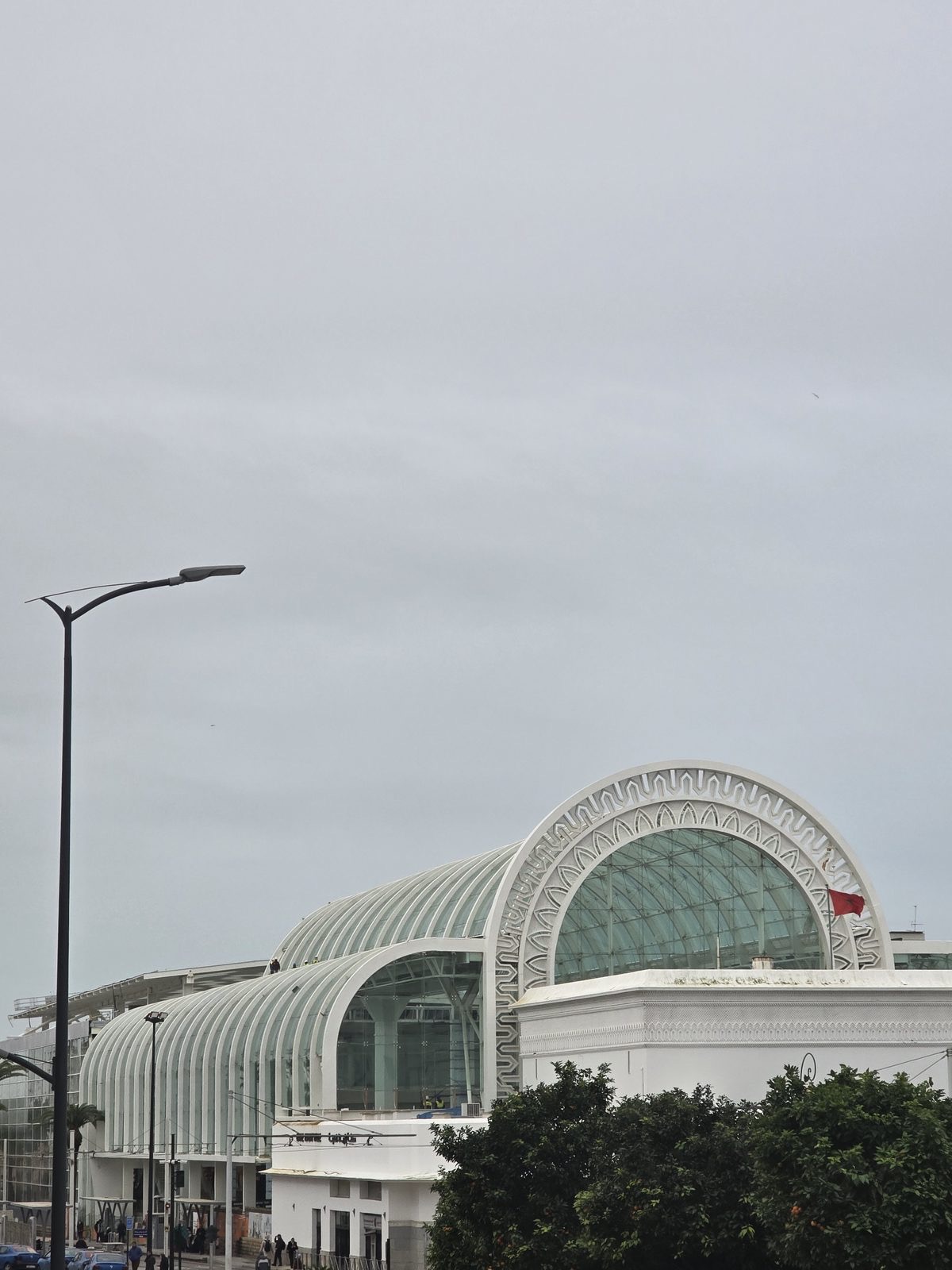
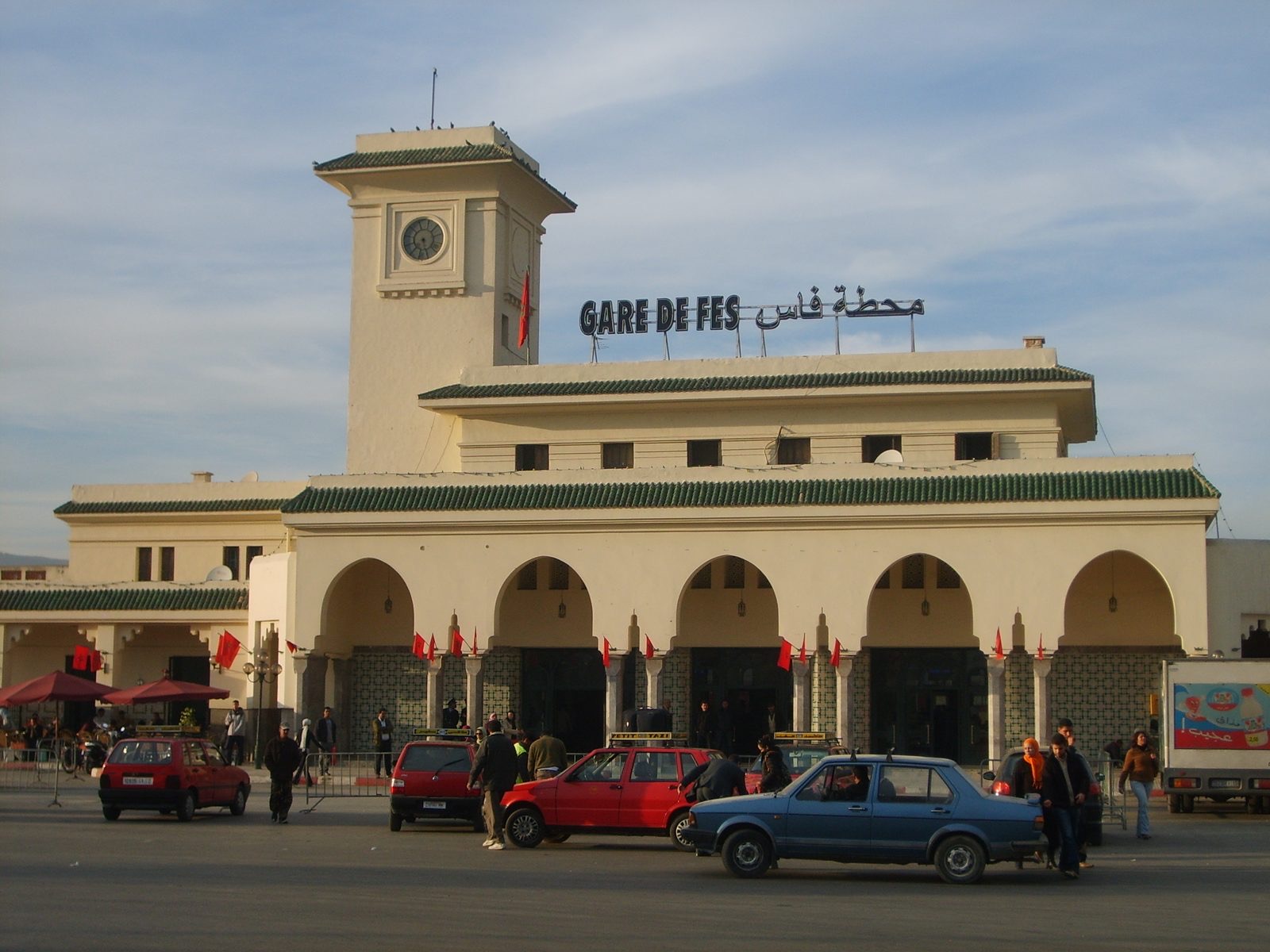
Casablanca and Rabat both have more than one important railway station. Casa Voyageurs is not Casa Port. Rabat Agdal is not Rabat Ville. Read the station printed on the ticket before leaving your hotel.
You do not need airport-style check-in for a normal train journey, but arriving with one or two minutes to spare is unnecessary risk. Give yourself enough time to enter the station, find the platform and board without running.
If your ticket is issued in a passenger's name, carry the same passport or identification used for the booking. Ticket inspectors may ask to match the passenger details.
A failed card payment does not necessarily mean the train is sold out.
International travelers sometimes run into payment failures when trying to book Moroccan trains online. One card may fail while another works normally.
Do not keep submitting the same failed payment repeatedly without checking whether your bank has placed a temporary authorization on the card.
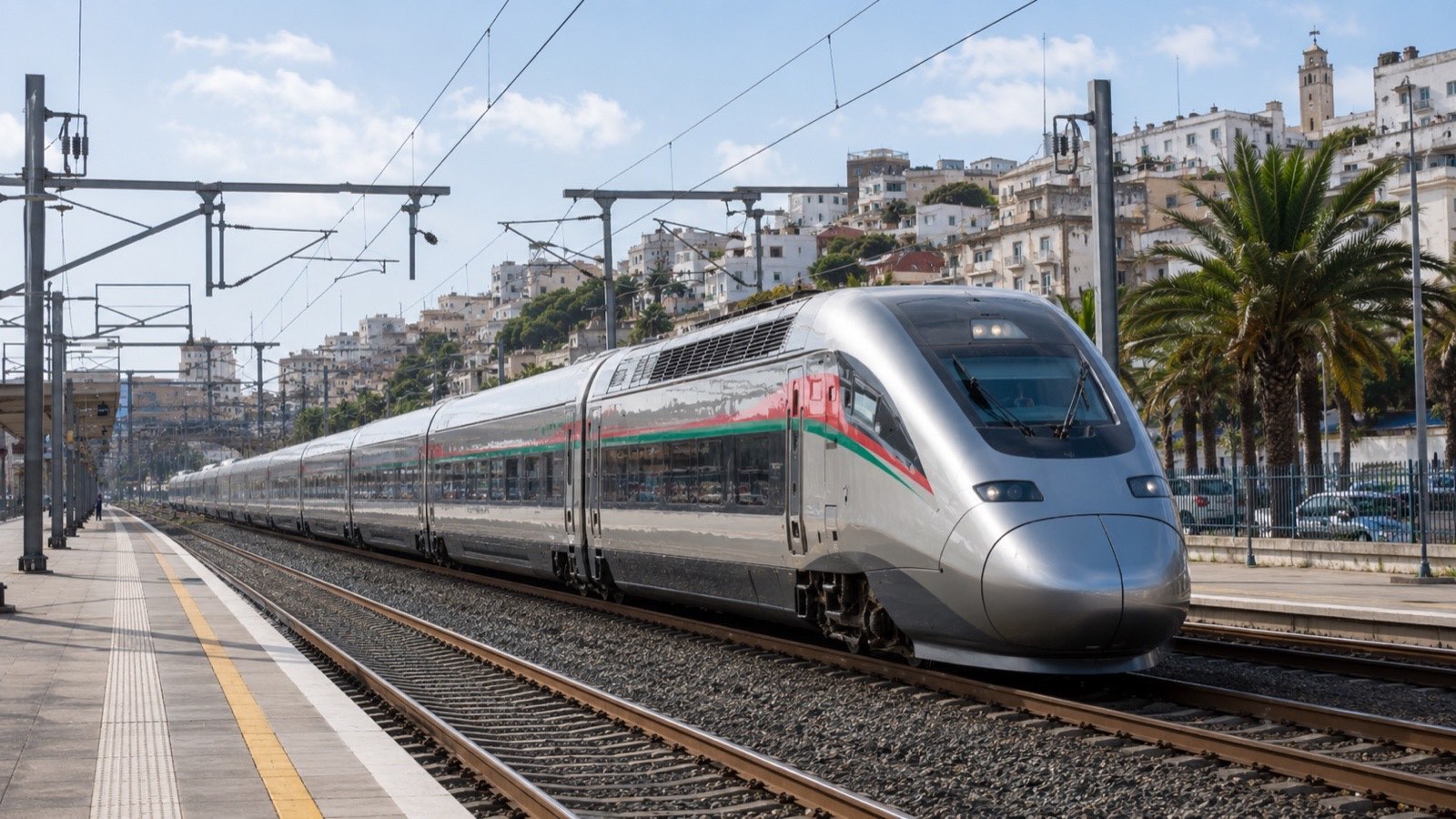
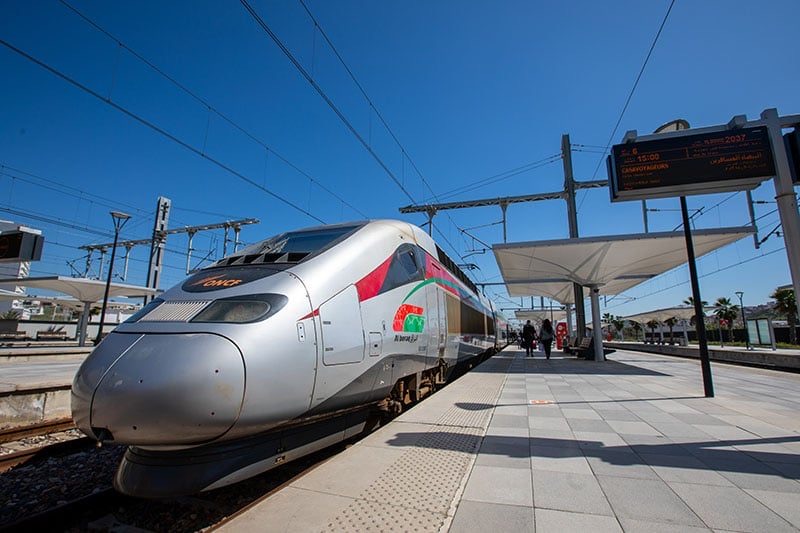
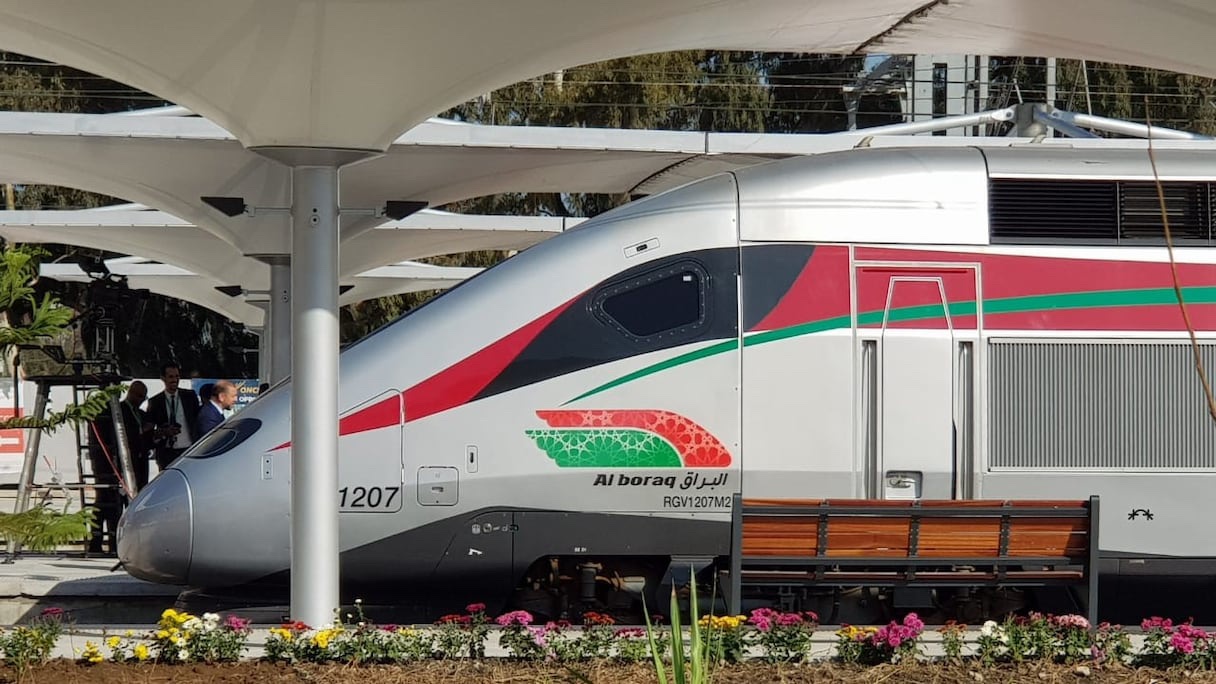
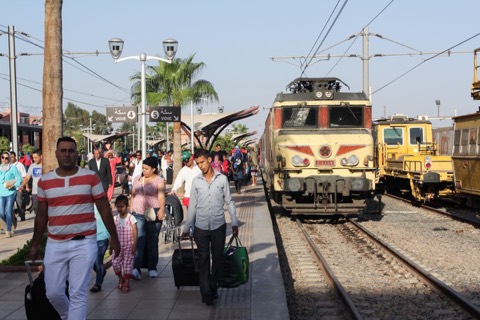
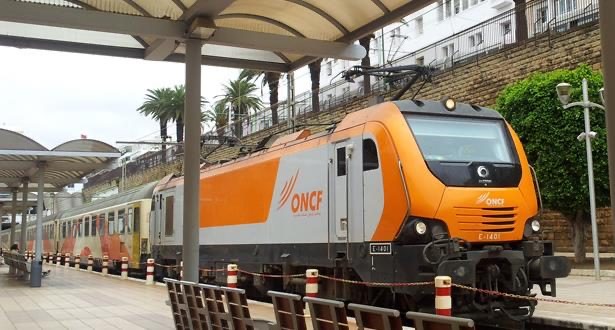
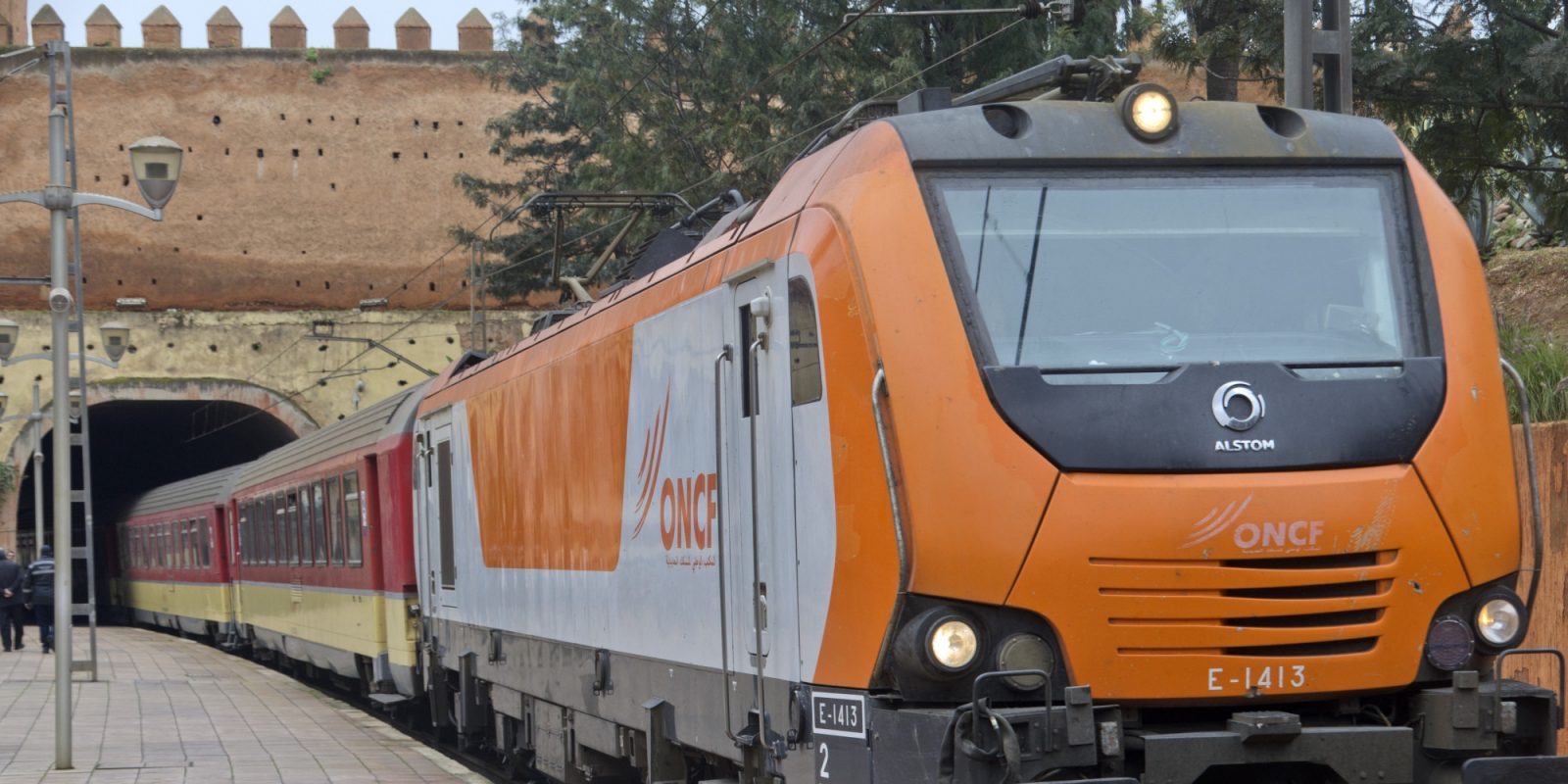
ONCF runs Morocco's passenger railway network. For visitors, there are three train types worth understanding: Al Boraq, Al Atlas and TNR.
You do not need to memorize every train number. First work out which family your route belongs to, then check the actual departure for your date.
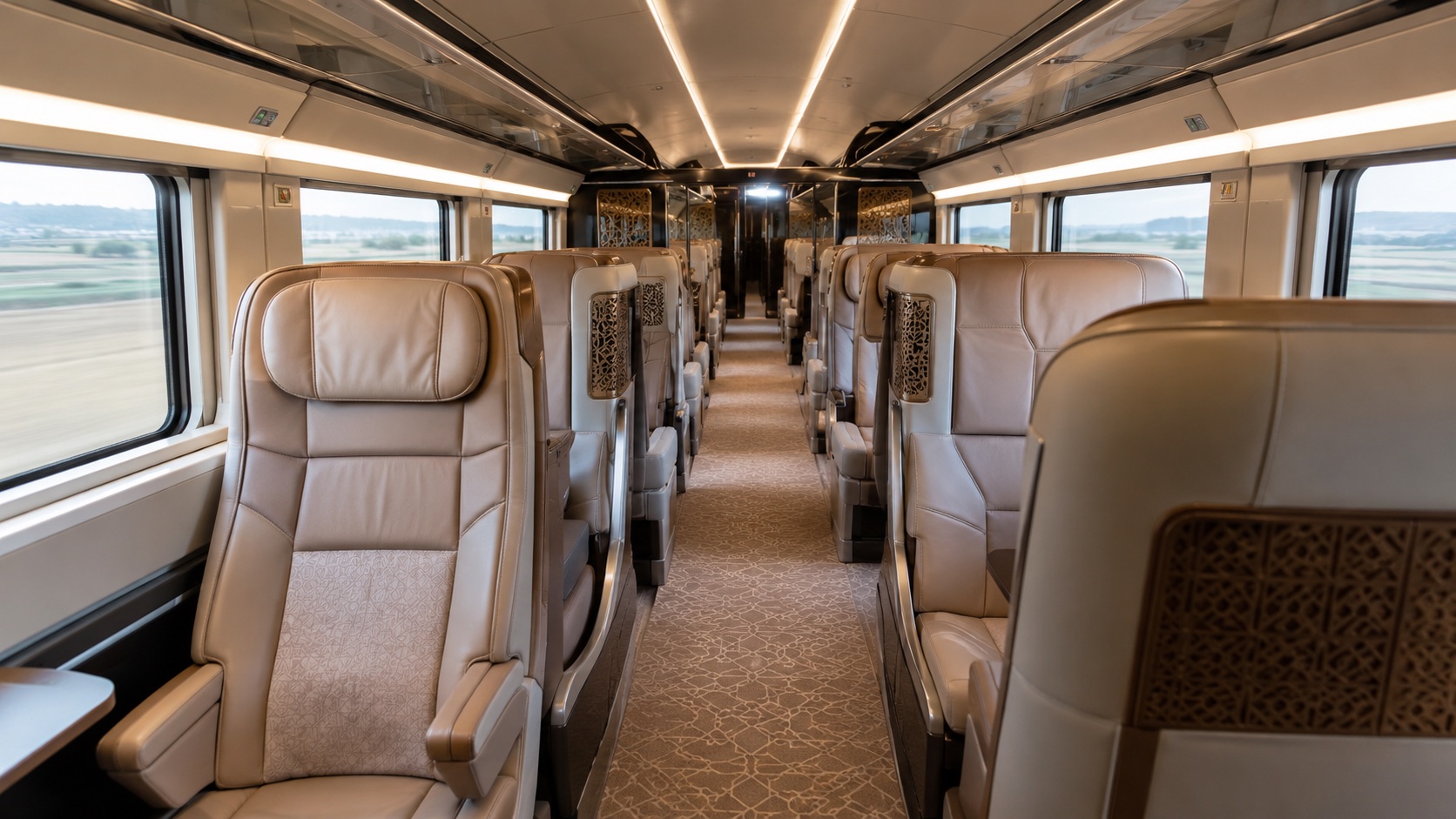
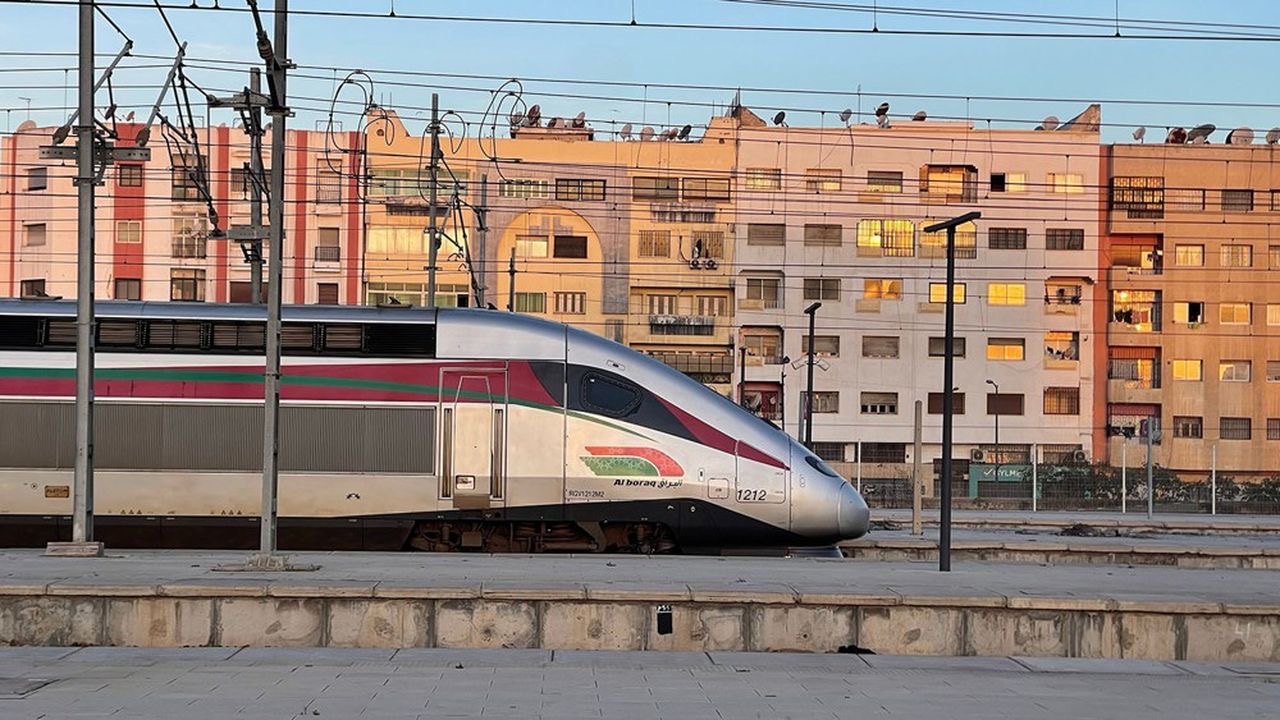
Take Al Boraq if you're travelling between Tangier, Kenitra, Rabat and Casablanca.
This is Morocco's high-speed railway and the easiest train product to understand. It serves Tanger Ville, Kenitra, Rabat Agdal and Casa Voyageurs on the main high-speed corridor.
Casablanca–Tangier takes roughly around two hours on the faster services, while Tangier–Rabat is shorter again.
Second class is already comfortable. First class is worth paying for mainly if you want more space or the first-class station experience rather than because second class is poor.
Al Atlas is the train you will use for many of Morocco's longer conventional journeys.
Marrakech, Fès, Meknès and the eastern network are where Al Atlas becomes important.
The trains are slower than Al Boraq, but that does not make them a bad choice. On routes such as Casablanca–Marrakech or Marrakech–Fès, rail still gives you a city-center departure and arrival without airport formalities.
On a long Al Atlas trip, class matters more. First class can be worth the difference simply because you will be sitting there for several hours.
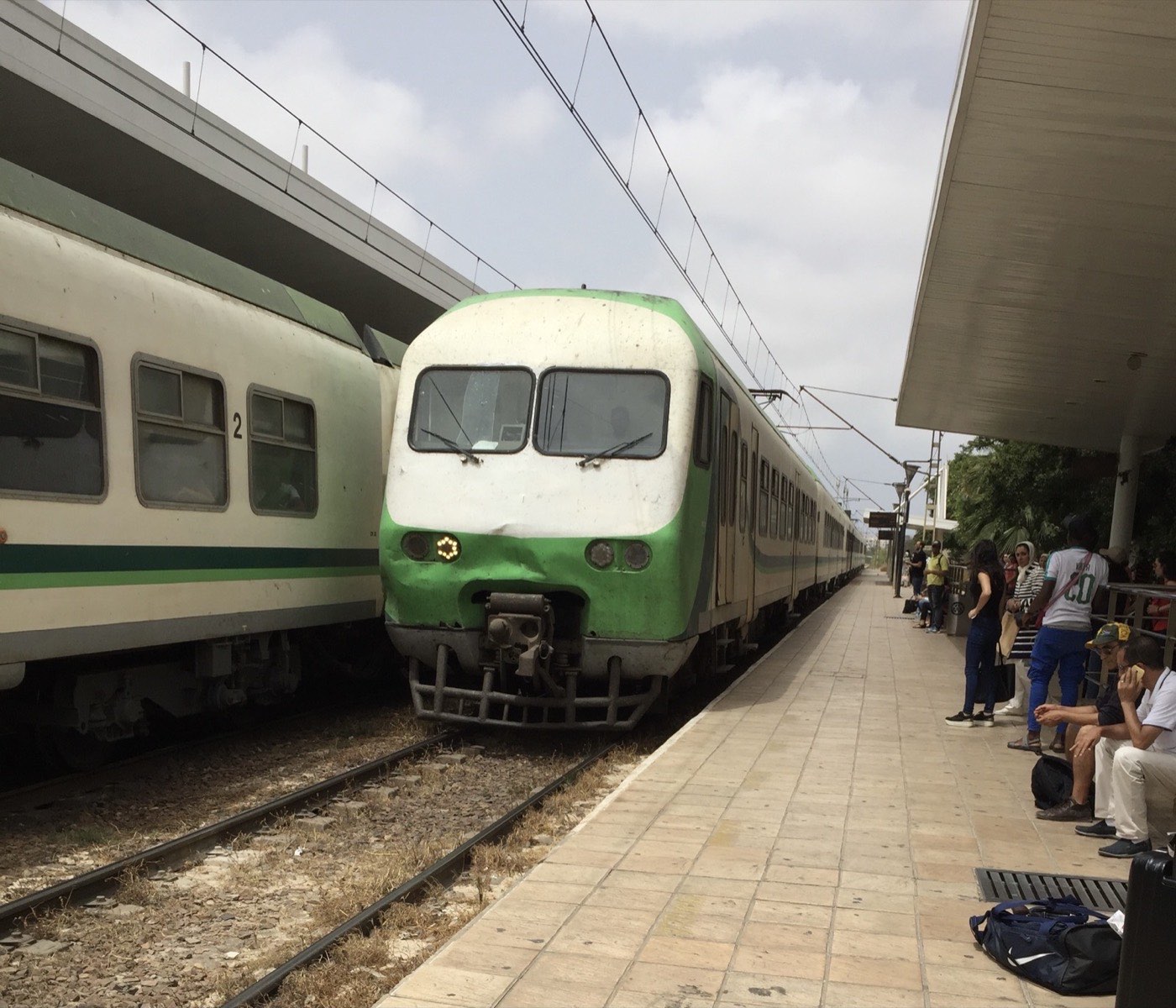
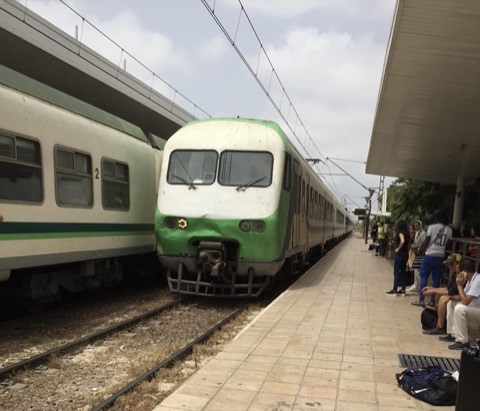
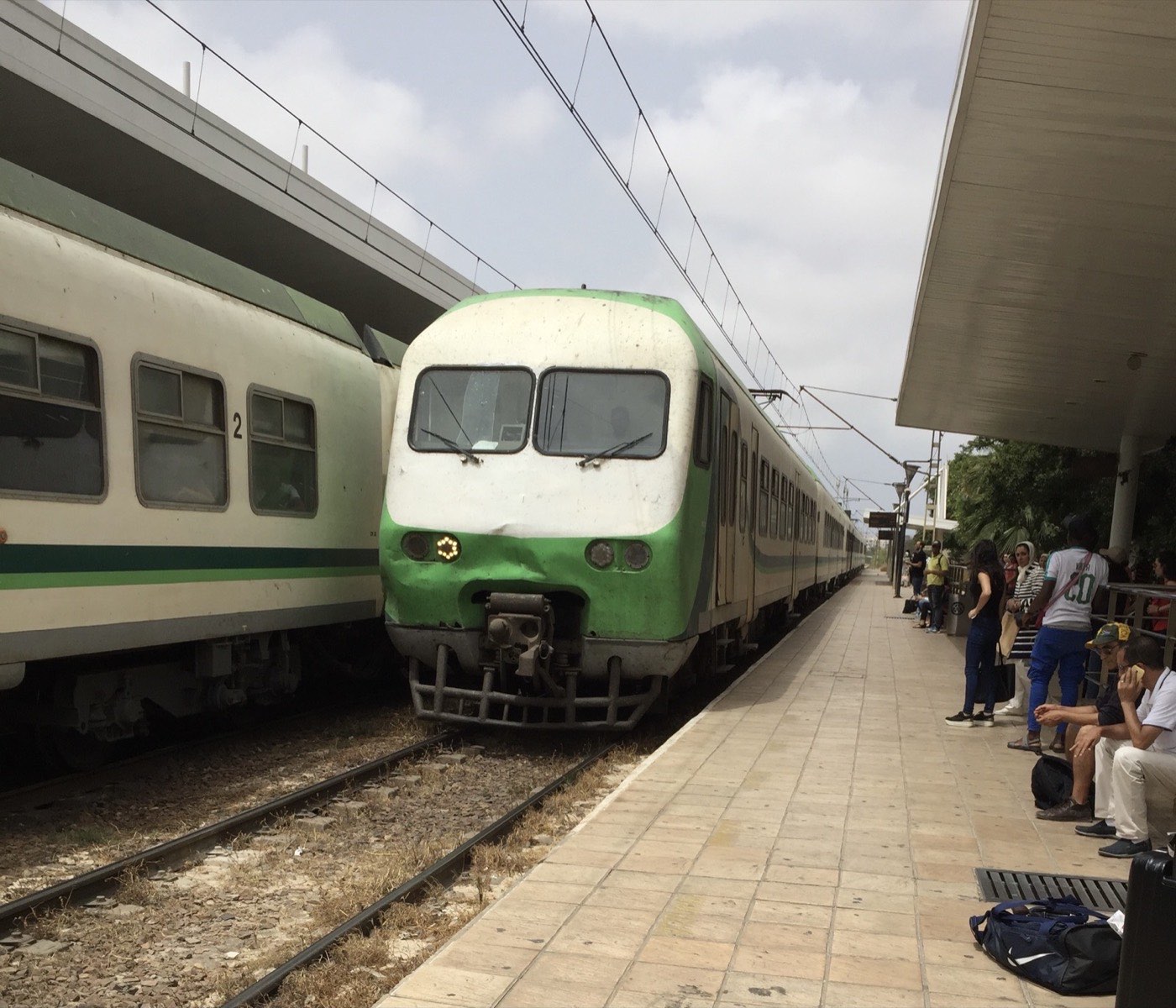
TNR is for shorter regional journeys.
Think Casablanca–Rabat–Kenitra, airport connections and similar commuter-style corridors.
If you're only going from Casablanca to Rabat, there is usually no reason to obsess over finding the most premium train. Choose a departure that fits your day.
| Train | Best for | Speed | Class advice | Typical use |
|---|---|---|---|---|
 Al Boraq Al Boraq | Tangier–Kenitra–Rabat–Casablanca | High-speed | 2nd is already good; 1st for extra comfort | Fast north–south intercity |
 Al Atlas Al Atlas | Marrakech, Fès, Meknès, eastern Morocco | Conventional long-distance | Compare 1st seriously on long journeys | Intercity |
 TNR TNR | Casablanca–Rabat–Kenitra and regional corridors | Regional | Usually choose by timetable | Shorter trips |
First class is not automatically the “correct” choice on Moroccan trains.
For a short trip such as Casablanca–Rabat, second class usually makes more sense. You are not onboard long enough for the extra space to change the journey very much.
For Casablanca–Marrakech, Casablanca–Fès or Marrakech–Fès, first class becomes easier to justify. The difference matters more after several hours than it does after 45 or 60 minutes.
On Al Boraq, second class is already a strong product. First class is an upgrade, not something you need in order to travel comfortably.
Choose first class for longer trips, extra space and a quieter ride where the train offers it. It is the option I would compare first on Marrakech–Fès or another long conventional journey.
Choose second class for value. It works very well on short and medium routes, and Al Boraq second class is already perfectly suitable for most travelers.
The answer depends much more on journey length than on status.
On Casablanca–Rabat, I would normally take second class. The trip is short and the extra room does not change much.
On Casablanca–Tangier, Al Boraq second class is already comfortable. First class is mainly about extra space and a quieter experience.
On Casablanca–Marrakech, the choice becomes closer. If the first-class premium is modest, it can be worth paying for because you are onboard for several hours.
On Casablanca–Fès or Marrakech–Fès, I would compare first class seriously. A small difference in comfort becomes much more noticeable halfway through a long journey.
The useful rule is simple: the longer the trip, the more first class matters.
| Journey | What I would book |
|---|---|
| Casablanca → Rabat | 2nd class |
| Rabat → Kenitra | 2nd class |
| Casablanca → Tangier | Al Boraq 2nd; 1st for extra comfort |
| Casablanca → Marrakech | Compare both |
| Casablanca → Fès | 1st worth considering |
| Marrakech → Fès | 1st if the price difference is reasonable |
Reservation rules depend on the train product.
Al Boraq uses reserved seating.
Long-distance intercity products may also assign seats depending on the train and class.
Regional services can work differently.
Do not assume every Moroccan train works exactly like Al Boraq. Check the ticket or booking result for the actual service.
Seat-selection options depend on the booking channel and train. If a specific seat matters to you, check whether the booking screen actually offers seat selection rather than assuming it will.
Moroccan trains are not airlines. You normally carry your luggage onboard with you rather than checking it at a counter.
A normal suitcase is not unusual, but the amount of useful storage depends on the train and carriage.
The railway does not take responsibility for watching your luggage while you sleep, use the toilet or leave your seat.
Yes, normal travel luggage is common. The practical question is where it will fit, not whether it looks like airline cabin baggage.
Small pets can be possible under ONCF's passenger rules, but this is not a “bring any animal onboard” policy.
Small cats or dogs may need to travel in an appropriate carrier and an animal fare may apply.
If you are travelling with a pet, check the current ONCF conditions before booking because carrier, size and fare rules can change.
Do not assume your ticket automatically transfers to the next departure.
What happens depends on the ticket conditions and fare you bought.
This is one reason I would not book an extremely tight train after an international flight.
Not automatically. Use the train shown on the ticket unless the fare conditions or ONCF staff confirm that a change is allowed.
Use the route notes to decide which train, station and class make sense for the journey.
A schedule example tells you whether a route has one bus a day or a choice every few hours. That is useful.
Copying an entire timetable into an evergreen travel page is not. Operators change schedules, add holiday services and adjust fares.
Use the examples here to plan the shape of your day. Use the live booking result to choose the actual departure.
| Route | Best transport | Typical journey | Typical fare example | My choice |
|---|---|---|---|---|
| Casablanca → Tangier | Al Boraq | ~2h–2h20 | dynamic | Train |
| Casablanca → Marrakech | Train | ~2h40 | ~120 MAD typical orientation | Train |
| Marrakech → Fès | Train | ~6½–7h+ | variable | Train, consider 1st |
| Tangier → Fès | Train | ~3–5½h depending connection/direct | variable | Compare final arrival |
| Marrakech → Agadir | Bus | ~3–3½h | from 135 MAD CTM example | Bus |
| Marrakech → Essaouira | Bus | ~3h | ~80–130 MAD orientation | Bus |
| Essaouira → Agadir | Bus / road | variable | check live operator result | Compare direct road service |
| Tangier → Chefchaouen | Bus | ~2h15–2h40 | from 85 MAD CTM example | Bus |
| Fès → Chefchaouen | Bus | ~4h10–4h50 | from 145 MAD CTM example | Bus |
| Tangier → Tetouan | Bus / road | short road journey | check live operator result | Road transport |
| Marrakech → Ouarzazate | Bus | ~4h30–4h45 | from 115 MAD CTM example | Bus |
| Casablanca → Agadir | Bus / flight | ~5½h+ direct bus | ~285–345 MAD CTM examples | Compare bus vs flight |
Fares above are examples from current searches, not fixed tariffs.
A direct train is usually easier. It is not always faster.
Routes such as Tangier–Fès can present a real choice: stay on a conventional direct train, or use Al Boraq to Kenitra and connect east.
Compare:
If the connection saves only 10–15 minutes, I would usually take the direct train.
If it saves an hour, the change is probably worth it.
Morocco still has a useful overnight option on some of its longest rail journeys.
The route most visitors are likely to care about is Marrakech–Tangier.
Instead of spending a large part of the day travelling north, the night train lets you cover the distance while you sleep.
The night service is part of the conventional network, not Al Boraq.
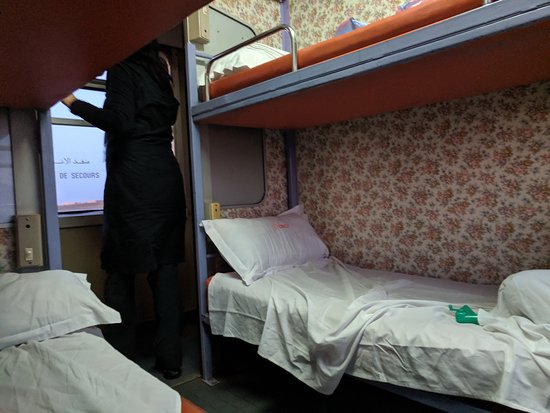
If your priority is saving daytime, the overnight train is worth checking.
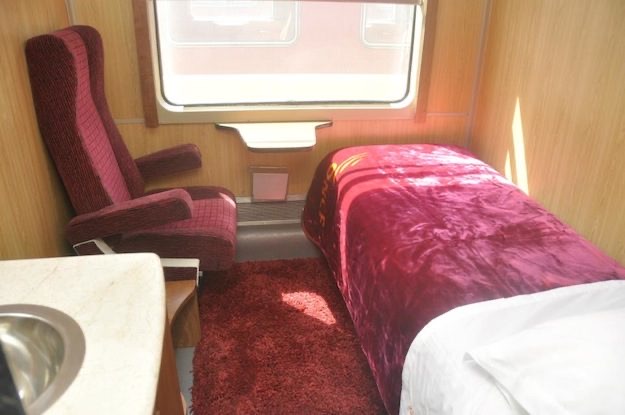
The service includes shared couchette accommodation on selected departures. A couchette gives you a berth rather than making you sit upright all night.
Do not treat it like a hotel room. The value is that you wake up much farther north without losing most of a sightseeing day.
Yes. Check the current timetable for the date because departure times can change.
Yes, on the night-train product where offered. A couchette is a shared sleeping compartment with proper berths.
Yes if saving daytime matters more than privacy. If you know you sleep badly in a shared compartment, take the daytime train instead.
The bus becomes important the moment you leave the railway map.
For Agadir, Essaouira, Chefchaouen, Ouarzazate, Merzouga and many smaller cities, road transport is often the only practical public option.
The two names most visitors encounter are CTM and Supratours.
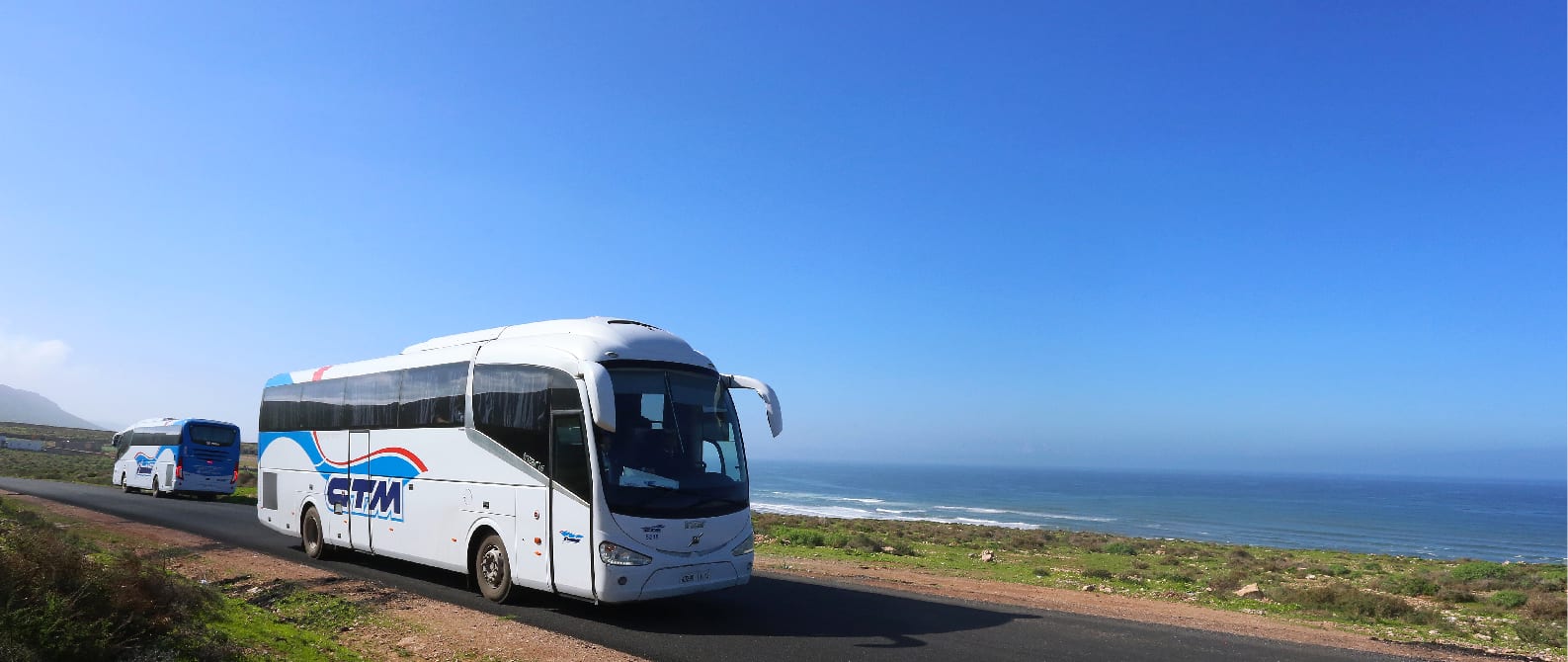
CTM is the bus company I would check first for a direct city-to-city route.
It covers major cities and many destinations with no train service.
It is particularly useful for places such as Agadir and Chefchaouen, or when the railway would force an unnecessary detour.
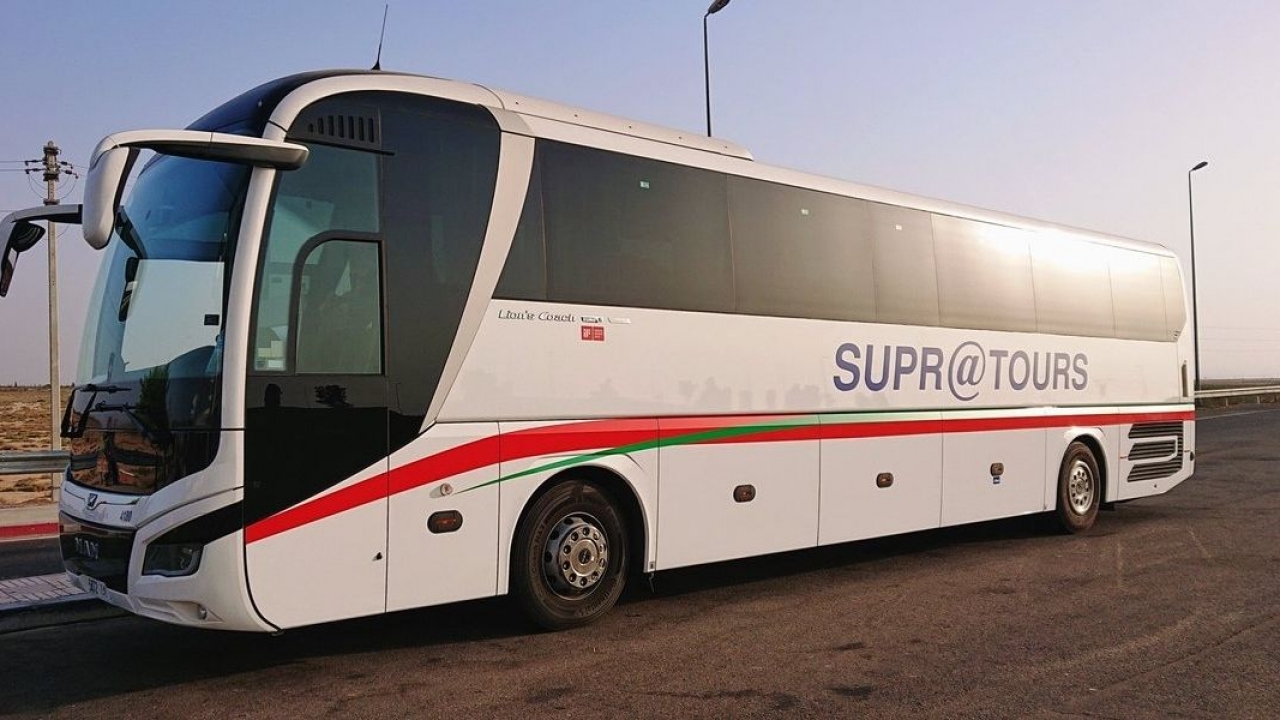
Supratours is especially useful when your journey begins or ends on the ONCF network.
The classic examples are Marrakech–Agadir and Marrakech–Essaouira, where the bus continues beyond the end of the railway.
Marrakech's Supratours terminal is beside the railway station, which makes a train-to-bus connection much simpler than it sounds.
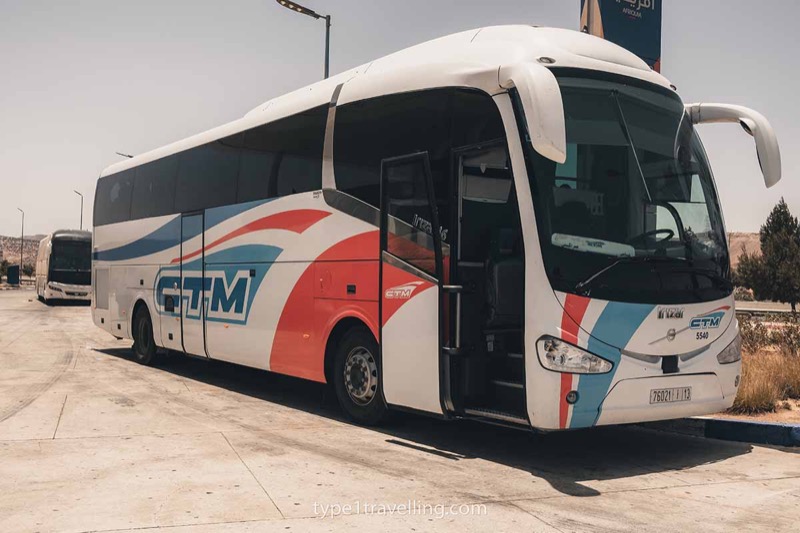
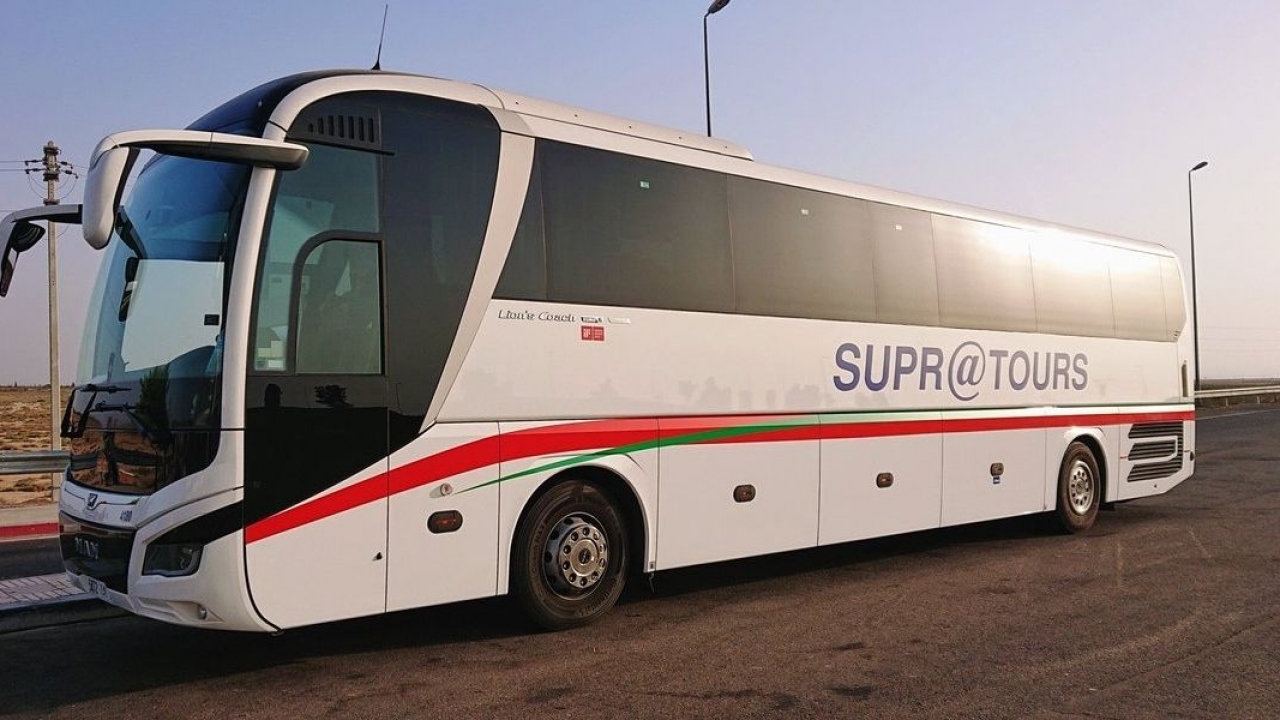

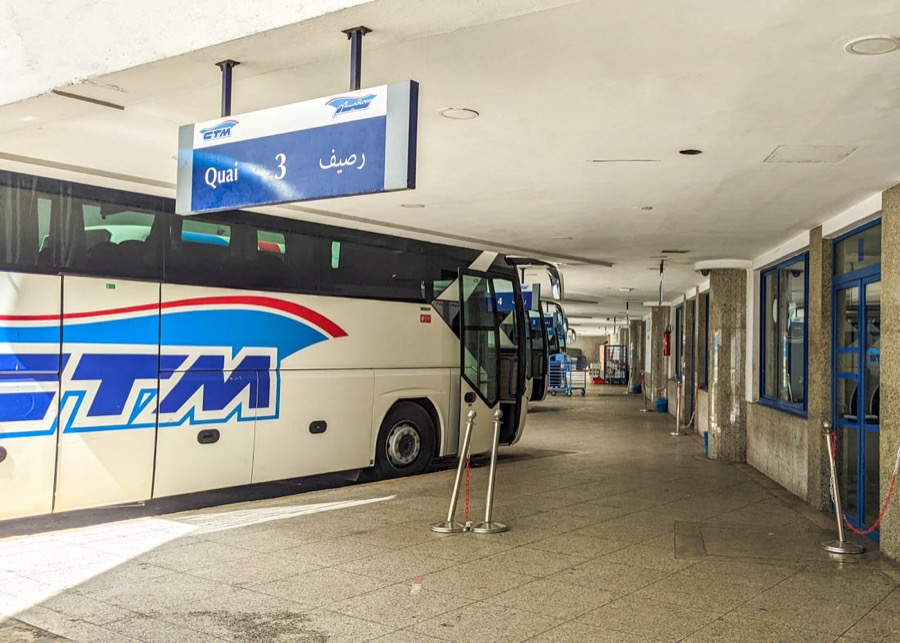
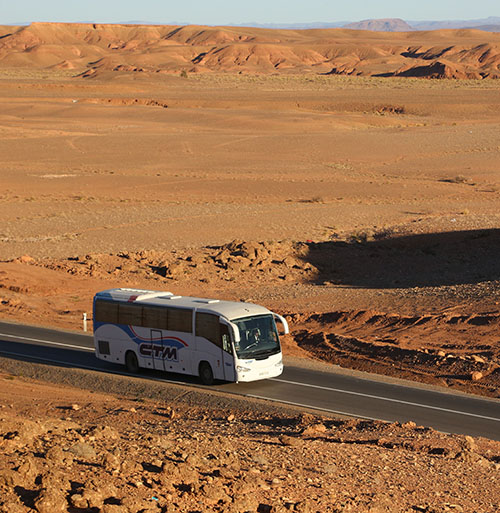
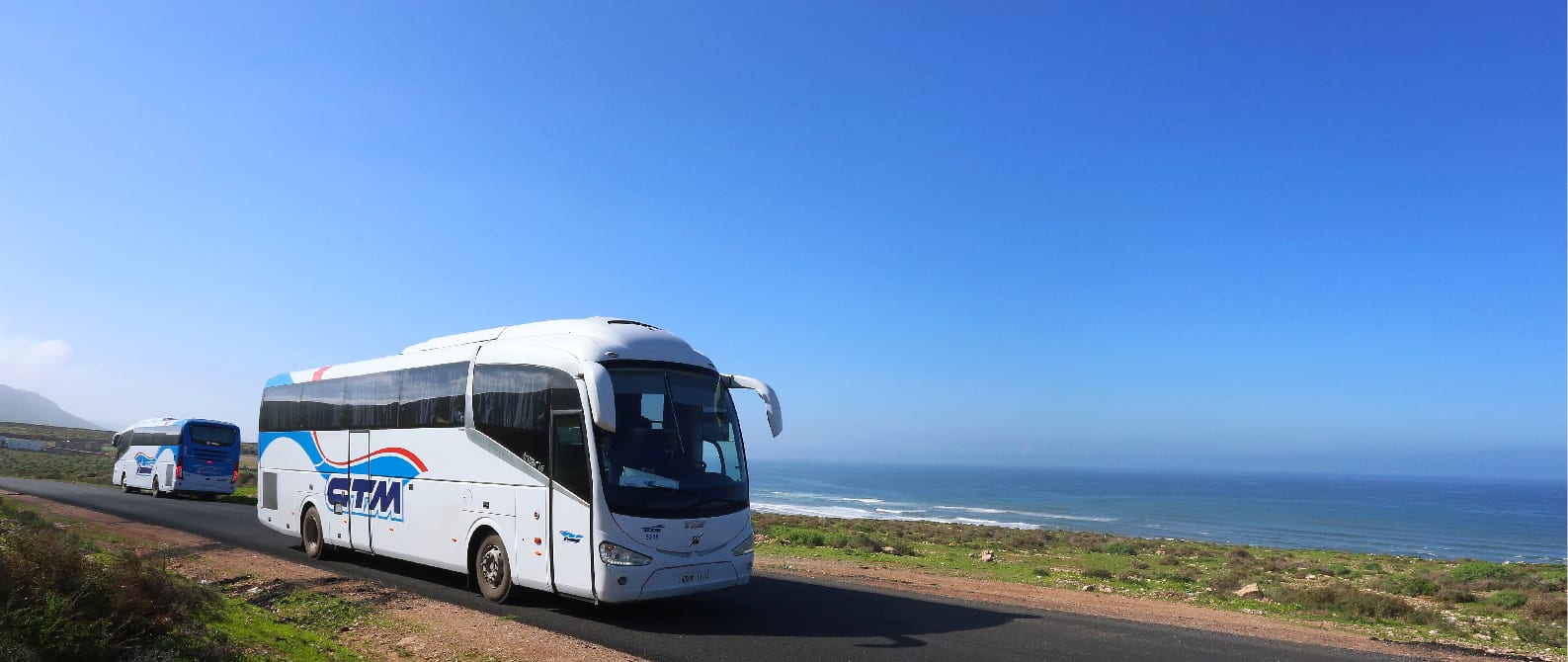
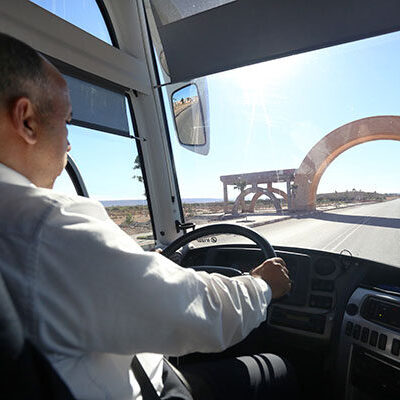
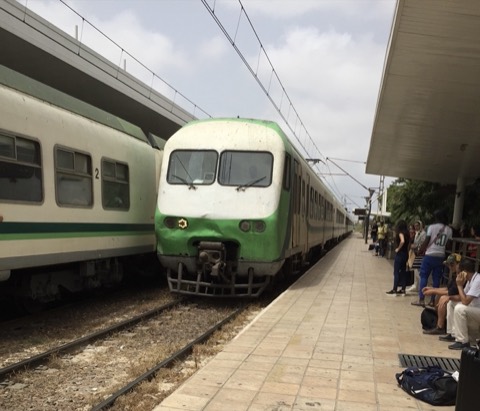
There is no universal winner.
CTM is the first company I would check when I simply need a direct intercity bus.
Supratours becomes especially useful when the trip connects naturally with the railway network.
Compare the departure point as well as the timetable. Saving 20 minutes on the bus means little if the terminal is much harder to reach.
Morocco's ferry network is useful for two very different trips: crossing between northern Morocco and southern Spain, and travelling with a car between Europe and Morocco.
The first thing to check is the port.
Tangier Med and Tangier Ville are not the same place.
Tangier Ville is in the city. Tangier Med is a large international port outside Tangier, so the transfer to the port has to be included in your travel time.
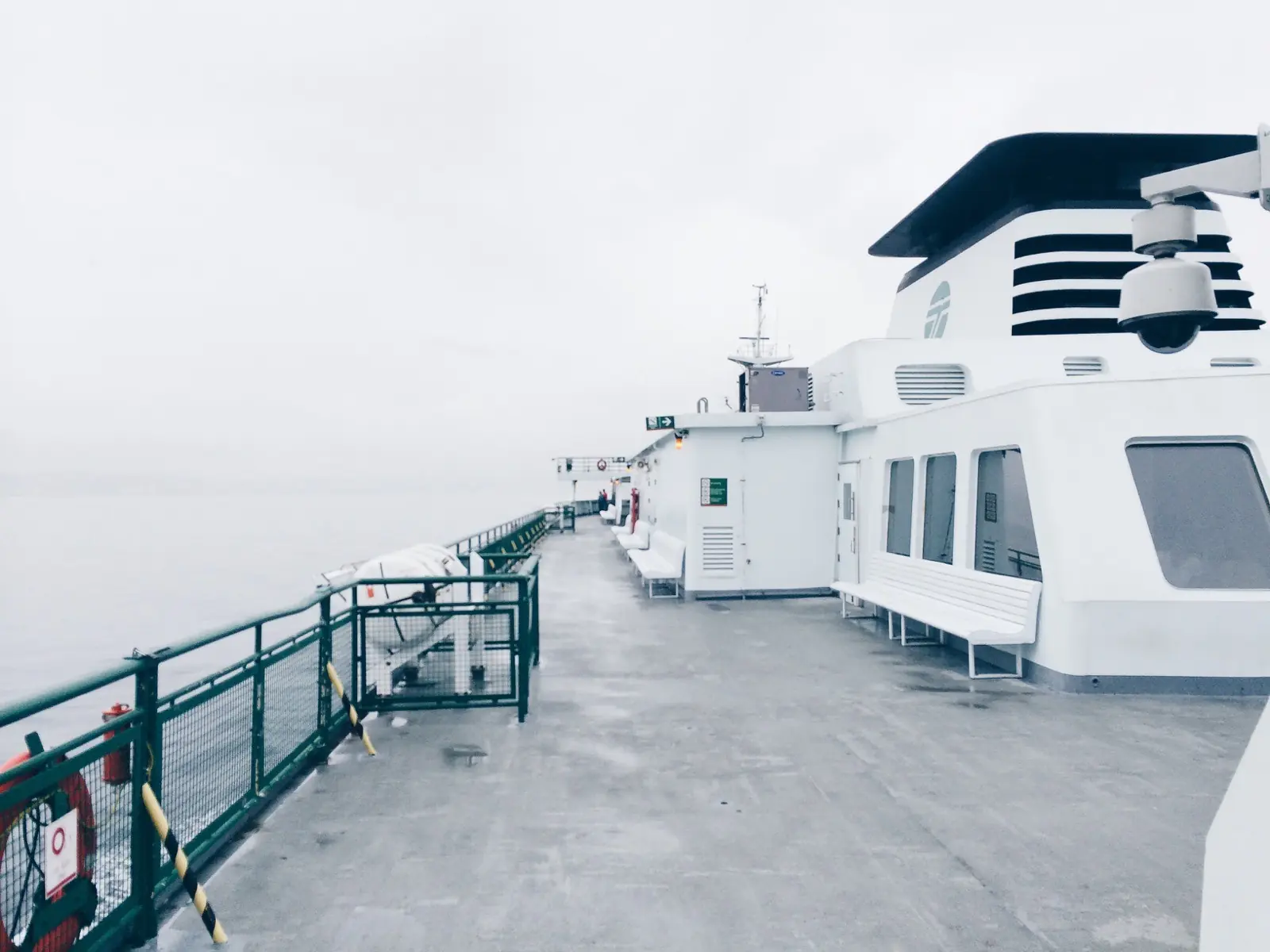
This is one of the main Morocco–Spain ferry routes.
The crossing itself is roughly around 1½ hours on fast/current services, but the complete journey takes longer once check-in, passport control, customs and boarding are included.
Current operators run several departures through the day.
Do not plan this like a train where you arrive five minutes before departure.
If you are travelling with a car, leave even more time.
Use this route when you want the city-center ferry option and the current sailing is available for your date.
Tangier Ville is much easier to reach from central Tangier than Tangier Med.
Baleària currently operates the Tangier Ville–Tarifa route and advertises a crossing of roughly one hour.
Schedules and operators can change, so always check the live sailing before going to the port.
Do not confuse an old DFDS/Ferry operator timetable with the current route situation.
This is useful if your Morocco itinerary is in the northeast rather than Tangier.
Nador has ferry links toward southern Spain, including Almería.
If you are travelling with a vehicle from eastern Morocco, this can be more practical than driving all the way north to Tangier.
Nador also has ferry connections toward Motril.
Compare this with Almería based on:
Do not choose a ferry based only on the cheapest headline fare.
Selected services also connect Al Hoceima with Motril.
This route is much more relevant to travelers already in northern/eastern Morocco than to someone starting in Casablanca or Marrakech.
| Route | Best for | Port warning | My advice |
|---|---|---|---|
| Tangier Med → Algeciras | Most flexible Tangier/Spain crossing | Tangier Med is outside the city | Leave plenty of check-in time |
| Tangier Ville → Tarifa | Central Tangier access | Different port from Tangier Med | Check current operator/sailing |
| Nador → Almería | Eastern Morocco to Spain | Nador/Beni Ensar port area | Good for vehicles/eastern itinerary |
| Nador → Motril | Eastern Morocco to Granada coast | Check sailing days | Compare against Almería |
| Al Hoceima → Motril | Northern/eastern Morocco | More limited schedule | Useful only if geography fits |
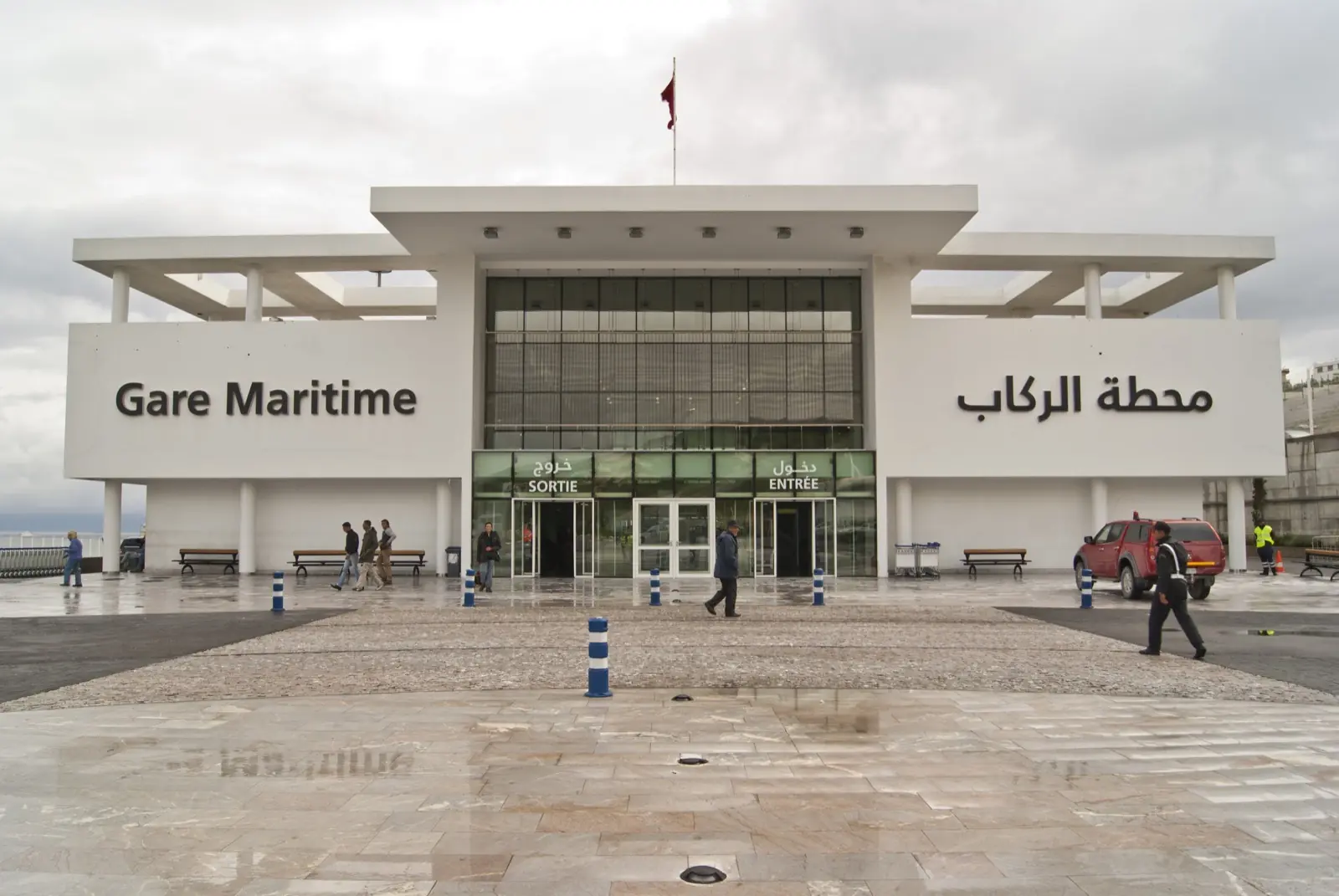
Choose the port based on the ferry, not based on the word “Tangier.”
Tangier Ville is close to central Tangier.
Tangier Med is outside the city and requires a road transfer.
If your train arrives at Tanger Ville railway station, do not assume you can walk to a Tangier Med ferry.
Check the ferry ticket first, then plan the transfer.
A ferry becomes especially useful when the vehicle is part of the trip.
Before booking, check:
Do not arrive at the port using passenger-only timing if you are taking a car.
Yes on services that accept foot passengers.
But do not assume every sailing and terminal works the same way.
Check the operator and exact departure before travelling to the port.
For Tangier, the difference between Tangier Ville and Tangier Med becomes even more important when you do not have a car.
Yes. Major routes include Tangier Med–Algeciras, Tangier Ville–Tarifa, and services from Nador toward southern Spain.
The crossing itself is often around 1½ hours, but port check-in and border procedures make the complete journey longer.
No.
Yes on vehicle-carrying sailings.
Yes on ferries that accept foot passengers.
There is no universal answer. Compare the actual port, sailing time and where you need to be in Spain.
Yes. Current operators and booking platforms sell many Morocco–Spain sailings online. Compare ferry tickets between Morocco and Spain .
Private transfers are useful when a scheduled train or bus does not reach your destination cleanly, or when you want to travel from an airport or hotel directly to your accommodation.
Private transfers usually cost more than scheduled rail or bus travel. Prices depend on the vehicle, route, date and passenger count, so use a live quote rather than a fixed table.
A private car gives you door-to-door travel between Marrakech and Casablanca, usually taking around 2½–3½ hours depending on pickup and traffic. There is no reason to choose it over the train for price alone: the direct ONCF service is usually the cheaper scheduled option. A private transfer makes more sense for a family with luggage, several passengers, a hotel outside the station area or a very early departure. Confirm the vehicle, passenger count, luggage space, pickup address and live quote before booking.
Compare public alternativesA private transfer takes you from a Marrakech hotel or airport to an Agadir address without changing terminals. Allow roughly 2½–3½ hours by road, depending on traffic and the final drop-off. There is no passenger train to Agadir, so CTM and Supratours are the lower-cost scheduled alternatives. A private car can be useful for families, groups, surf luggage, early departures or hotels away from the bus terminal. Compare the live quote with the public bus total because vehicle size and passenger count change the price.
Compare public alternativesA private car offers door-to-door travel from a Casablanca address to a Fès hotel, normally taking roughly 3–4 hours by road. The direct ONCF train is usually the better-value scheduled choice, especially for solo travellers. A private transfer can still be practical for families, heavy luggage, multiple pickups or accommodation outside the station area. Confirm whether the quoted service includes airport pickup, tolls, waiting time and the exact Fès drop-off. Use a live quote rather than assuming a fixed route price.
Compare public alternativesThe private-car option runs directly from a Marrakech hotel to an Essaouira address and usually takes about 2½–3½ hours. Essaouira has no railway, while Supratours and CTM provide scheduled bus alternatives. A transfer is most useful for a group, bulky luggage, a villa outside the centre or a departure that does not fit the bus timetable. It costs more than a scheduled coach, so compare the live vehicle quote, passenger count, luggage space and final drop-off before choosing it.
Compare public alternativesA private transfer can take you from a Tangier hotel, airport or station directly to your Chefchaouen accommodation in roughly 2–3 hours by road. Chefchaouen has no railway, and CTM is the normal scheduled alternative. A car is useful for families, luggage, late arrivals or a hillside guesthouse that is awkward to reach from the bus terminal. Compare the live quote with the CTM fare and confirm the exact pickup, vehicle, passenger count and drop-off before paying.
Compare public alternativesA private car gives you direct hotel-to-hotel travel between Casablanca and Rabat, usually taking around 1–2 hours depending on traffic. The frequent train is normally the simpler and cheaper scheduled option. A private transfer can still help with several passengers, airport or hotel pickups, heavy luggage and a door-to-door arrival outside the station area. Confirm the pickup address, traffic margin, passenger count, luggage capacity and live quote. Do not treat a private car as a fixed-price substitute for the railway.
Compare public alternativesStart with the station printed on your ticket, then check the map before ordering the taxi.
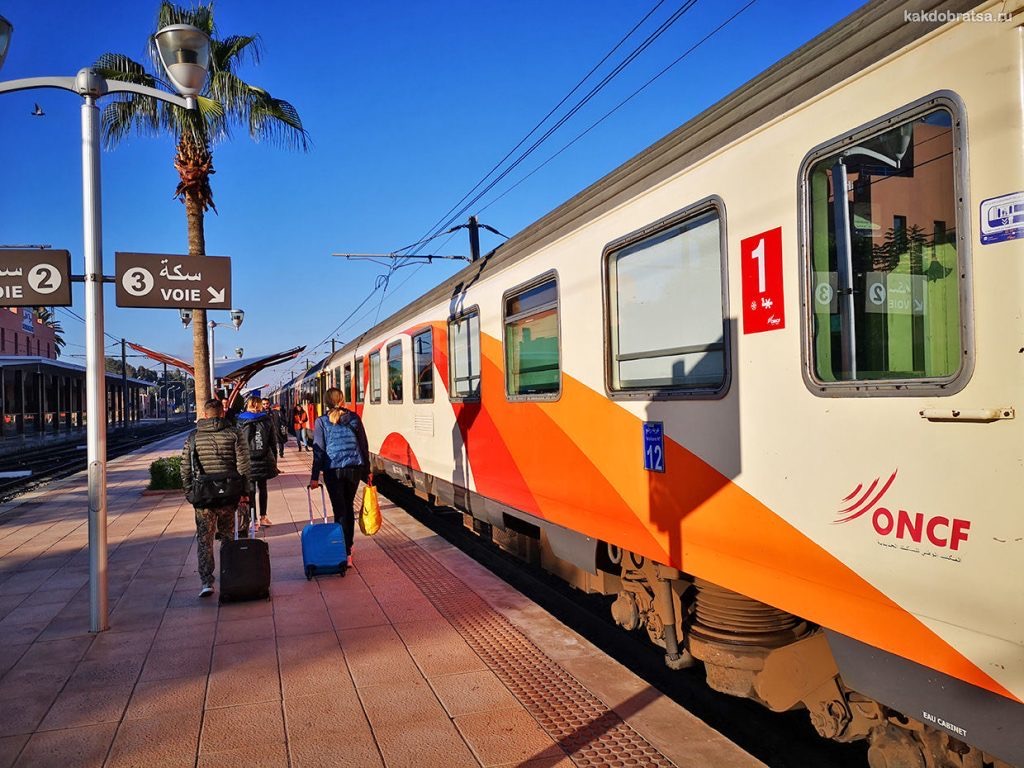
This is Casablanca's main long-distance station. Use it for Marrakech, Fès, Tangier and most major intercity journeys. It is also the station that matters when changing between Al Atlas and Al Boraq.
Open in Google Maps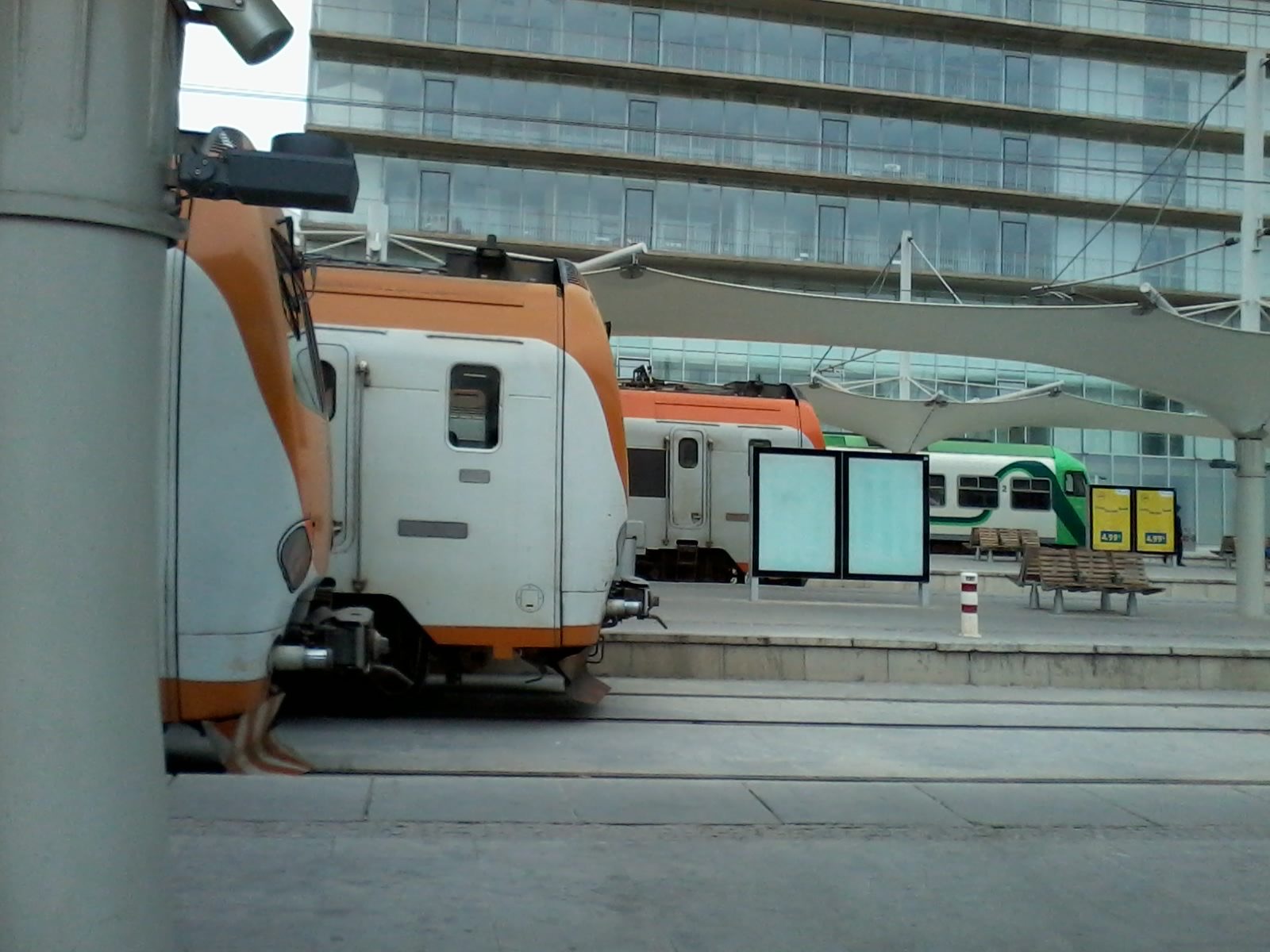
Use Casa Port mainly for central Casablanca and local/regional trips. Do not automatically choose it for a long-distance journey just because it is closer to the city center.
Open in Google Maps
Casablanca Airport has its own railway station. Use it for the airport–Casablanca connection, then change where required for Marrakech, Fès, Tangier or other cities.
Open in Google Maps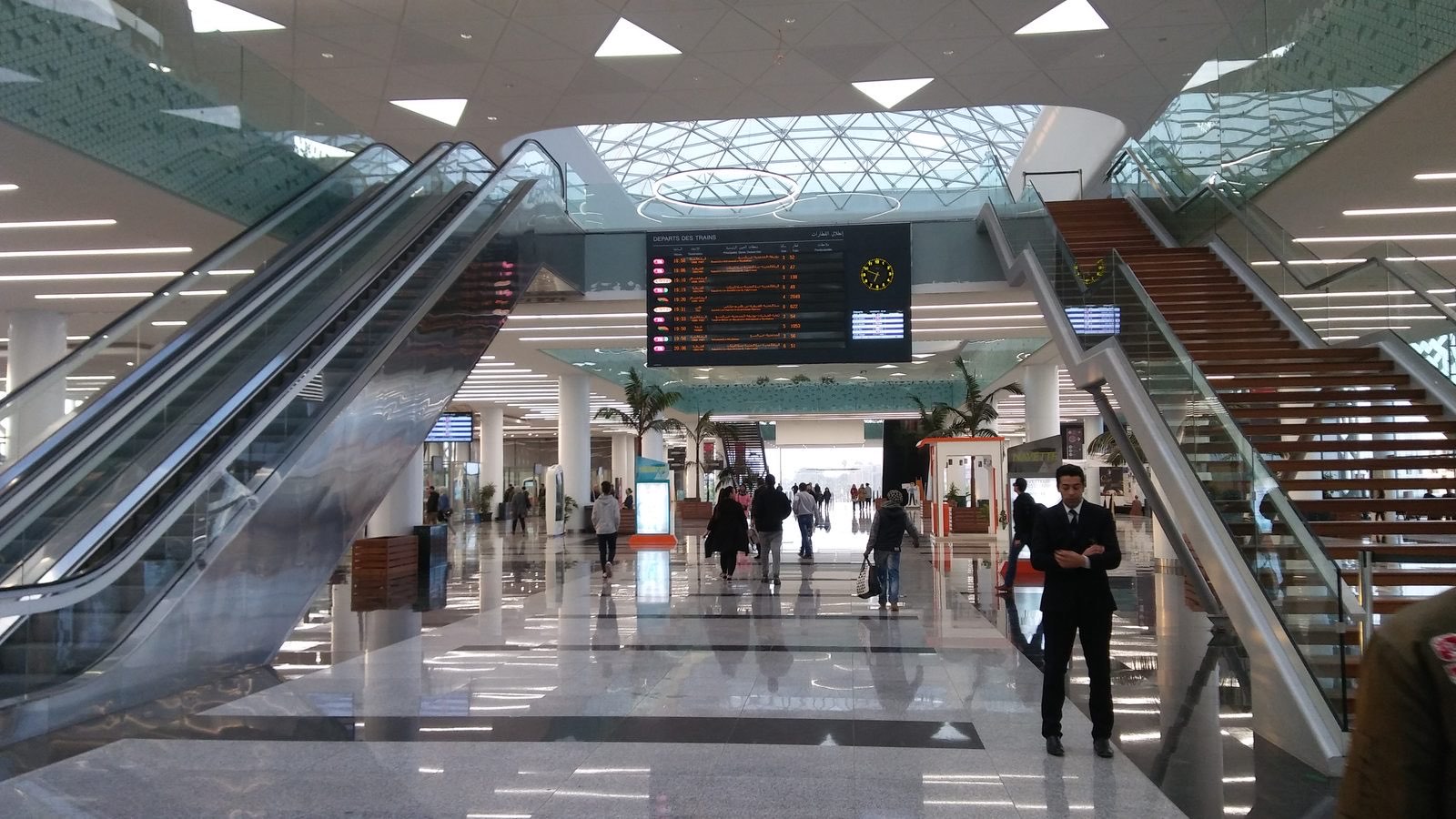
Use Rabat Agdal for Al Boraq. This is the station to remember for high-speed journeys between Rabat, Casablanca and Tangier.
Open in Google Maps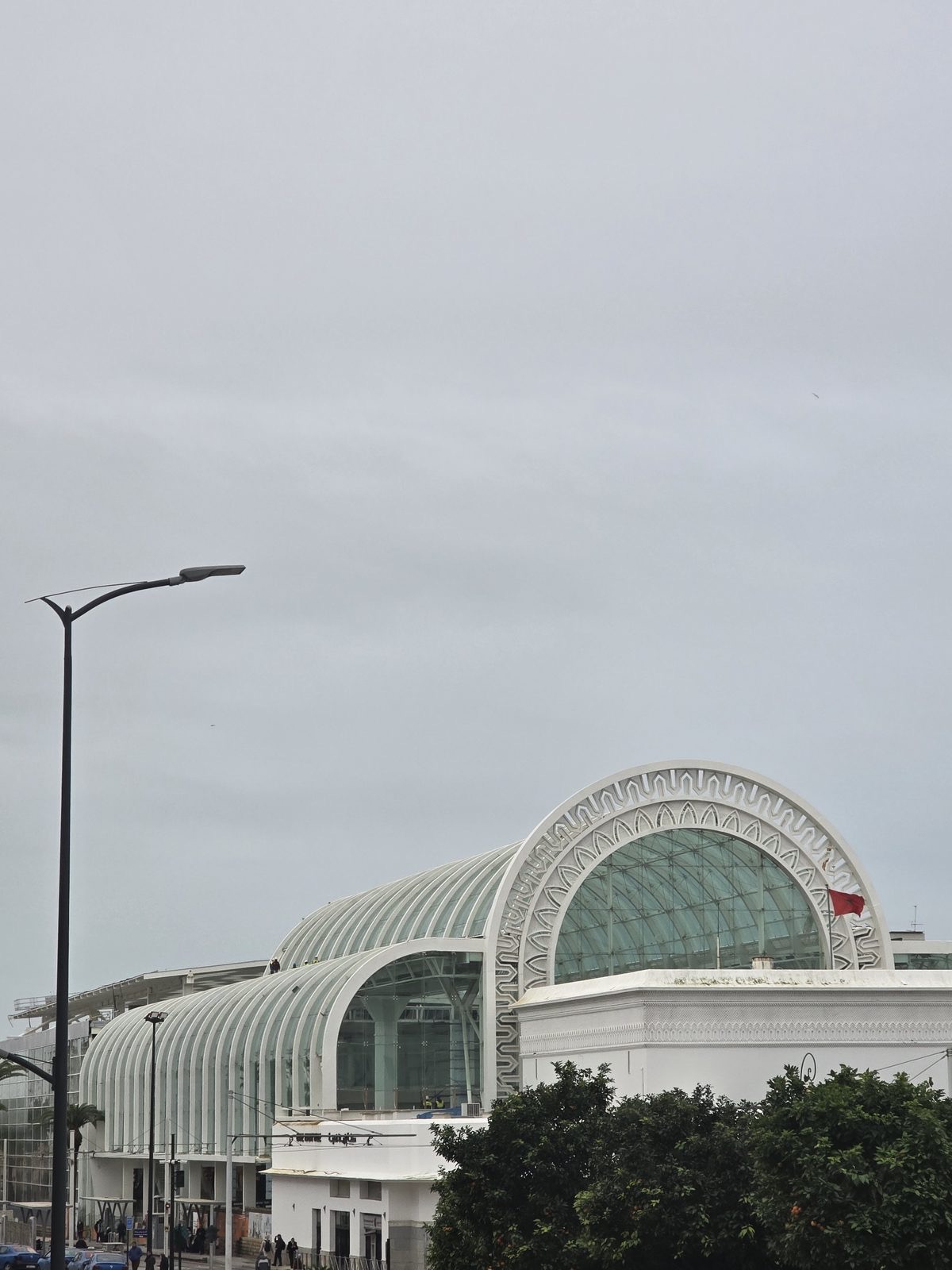
Rabat Ville is more central. It can be the better station if your train serves it and you're staying close to the old center.
Open in Google Maps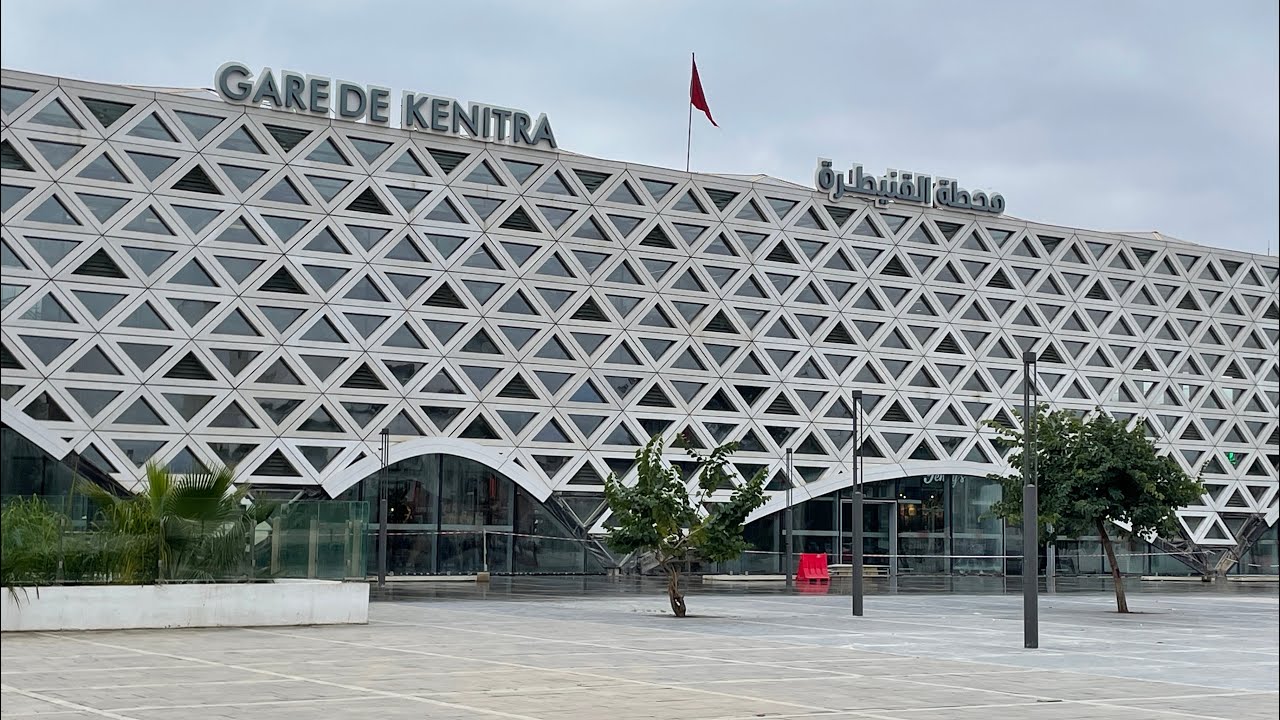
Kenitra is an important Al Boraq interchange. It is also where some journeys toward Fès and Meknès connect with the high-speed corridor.
Open in Google Maps
Tanger Ville is the main rail station for Tangier. It is the northern end of Al Boraq and is not the same place as Tangier Med ferry port.
Open in Google Maps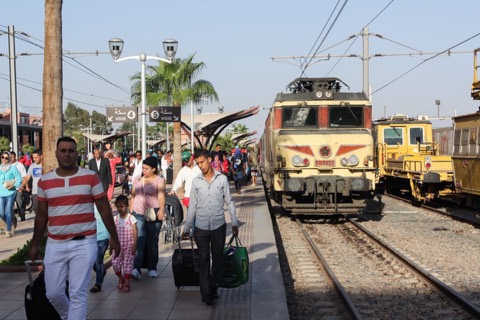
Marrakech station is in Guéliz, not inside the medina. Taxis are easy to find outside for the final trip to a riad or hotel.
Open in Google Maps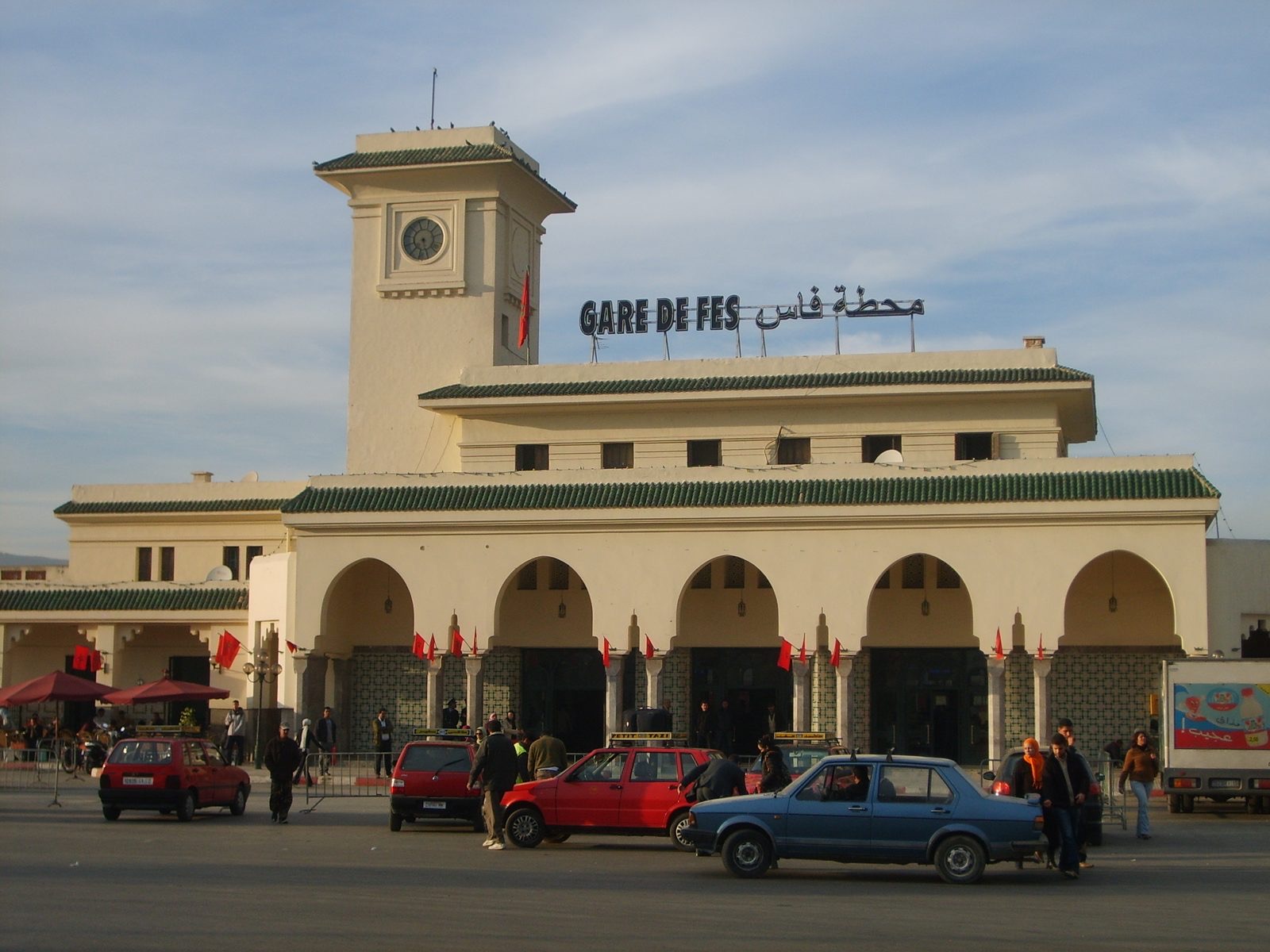
Fès station is in Ville Nouvelle. Continue by taxi if you're staying inside Fès el-Bali.
Open in Google Maps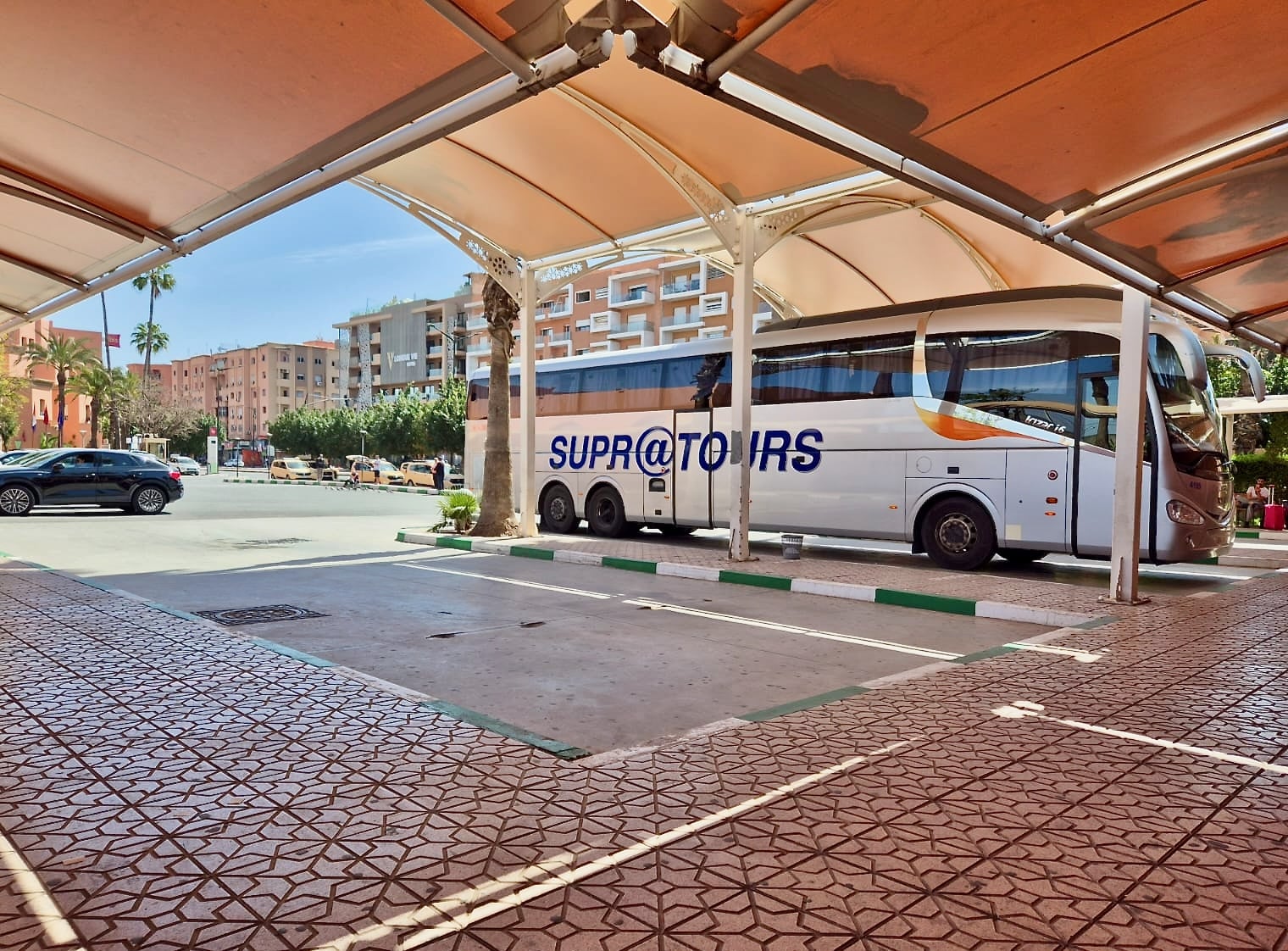
Marrakech's Supratours terminal is beside the railway station, which makes a train-to-bus connection much simpler than it sounds.
Open in Google MapsTangier Med is a large port east of Tangier city. It is not the same place as Tanger Ville railway station.
Open in Google MapsCasa Voyageurs for most long-distance trains and Al Boraq.
Casa Port for central Casablanca and regional services.
Mohammed V Airport has its own station.
Rabat Agdal for Al Boraq.
Rabat Ville for central-city access on services that call there.
Tanger Ville for trains.
Tangier Med for many international ferries. They are not the same place.
The railway station is in Guéliz.
Supratours is beside the railway station. CTM uses a different terminal.
Railway station in Ville Nouvelle.
Continue by taxi for the old medina.
No railway station.
Arrive by bus/road and continue locally.
No passenger railway.
Bus terminal location matters because hotels/beach areas can still require a taxi.
Mohammed V International Airport has its own railway station.
The train is useful for reaching Casablanca, but do not assume the airport service simply continues to every major Moroccan city.
If you're heading to Marrakech, Tangier or Fès, check the connection pattern before booking.
After an international flight, leave enough time for immigration and baggage. A very tight fixed train connection is usually not worth the stress.
A railway station inside Mohammed V Airport makes onward travel easier, but the flight is still the unpredictable part of the journey.
Immigration can take time. Checked baggage can take longer. Flights arrive late.
If you are connecting toward Marrakech, Rabat, Tangier or Fès, leave enough margin that one airport delay does not destroy the rest of your day.
A slightly later train is usually a better decision than saving 30 minutes on paper and spending the flight worrying about the connection.
There is no single safe number for every flight. Leave enough time for immigration, baggage and finding the railway station. Avoid the tightest possible fixed connection.
No passenger train. Use CTM, Supratours, another bus operator, private transfer or a flight depending on where you're starting.
No railway station. From Marrakech, bus is the simplest public option.
No train. Continue by road from Tangier, Fès or another nearby city.
No passenger railway crosses the High Atlas to Ouarzazate. Travel by road from Marrakech.
No railway reaches Merzouga. The desert section is by bus, private transfer or organized road transport.
No passenger train. Continue from Fès or Meknès by road.
No train. The High Atlas trekking area is reached by road from Marrakech.
No railway. Reach it by road, usually from Marrakech or Ouarzazate.
Morocco changes transport mode naturally as you move around the country.
In the north, the railway feels modern. Al Boraq turns Tangier–Rabat–Casablanca into a simple intercity corridor where the train is usually the first option to check.
South of Casablanca, the pace slows. The conventional line runs through Settat and Benguerir before reaching Marrakech. It is not high-speed rail, but it is easy: you leave from one city and arrive in another without dealing with airports.
Head toward Fès and the journey becomes longer again. The train crosses the central part of the country through Rabat, Kenitra and Meknès before arriving in Ville Nouvelle.
Then the railway map runs out.
There is no useful train to Agadir or Essaouira. Chefchaouen has no station. Ouarzazate and Merzouga are road journeys.
That is the easiest way to understand Morocco transport: rail for the main railway cities, bus for the gaps, ferry when the trip continues to Spain.
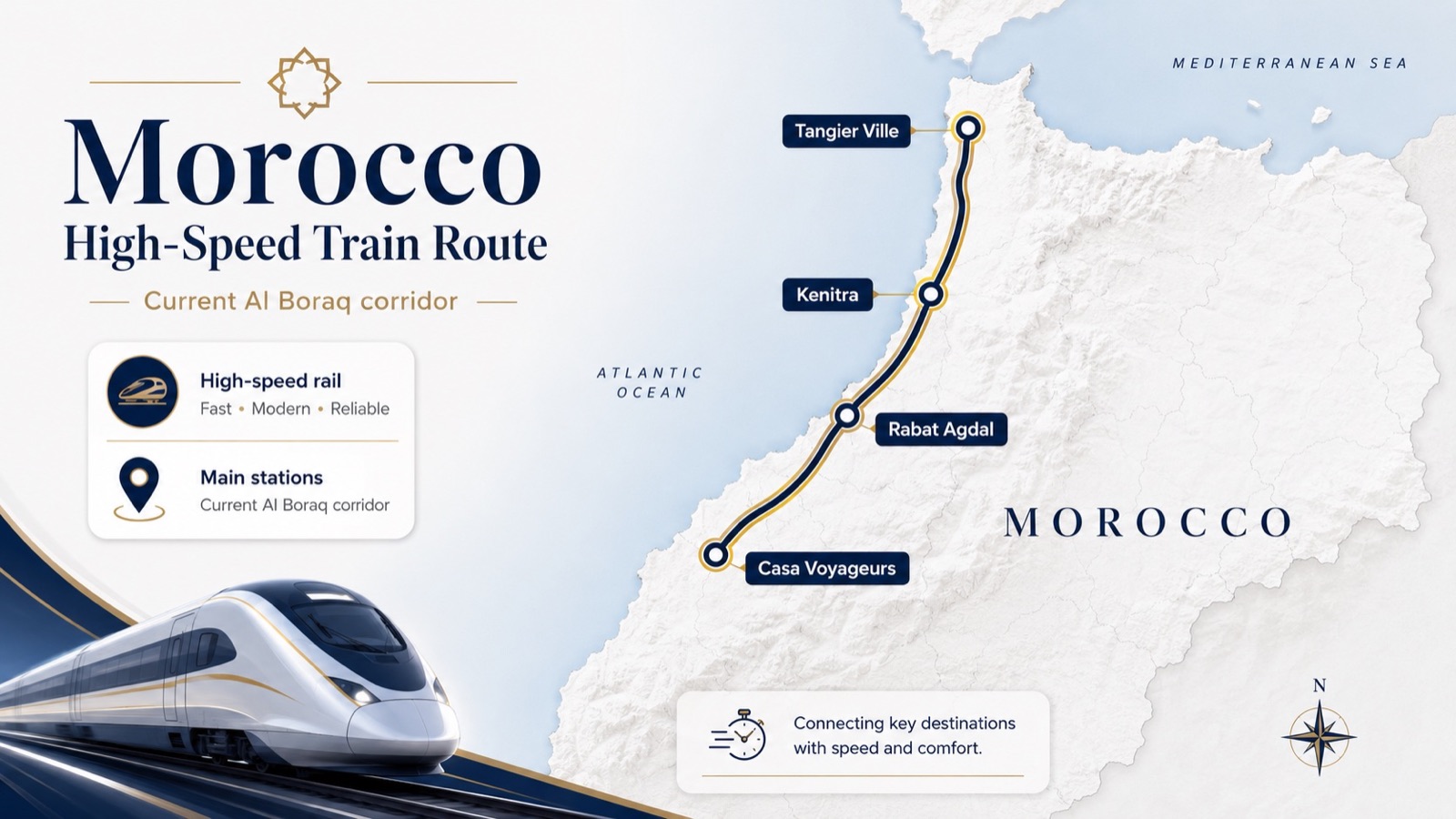
The journey starts at Casa Voyageurs, not Casa Port.
Once the train leaves Casablanca, the dense urban landscape gives way to flatter country. Settat comes first, then Benguerir, and the scenery becomes drier as you approach Marrakech.
The trip is not a dramatic scenic railway, and that is not why I would choose it.
The useful part is the geography at both ends. Casa Voyageurs is a major intercity station, while Marrakech station drops you directly into Guéliz. From there, taxis can take you to the medina without an airport transfer at either end.
Rail works here even though it is not high-speed: it runs city to city, avoids airport procedures and bypasses road traffic for most of the journey.
Tangier–Fès is not as obvious as Tangier–Casablanca.
Depending on the timetable, you may find a direct conventional train or a journey that uses Al Boraq south to Kenitra before connecting east toward Meknès and Fès.
Do not choose purely because one option includes a high-speed train.
Compare the arrival time, number of changes and waiting time.
A direct conventional train can be easier even if it is slower for part of the journey. A well-timed Al Boraq connection can be better if it saves a large amount of time.
The fastest train segment is not always the fastest complete journey.
This is a good example of why Morocco transport cannot be understood by looking only at the railway map.
Marrakech has a major railway station. Agadir does not.
The practical trip is therefore simple: take the bus south.
Supratours is especially convenient because its Marrakech terminal is beside the railway station. CTM is also worth comparing.
Trying to construct a train journey through Casablanca does not get you closer to Agadir. It only adds distance.
For trains, ONCF is the railway operator. Tickets can be bought through official channels, at stations, and through international booking platforms where inventory is available.
For buses, operators such as CTM and Supratours have their own booking systems.
Ferry booking depends on the route and operator.
If your travel date matters, book earlier rather than assuming every train, premium class, bus or ferry will still have space.
Compare live departures above, then keep your booking confirmation available offline.
Book the journey with the least flexibility first.
Do not spend your planning energy on the easiest ticket first.
First check whether the destination actually has a railway.
If you're searching for:
then the problem may not be the booking website. There is no passenger train to those destinations.
Switch to the bus or road section instead.
If both cities are on the railway network but no result appears, check the date, station and whether a connection is required.
Departure time can matter more than saving a few dirhams.
you want daylight on arrival;
you're travelling to Chefchaouen;
you're crossing the High Atlas to Ouarzazate;
you still need a taxi or hotel check-in;
the destination is new to you.
you want another full day in the departure city;
you already know exactly where you're going on arrival;
you are using a night train/couchette;
the journey is straightforward and arrival transport is arranged.
I would not choose a late bus to save 20 MAD if it puts me in an unfamiliar mountain town after midnight.
The ticket gets you to the station or terminal, not your hotel.
Station in Guéliz. Most medina stays need a taxi.
Station in Ville Nouvelle. Fès el-Bali still requires a transfer.
Bus arrival is outside the riad maze. Expect a taxi/walk uphill.
The city is spread out. Beach hotels may be some distance from the bus terminal.
You have arrived at the port, not central Tangier.
Morocco does not have one fixed fare that applies forever.
ONCF uses different fare products and availability can affect the price, especially on Al Boraq and longer intercity trains.
Bus fares vary by operator, departure and route. Ferry fares can move even more because vehicle type, season, cabin choice and departure time all matter.
Use static prices only as orientation. Check the live booking result before paying.
Normal suitcases are common on Moroccan trains and buses. Keep valuables with you and arrive early enough to store larger bags without blocking the aisle.
Do not rely on a full meal being available on every train or bus. Bring water and something to eat on longer trips.
Long-distance trains have toilets. Condition and layout vary by train type.
Do not plan a journey around onboard Wi-Fi. Mobile data is a better backup.
Sockets vary by vehicle and carriage. Carry a charged power bank on longer trips.
A car is not automatically better in Morocco.
If your trip is mostly Tangier–Rabat–Casablanca–Marrakech–Fès, public transport works well and parking can become more annoying than useful.
A rental car becomes more attractive when your itinerary includes:
For medinas, major railway cities and a simple city-to-city itinerary, I would usually avoid renting a car unless you specifically want one.
You do not need a rental car for a first trip built around Morocco's major cities.
One simple route is:
Tangier → Rabat → Casablanca → Marrakech
Use Al Boraq between Tangier, Rabat and Casablanca, then switch to the conventional train for Marrakech.
If you want Essaouira instead of another railway city, take a bus from Marrakech.
The important part is not squeezing in every city. Morocco's transport works better when you follow the network instead of fighting it.
With ten days, you can combine the railway with one destination beyond it.
For example:
Tangier → Rabat → Fès → Marrakech → Essaouira
Use Al Boraq and conventional rail for the first part, then switch to bus for Essaouira.
Another option is:
Casablanca → Fès → Marrakech → Agadir
The final leg is by bus because Agadir has no railway.
This is a better way to plan Morocco than trying to force every destination into one transport mode.
Trains and buses can become much busier around major holidays and peak travel periods.
If you are travelling around Eid, a public holiday, a major weekend or another high-demand period, book earlier when possible.
The important departure is the one you should protect first. Do not assume you can simply show up and take the next premium train or bus when thousands of other people have the same idea.
Do not publish changing religious-calendar dates directly into evergreen body copy.
Morocco's main train network is easy to use whether you travel alone or with family.
Solo travelers mainly need to think about station location, luggage and late arrival transport.
Families should pay more attention to:
On a long journey with children, paying more for a better class can make more sense than it does for a solo traveler.
Casa Voyageurs, Casa Port and Mohammed V Airport are different stations. Read the ticket.
Al Boraq uses Rabat Agdal.
There isn't one.
They are not. The railway station is in Tangier city; Tangier Med is a separate ferry port.
It isn't. Marrakech and Fès are served mainly by conventional intercity trains.
Leave time for immigration, baggage and delays.
There are three practical ways to buy an ONCF train ticket: online, through a supported booking platform, or at the station.
If the journey matters — Al Boraq at a specific time, first class on a long trip, or a couchette — I would book ahead rather than waiting until the station.
If you are travelling on an ordinary weekday and your schedule is flexible, buying at the station can still work for many routes.
The important distinction is seat availability versus train availability. A train may still run even when the class or fare you wanted is no longer available.
Online booking is easiest when the payment works normally. Keep the ticket available offline after purchase.
Buy from the ticket counter or available machines before going to the platform. Give yourself enough time if the station is busy.
Use the MYticket search form to compare available transport and booking options for your route.
Book earlier when the exact departure matters.
Al Boraq, first-class seats, sleeper/couchette accommodation and busy holiday departures are the journeys where I would not wait until the last minute.
If you are taking a short regional train and can use several departures during the day, advance booking matters much less.
ONCF currently allows Al Boraq bookings months ahead, but that does not mean you need to buy every ticket months in advance.
| Journey | How I would book |
|---|---|
| Casablanca → Rabat | Flexible; same day can work |
| Casablanca → Tangier | Ahead if the departure matters |
| Casablanca → Marrakech | Ahead for busy dates / preferred class |
| Marrakech → Fès | Ahead if you want first class |
| Marrakech → Tangier couchette | Book as early as practical |
| Holiday / Eid travel | Book earlier |
Not necessarily.
A blank result can mean several different things:
If you know the cities are on the railway network, check the date, try the operator again, or compare another legitimate booking source before assuming the train does not run.
You do not need to speak Arabic to find a Moroccan train.
Major stations display train numbers, departure times, destinations and platform information using Latin-script place names as well as Arabic signage.
The useful habit is simple:
match the departure time and train number, not just the city name.
A train to a city beyond your destination may still be the correct train.
Arrive early enough to read the departure board and walk to the platform without rushing. This is a railway station, not an airport, but one minute before departure is unnecessarily risky.
Delays can happen, especially when one train feeds into another.
If your itinerary uses a connection, do not plan the next part of the day as though every arrival is guaranteed to the minute.
The routes where I would leave the most margin are:
A same-network railway connection is easier to manage than a separately booked flight or ferry.
No. Tangier Med is outside Tangier city and ferry check-in adds another layer of timing. Leave proper margin.
Train stations get most of the attention, but bus terminals can change the practical journey just as much.
In Marrakech, Supratours is particularly convenient beside the railway station. CTM uses its own terminal.
In Casablanca, CTM departures can use different terminals depending on the service.
That means the “fastest bus” is not automatically the fastest door-to-door journey.
Before booking, check:
Recent traveler discussions specifically mention the different CTM and Supratours locations in Marrakech and why this matters.
You do not need to return to Marrakech.
If your trip continues south from Essaouira to Agadir, check direct road services first.
This is a common mistake in itinerary planning: people assume Marrakech must remain the transport hub because that is where the train ends.
It does not make sense to travel east back to Marrakech if a suitable coastal bus gets you south toward Agadir.
Do not invent a fixed timetable until verified against a current operator source.
Compare current CTM, Supratours and other legitimate operator schedules for your date.
Take the bus or road transport.
Tetouan is close enough to Tangier that rail would not improve the trip even if the railway reached it.
If your itinerary is:
Tangier → Tetouan → Chefchaouen
think of it as a road itinerary rather than trying to return to the railway between each stop.
Take the train.
Depending on the current timetable, the journey may be direct or work through the Casablanca corridor.
Do not automatically use Al Boraq simply because you're starting in Rabat. Marrakech itself is not on the high-speed line.
Compare the complete journey and number of changes.
Yes, you can make the journey by rail, but check the connection rather than searching for a mythical airport express to Marrakech.
Start at the railway station inside Mohammed V Airport and follow the current connection toward Marrakech.
The real planning issue is not the train. It is your flight arrival.
Do not book the tightest possible connection after an international arrival.
The railway can take you from Mohammed V Airport toward Casablanca, where you connect with Al Boraq for Tangier.
The key interchange is normally Casa Voyageurs.
Do not plan the Al Boraq departure too tightly after landing. Immigration, baggage and the airport train all happen before you reach Casa Voyageurs.
Train travel works well for families because you can move around more easily than on a long bus journey.
The details matter more than the transport itself:
For Casablanca–Rabat, I would not pay much extra purely because you have children.
For Marrakech–Fès, the comfort calculation is very different.
Some routes are short enough for a day trip. Others technically work but waste too much of the day.
| Trip | Works as a day trip? | Comment |
|---|---|---|
| Casablanca → Rabat | Yes | Easy |
| Rabat → Casablanca | Yes | Easy |
| Casablanca → Tangier | Yes | Possible with Al Boraq, but an overnight stay is better if you want the city |
| Marrakech → Essaouira | Possible | Long day; staying overnight is better |
| Marrakech → Agadir | Possible but not ideal | Too much road time for most people |
| Tangier → Chefchaouen | Possible | Start early |
| Fès → Chefchaouen | Poor day trip by bus | Too much time on the road |
| Marrakech → Ouarzazate | Not my choice as a public-transport day trip | Long mountain journey |
People often search for trains simply because both places are famous.
These routes do not have a passenger railway connection:
If you see a website implying there is a direct train on one of these routes, check the claim carefully.
First check what is actually sold out.
It may be:
Try nearby departure times before changing the entire itinerary.
On Casablanca–Tangier, another Al Boraq departure may solve the problem.
On Marrakech–Fès, changing class can sometimes be easier than changing the day.
On the overnight train, couchette availability is a bigger issue because sleeping inventory is much more limited.
Train wins most major rail corridors, but not every door-to-door journey.
I would still compare the bus when:
Transport mode matters less than the complete journey from where you are to where you actually need to be.
These are the Morocco routes where I would start with rail rather than comparing everything:
Bus can still exist on some of these routes. That does not make it the better first choice.
Buying the ticket is only half of the question. You also need to know what you have actually bought.
Check four things before closing the booking:
station, departure time, class and passenger name.
A Casablanca ticket from Casa Voyageurs is not the same thing as a departure from Casa Port. A first-class ticket does not mean you can simply board another departure. And a ticket issued for one passenger should stay with that passenger.
If something on the ticket looks wrong, deal with it before departure rather than explaining it to the inspector onboard.
Where a train number is shown, use it together with the departure time to find the correct service at the station.
Do not assume that. Treat it as valid for the train shown unless the fare conditions explicitly say otherwise.
Yes. Download the ticket or keep a screenshot that remains available if mobile data fails.
Do not immediately change your itinerary.
A broken checkout, blank screen or rejected card can be a website/payment problem rather than a transport problem.
Travelers continue to report occasions where ONCF payment fails with one foreign card while another method works.
Try this in order:
Do not interpret a payment error as “train sold out.”
The most useful information is not just the departure time.
Look at:
This matters especially on routes such as Tangier–Fès or Tangier–Marrakech, where a journey containing Al Boraq is not automatically the best journey.
Compare arrival time, not train speed.
| Option | Service | Time | Changes |
|---|---|---|---|
| Option A | Direct train | 07:30 → 12:50 | No change |
| Option B | Al Boraq + connection | 08:00 → 12:15 | 1 change |
In this example I would probably accept the change because it saves meaningful time.
If the connected journey arrived at 12:40 instead, I would probably take the direct train.
Not all connections deserve the same margin.
Changing between two trains is very different from changing from a train to an international ferry.
| Connection | My approach |
|---|---|
| ONCF → ONCF | Follow the official itinerary; avoid deliberately tight self-made combinations |
| Train → CTM/Supratours | Leave additional time because tickets are separate |
| Train → flight | Leave substantial margin |
| Train → Tangier Med ferry | Leave substantial margin plus transfer time to the port |
| Flight → train | Do not use the tightest possible departure |
| Bus → tour/activity | Give yourself recovery time |
A connection that works perfectly on paper is worthless if a 20-minute delay destroys it.
On a short journey, seat choice is not worth obsessing over.
On a longer trip, it can matter.
Al Boraq currently supports reserved seating and ONCF has introduced seat-choice options on eligible Al Boraq and Al Atlas bookings.
If the booking system offers it:
Do not promise a particular seat layout unless the actual booking screen confirms it.
For a long journey, yes.
Do not plan a six- or seven-hour trip around the assumption that the exact food you want will be available onboard.
For Casablanca–Rabat, this barely matters.
For Marrakech–Fès, it does.
Buy water before boarding and bring something you know you will eat.
The longer the route, the less I would rely on onboard catering.
The train or bus may arrive perfectly safely at night, but the last kilometer becomes more important.
Before choosing a late service, check:
This matters particularly in destinations such as Chefchaouen, where the bus does not leave you inside your riad.
Do not book every Morocco ticket in chronological order.
Book the hardest-to-replace journey first.
Use this priority:
Protect the journey with the least flexibility first. Fill in the easy trips later.
Only if you already know when you want to come back.
A return ticket can be useful when both journeys are fixed, but it can also remove flexibility from a trip that is still changing.
For a day trip such as Casablanca–Rabat, a planned return is easy.
For a multi-city Morocco itinerary, I would normally book each important leg around the actual route rather than forcing the trip into return journeys.
Search engines often show city-to-city travel time as if the trip ends the moment the train stops.
It doesn't.
Think about the final transfer too.
| Arrival | What happens next |
|---|---|
| Marrakech station | Taxi to many medina riads |
| Fès station | Taxi to Fès el-Bali |
| Tanger Ville | Taxi/local transport depending accommodation |
| Chefchaouen bus arrival | Taxi/walk uphill depending accommodation |
| Agadir bus arrival | Often another taxi to beach/hotel zone |
| Tangier Med | You are still outside Tangier city |
This is why I sometimes choose a theoretically slower service with a better terminal.
MYticket checks route information against transport-operator timetables and booking systems, including ONCF timetable information , CTM coach routes and Supratours schedules .
For CTM ticket purchase details, see CTM ticket information when that operator serves your route.
The timetable tables focus on routes visitors use most rather than reproducing every departure in Morocco.
Train and coach times can be adjusted by operators, and fares can differ by date, class or availability, so the booking result for the selected travel date remains the final reference.
Yes on the main railway corridors. Tangier, Rabat, Casablanca, Marrakech, Meknès and Fès are all practical by train. For places outside the rail network, switch to bus or road transport.
Al Boraq is Morocco's high-speed train. It serves Tangier, Kenitra, Rabat and Casablanca.
No. Marrakech is served by conventional intercity trains. If you're travelling between Tangier and Marrakech during the day, you may use Al Boraq for part of the journey and change at Casablanca.
Not directly. Fès is on the conventional rail network. Some journeys connect with Al Boraq through Kenitra or another suitable interchange depending on the timetable.
Yes. Direct conventional intercity trains run between Casa Voyageurs and Marrakech.
Yes. Take Al Boraq.
Yes. Take Al Boraq from Rabat Agdal.
Yes. It is a long conventional intercity journey.
No. Take the bus.
No. Essaouira has no railway station.
No. Continue by bus, taxi or private road transfer.
No.
No.
Second class is enough for most short journeys. First class is more useful on long trips such as Marrakech–Fès.
Yes. First class is an upgrade, not a requirement.
For most major long-distance trains, start by checking Casa Voyageurs. The airport has its own station and Casa Port serves different journeys.
Rabat Agdal.
No. It is in Guéliz.
No. It is in Ville Nouvelle.
Yes. Mohammed V Airport has its own railway station.
Do not assume every airport service continues directly. Check the connection pattern for your date.
Yes, on selected night services. Check the live timetable for your date.
Couchette accommodation is available on the night product where offered.
Check both when both serve the route. Supratours is particularly useful for connections beyond the ONCF railway, while CTM has a broad independent bus network.
Only on routes where the train does not go or where the bus is much more direct. For Casablanca–Tangier, take the train. For Marrakech–Agadir, take the bus.
No. They are separate locations.
You do not need airport-style check-in, but arrive early enough to find the platform and board without rushing.
Reserved services and premium classes can become unavailable, especially on busy travel dates.
Yes if your departure time matters.
Yes. Normal travel luggage is common.
Long-distance trains do.
Do not depend on reliable onboard Wi-Fi unless the specific service confirms it.
It varies by train and carriage. Carry a power bank.
Moroccan trains are widely used by local and international travelers. Use normal travel precautions and keep valuables with you.
Yes. International visitors can book Moroccan trains online, although card acceptance can vary by bank and booking channel.
The problem may come from the bank, card authentication, browser session or payment gateway rather than the train itself. Try another card or booking channel before assuming the journey is unavailable.
International cards are commonly used, but approval still depends on the issuing bank and the payment flow used for that booking.
Yes. If online payment is failing, station purchase is an alternative. For a departure that matters, do not leave it until the last minute on a busy travel day.
Seat-selection options depend on the booking channel and train. If a specific seat matters to you, check whether the booking screen actually offers seat selection rather than assuming it will.
Yes, normal travel luggage is common. The practical question is where it will fit, not whether it looks like airline cabin baggage.
Small dogs may be allowed under the operator's conditions when properly contained and ticketed. Check the current rule before travelling rather than assuming every dog can board normally.
Not automatically. Use the train shown on the ticket unless the fare conditions or ONCF staff confirm that a change is allowed.
There is no single safe number for every flight. Leave enough time for immigration, baggage and finding the railway station. Avoid the tightest possible fixed connection.
No. Tanger Ville is the railway station in Tangier city. Tangier Med is a separate international port outside the city.
Yes. Road transport is the normal way to reach the port from Tangier city.
Well before departure. Check the ferry operator's current check-in deadline, especially if you are travelling with a vehicle.
It may be possible on some services, but advance booking is safer when the departure matters or when travelling with a vehicle.
Speak to railway staff immediately. Do not assume the ticket is valid simply because the destination is the same.
It depends on the fare conditions attached to the ticket. Check before departure rather than assuming every fare is flexible.
Follow the instructions attached to the booking. If a mobile e-ticket is accepted, keep it downloaded and accessible even without internet.
It is a sensible backup, especially if mobile data or email access may be unreliable at the station.
Major stations usually have more options than smaller ones. For a long journey, buy water and snacks before boarding rather than depending entirely on onboard service.
Yes. The main railway cities are easy to combine by train, and buses fill many of the important gaps.
Yes for most major tourist routes. The main limitation is that several popular destinations have no railway, so bus or road transport becomes necessary.
Neither is always better. Compare the route, departure time and terminal location.
No. Rail can get you part of the way toward eastern Morocco, but Merzouga and the desert destinations require road transport.
Yes. Ferry routes connect southern Spain with northern Morocco.
Small pets can be possible under ONCF's passenger rules, but check the current conditions before booking.
Current fares often start around 135 MAD. Check the live fare because prices and availability can change.
Most direct CTM examples currently take around 3 to 3½ hours.
Current CTM examples start around 85 MAD.
Current direct CTM services take roughly 2¼ to 2¾ hours.
Current CTM examples start around 145 MAD.
Current CTM examples take roughly 4¼ to 5 hours.
Current CTM examples start around 115 MAD.
Yes. Direct road services operate between the two cities.
Roughly 3 hours on many direct services.
Yes. Direct conventional ONCF services operate through the day.
Many current trains take around 2 hours 40 minutes.
A current useful orientation is around 120 MAD, but the actual fare depends on train, class and fare conditions.
Yes. This is exactly the route to use it for.